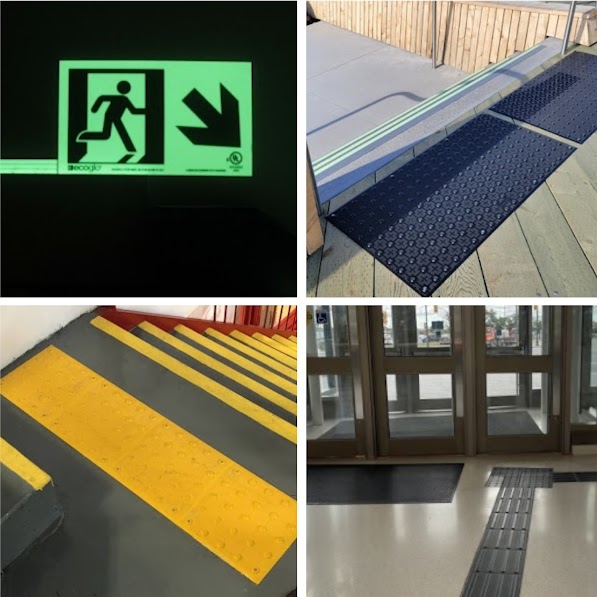
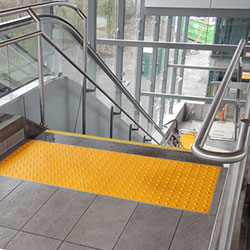
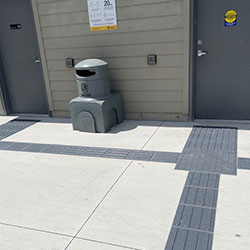
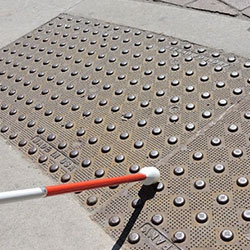
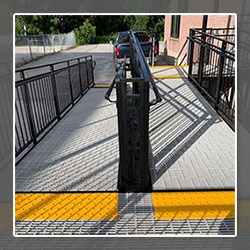
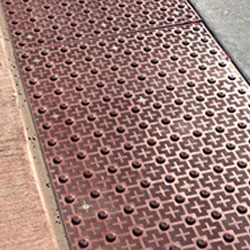
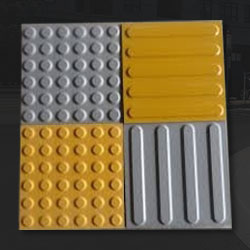
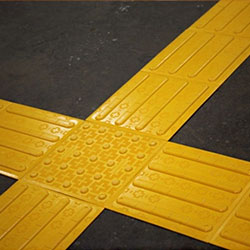
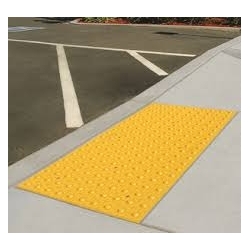
A safety upgrade fails the exact moment the marker meant to warn pedestrians becomes the obstacle that knocks them down. - Tactile Solution Canada
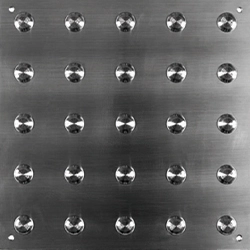
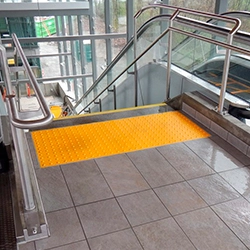
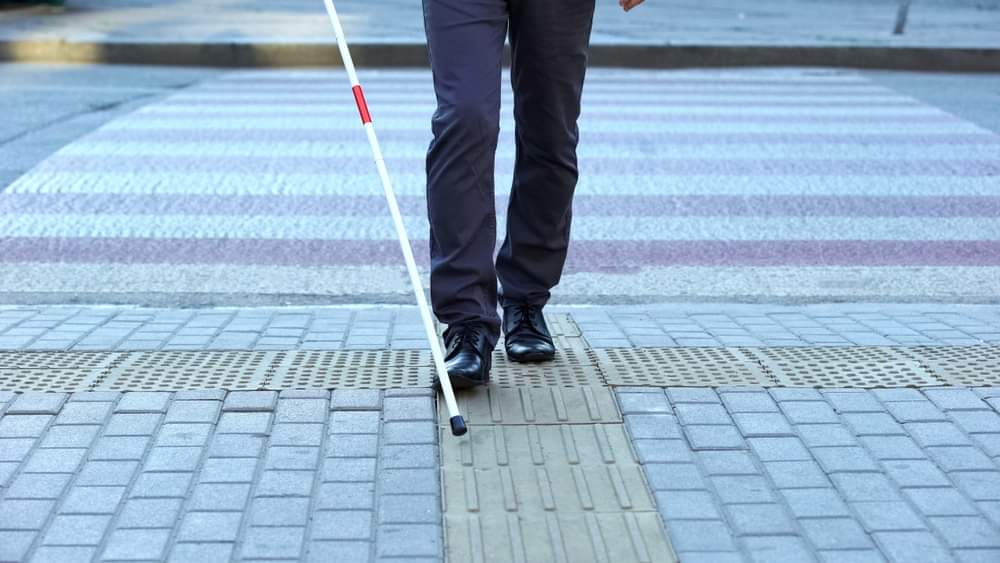
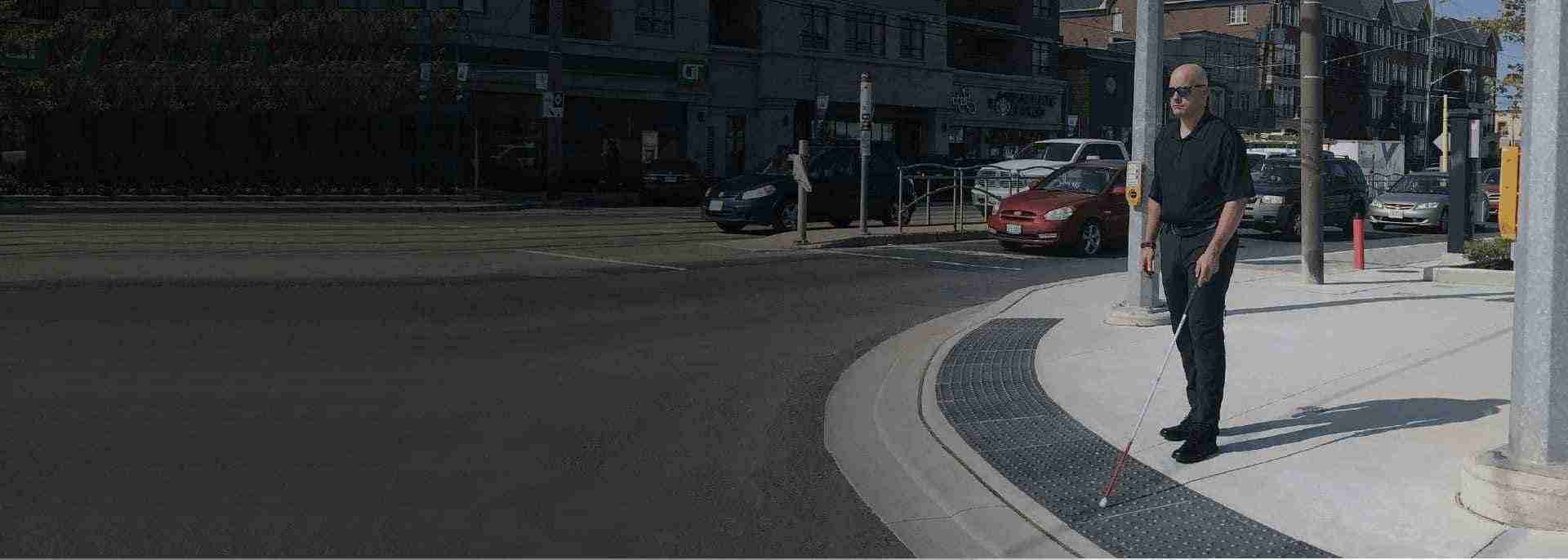
Ask any contractor or building manager about retrofitting an older property for accessibility, and the same concern comes up almost immediately. If you glue a Tactile Walking Surface Indicator (TWSI) right on top of cured concrete, asphalt, or lobby tile, are you just creating a raised lip that catches people's toes?
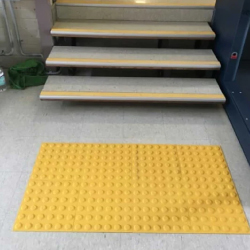
It is a fair question. Cutting out hardened concrete with a saw and jackhammer to sink a cast-in-place plate costs a fortune, fills occupied lobbies with silica dust, and shuts down entrances for days. On the other hand, bolting a thick, square-edged mat onto a busy walkway invites tripped shoppers, jammed wheelchair casters, and shredded winter snowplow blades.
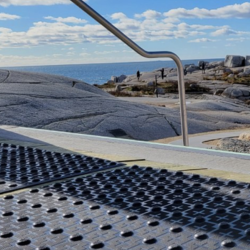
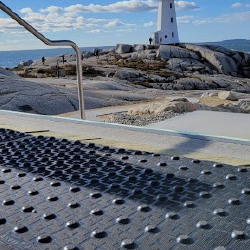
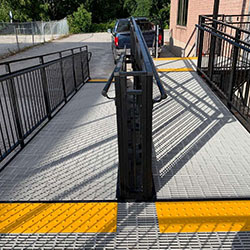
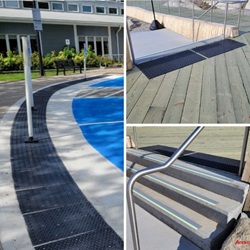
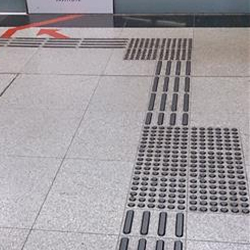
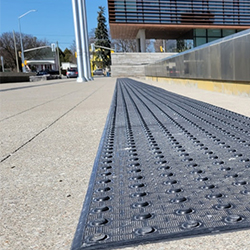
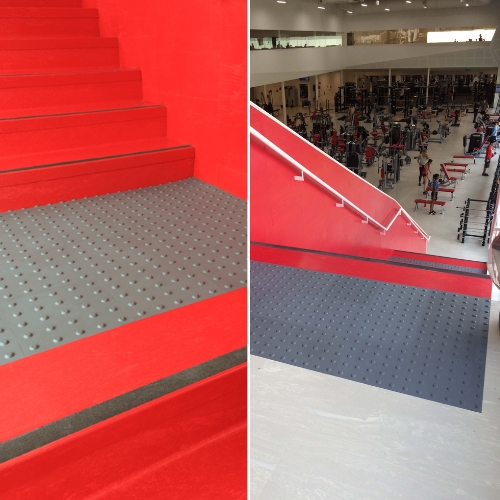
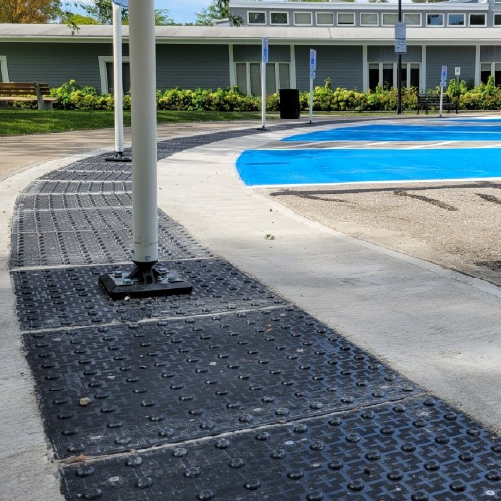
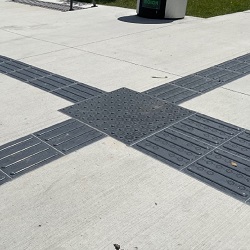
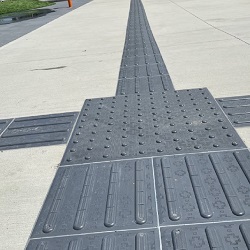
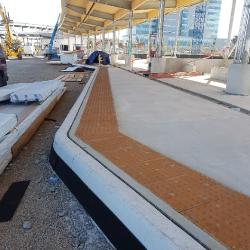
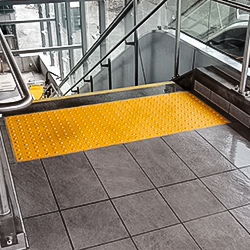
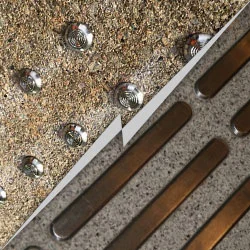
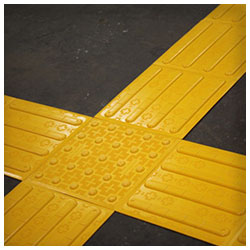
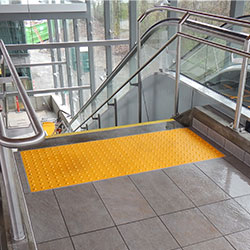
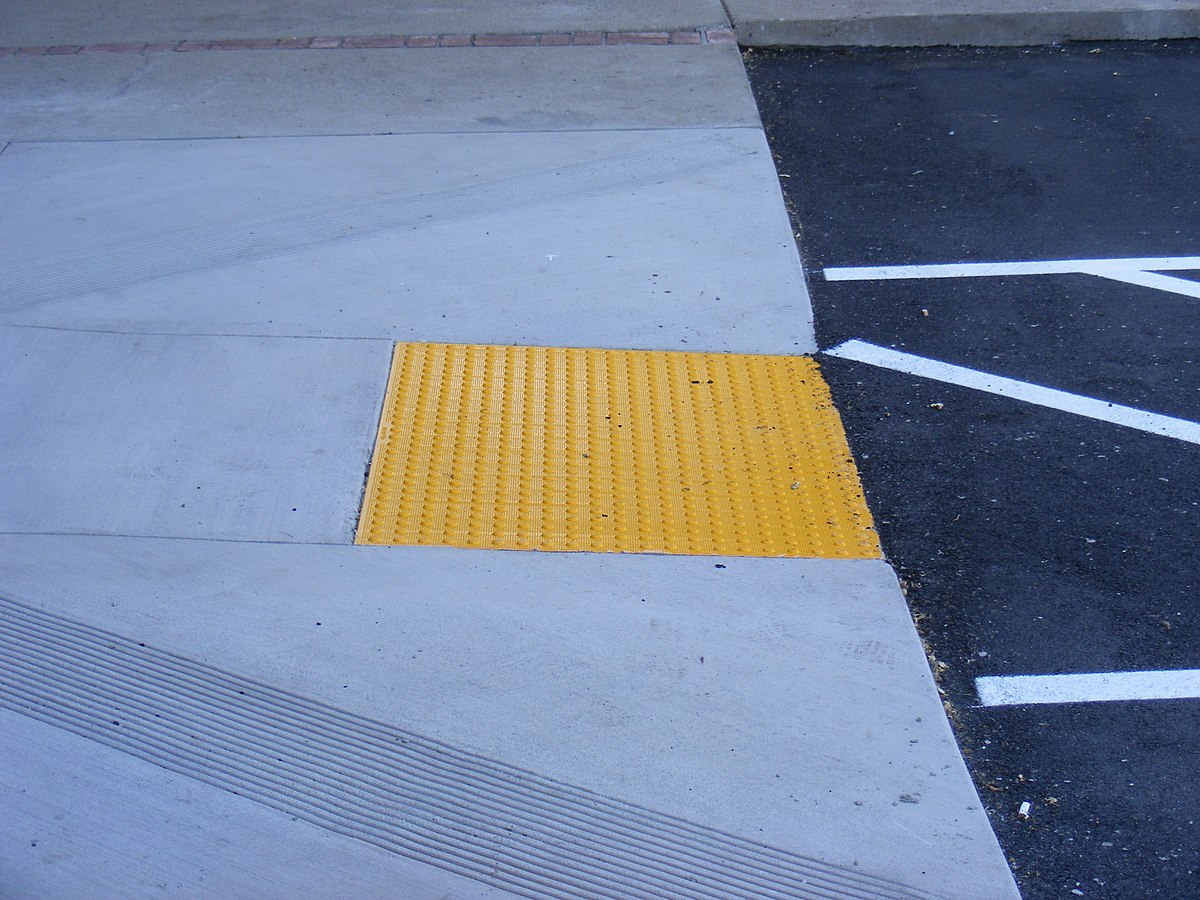
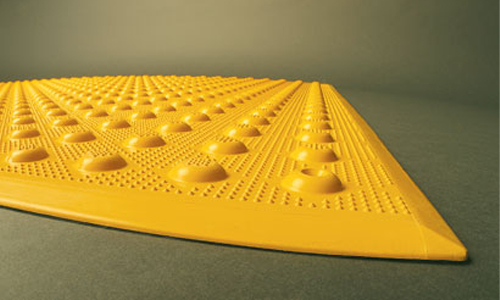
The engineering answer sits right along the outer border of the tile: the perimeter bevel. A properly engineered beveled edge turns an abrupt vertical step into a gentle micro-ramp, letting shoes, cane tips, strollers, and wheels glide smoothly onto the warning field without snagging.
At Tactile Solution Canada, we help contractors, property owners, and facility teams across the country bring existing buildings into full compliance without tearing up their floors. Below, you will find the exact biomechanics, Canadian code tolerances, product options, and field installation habits that keep surface-applied retrofits completely trip-free.
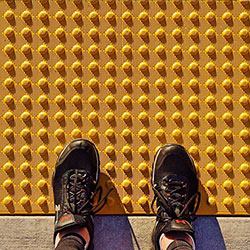
Most people overestimate how high they lift their feet while walking. During a normal stride on flat ground, your swinging foot clears the floor by only 10 to 20 millimeters. Add heavy winter boots, fatigue, a slight shuffle, or reduced vision, and that clearance drops to just a few millimeters.
When a flat, vertical edge sits even 5 or 6 millimeters proud of a walkway, a shoe toe does not step over it. It strikes the vertical face dead-on, stopping the foot while the upper body keeps moving forward.
The Canadian fall data shows just how serious everyday walking hazards have become:
Pedestrians are not the only ones affected by square-edged floor mats. Small front wheelchair casters, four-wheel rolling walkers, baby strollers, and heavy commercial delivery carts hit vertical lips hard. In winter, municipal snow shovels and sidewalk plow blades catch flat edges instantly, peeling low-grade tiles right off the pavement.
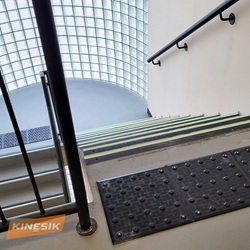
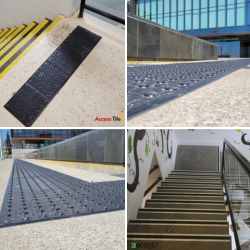
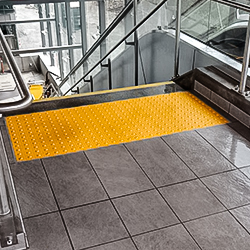
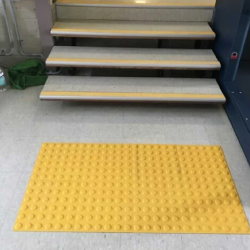
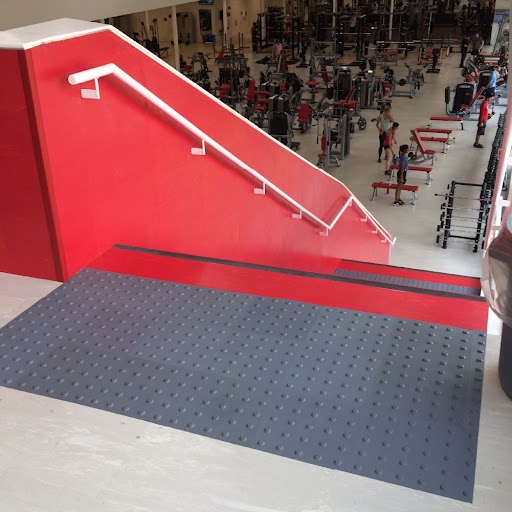
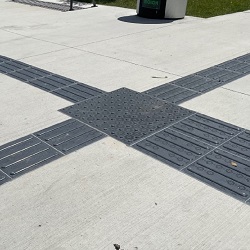
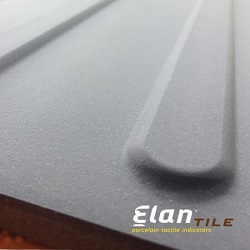
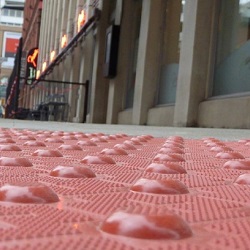
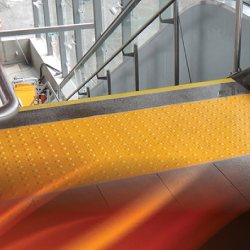
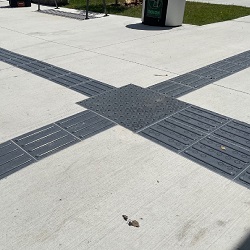
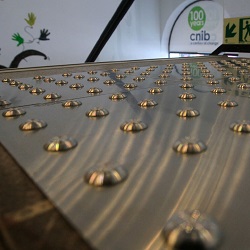
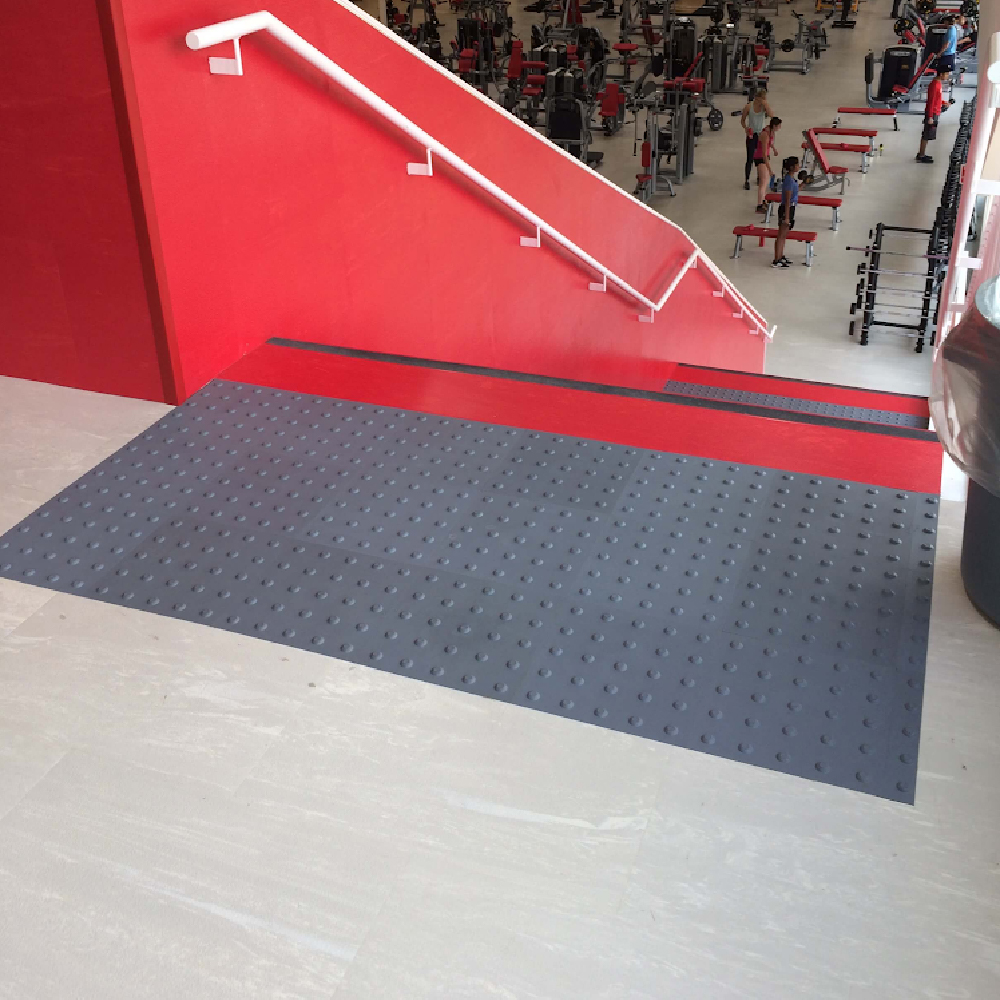
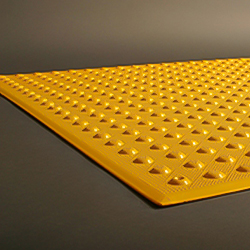
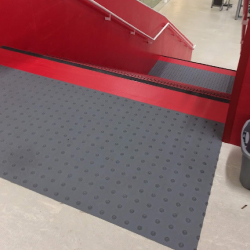
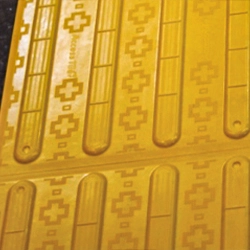
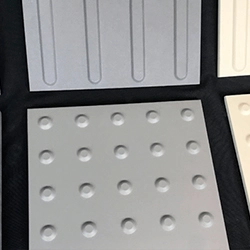
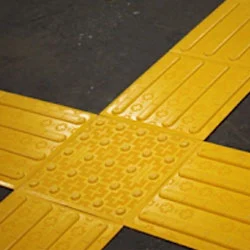
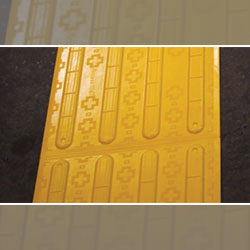
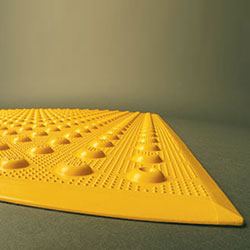
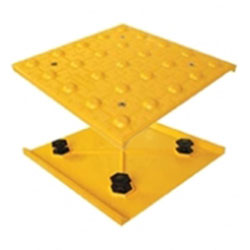
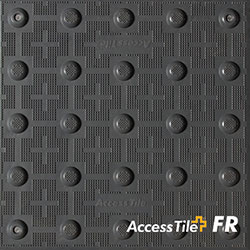
A commercial-grade surface-applied tactile tile is built differently from a generic rubber mat. Instead of ending in a blunt 90-degree wall, all four sides of the tile body taper down at a gradual, engineered angle toward the existing substrate.
This sloped border changes how objects interact with the tile from every angle of approach:
In Canada, you cannot guess on tile thickness or slope ratios. Municipal building inspectors check retrofits against the National Building Code of Canada (NBC), provincial rules like the Accessibility for Ontarians with Disabilities Act (AODA) in Ontario, and the national technical standard CSA B651 (Accessible Design for the Built Environment).
Under CSA B651, every Tactile Walking Surface Indicator (TWSI) must be installed so that it does not create a tripping hazard. Specifically, the standard states that the base surface of a tactile indicator should sit level with the surrounding walkway, or not more than 3 millimeters above or below it.
For general floor level changes along a barrier-free path of travel, both CSA B651 and the federal Accessibility Standards Canada (CAN-ASC-2.3) standard set clear transition rules:
High-quality surface-applied tiles keep the outer perimeter thickness razor-thin and taper gently into the main body. That profile satisfies both the strict 3 mm base-height expectation and the 1:2 bevel geometry simultaneously.
Physical beveling handles the contact, while visual contrast gives pedestrians early warning before their feet arrive. Many people living with vision loss retain partial sight and rely on strong tonal differences to read floor transitions.
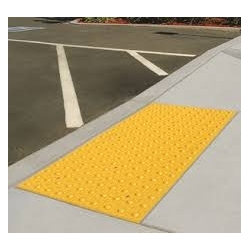
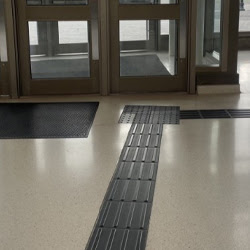
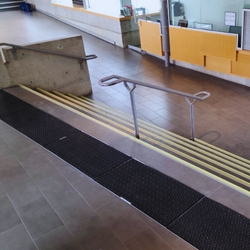
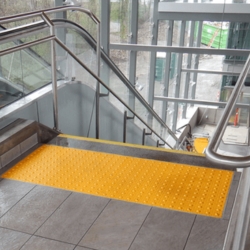
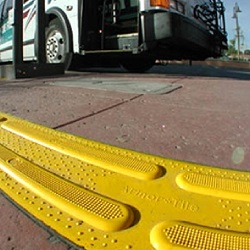
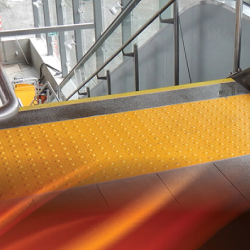
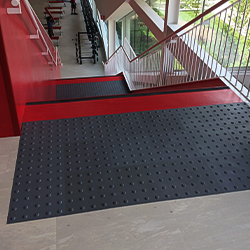
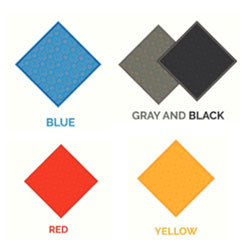
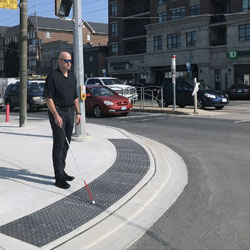
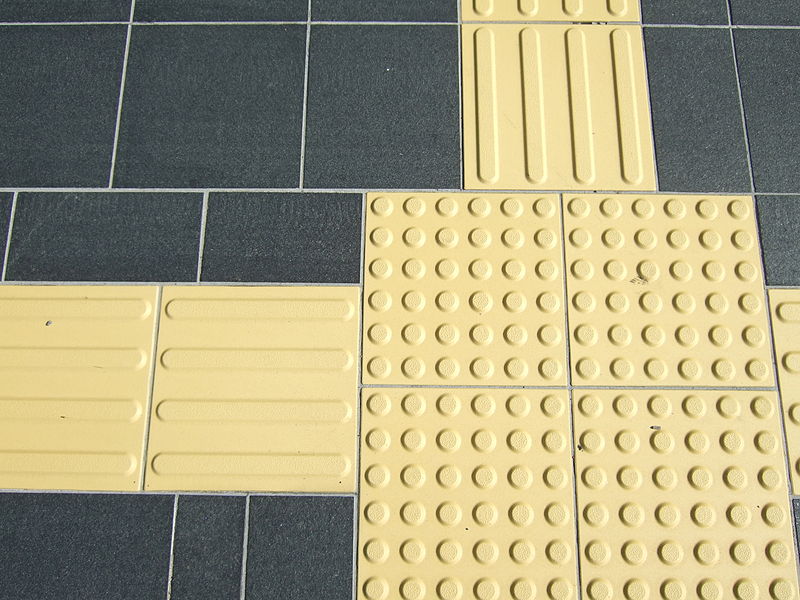
Canadian codes set 70% luminance contrast (measured by Light Reflectance Value) between the tactile tile and the surrounding concrete, asphalt, or lobby flooring as the safety benchmark. Pairing a bright Safety Yellow or high-contrast Onyx Black tile with a beveled perimeter gives low-vision visitors two layers of protection: they spot the hazard zone from several steps back, and their shoes cross the border cleanly without catching.
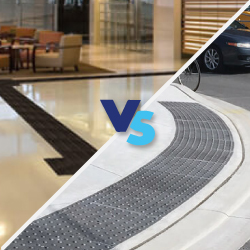
Before ordering materials for a renovation, it helps to compare how each retrofit approach handles trip risk and site downtime.
|
Retrofit Feature |
Cast-in-Place Tactile Plates |
Beveled Surface-Applied Tiles |
Non-Beveled Generic Mats |
|
Edge Profile |
Perfectly flush with fresh concrete |
Sloped perimeter bevel sits tight to floor |
Blunt vertical lip catches toes and wheels |
|
Demolition Required |
High (saw-cutting and repouring cured slabs) |
Zero demolition on sound existing surfaces |
Zero demolition |
|
Entrance Downtime |
Multiple days for concrete curing |
A few hours; foot traffic resumes quickly |
Fast install, frequent repair closures |
|
Trip Hazard Risk |
Lowest when poured cleanly |
Very low when anchored and sealed flush |
High; edges curl and peel quickly |
|
Canadian Winter Durability |
Maximum resistance to heavy plows |
High resistance with proper perimeter seal |
Poor; frost heave and plows shred corners |
Not every retrofit shares the same traffic load, substrate, or architectural style. Choosing the right product family stops premature edge lifting and keeps maintenance costs down over the long term.
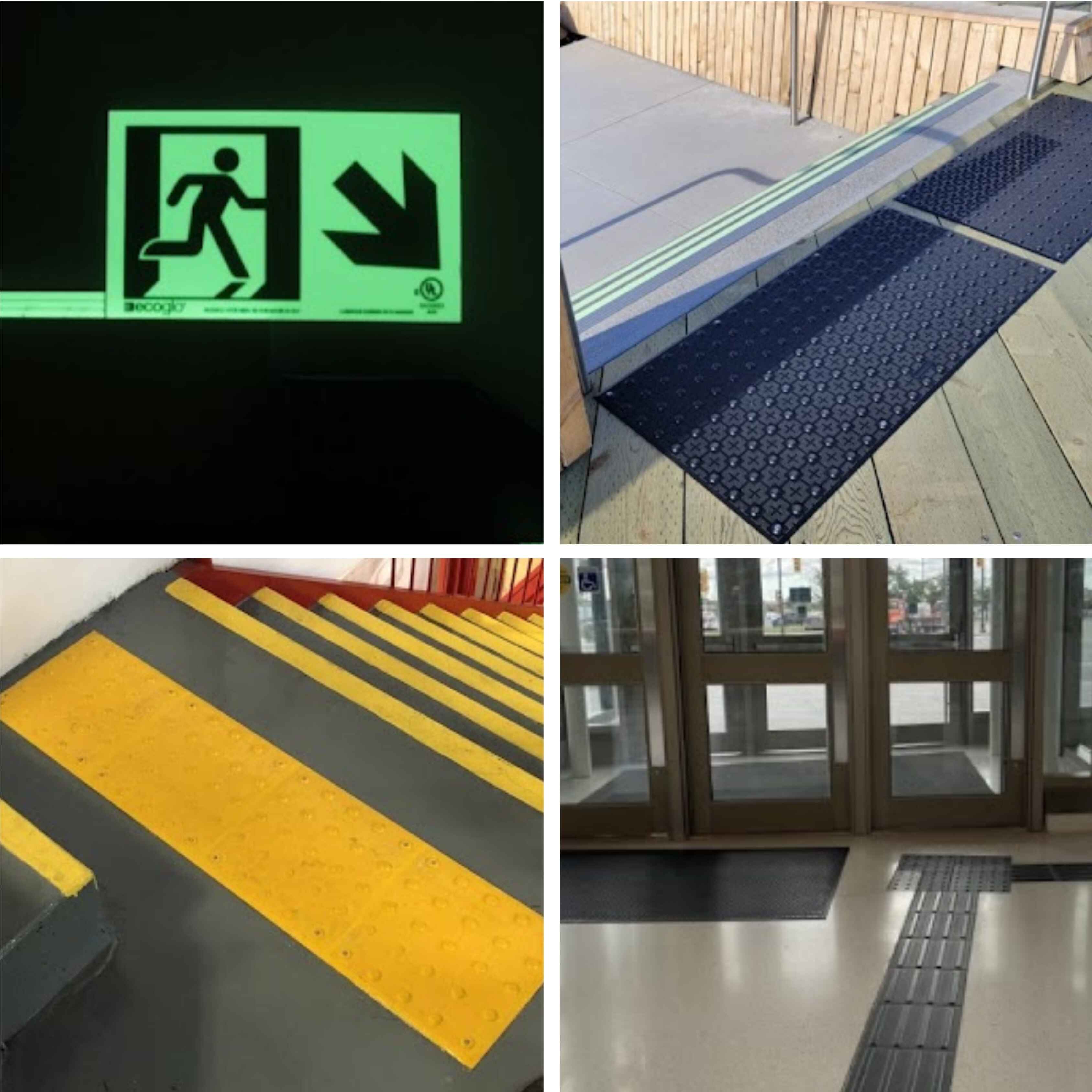
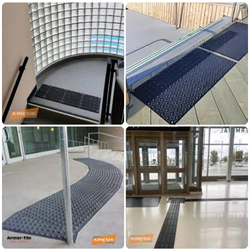
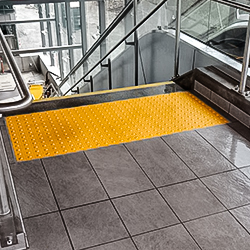
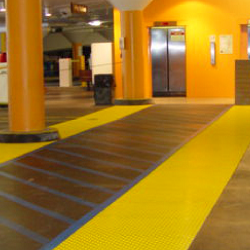
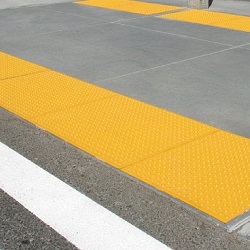
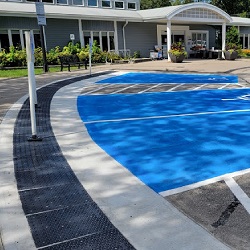
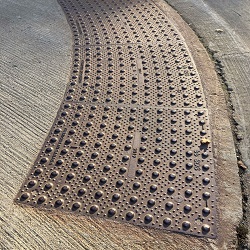
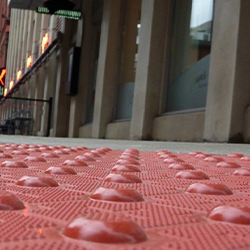
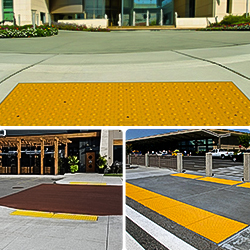
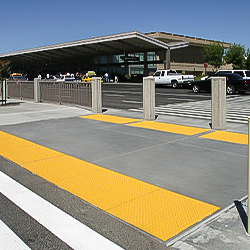
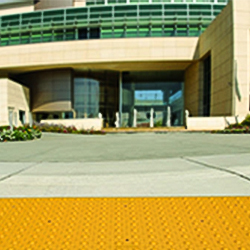
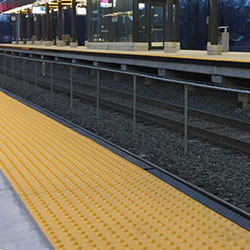
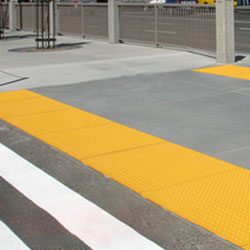
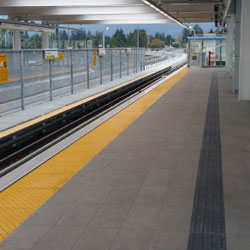
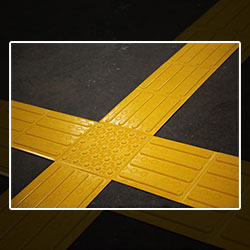
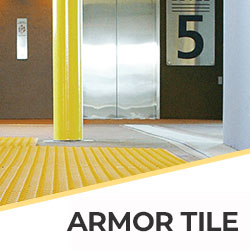
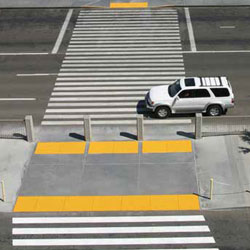
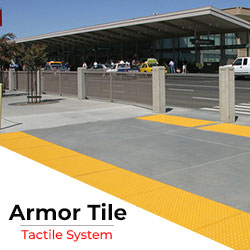
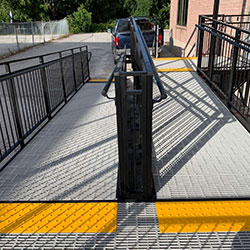
Busy transit platforms, municipal street corners, and high-volume commercial entrances take nonstop punishment from winter salt, grit, and thousands of boots every day. For these demanding zones, Armor-Tile Surface Applied sets the industry benchmark in Canada.
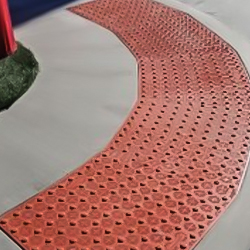
Older concrete sidewalks and aging commercial floors rarely sit perfectly flat. Rigid metal plates can rock or leave gaps along the perimeter if the existing concrete has minor waves or settling.
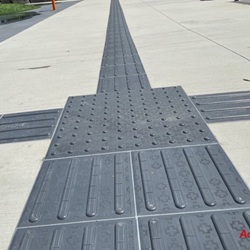
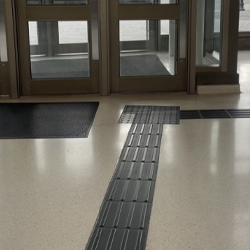
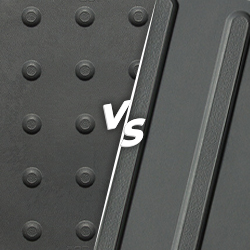
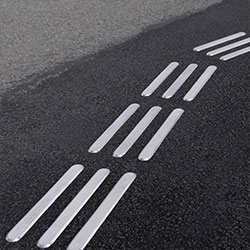
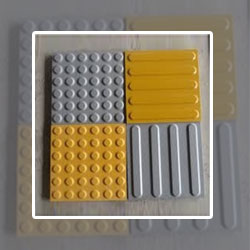
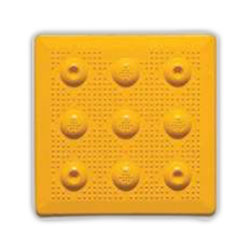
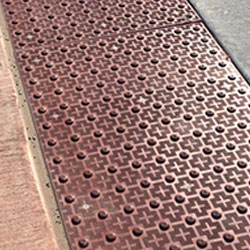
That is why contractors frequently turn to Access Tile Surface Applied Attention Domes for hazard zones and Access Tile Surface Applied Wayfinding Bars for open-concept directional paths.
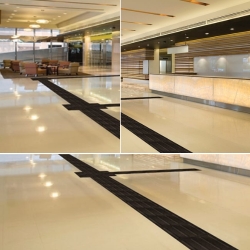
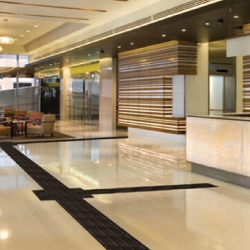
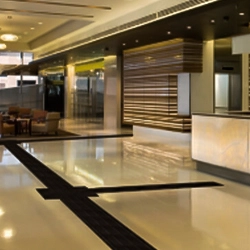
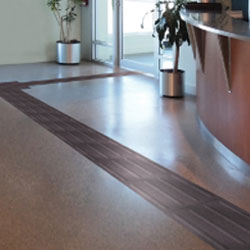
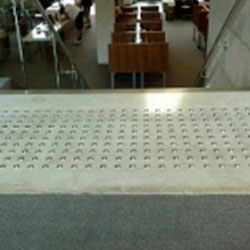
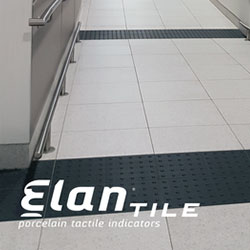
Sometimes a building manager is upgrading an upscale corporate atrium, a boutique hotel, or a heritage terrazzo lobby where covering expensive stone with a full polymer tile clashes with the architecture.
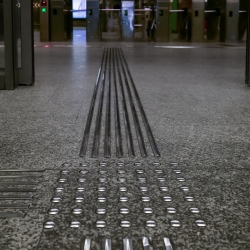
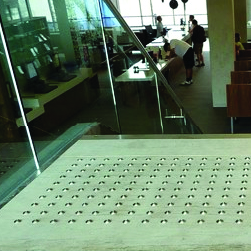
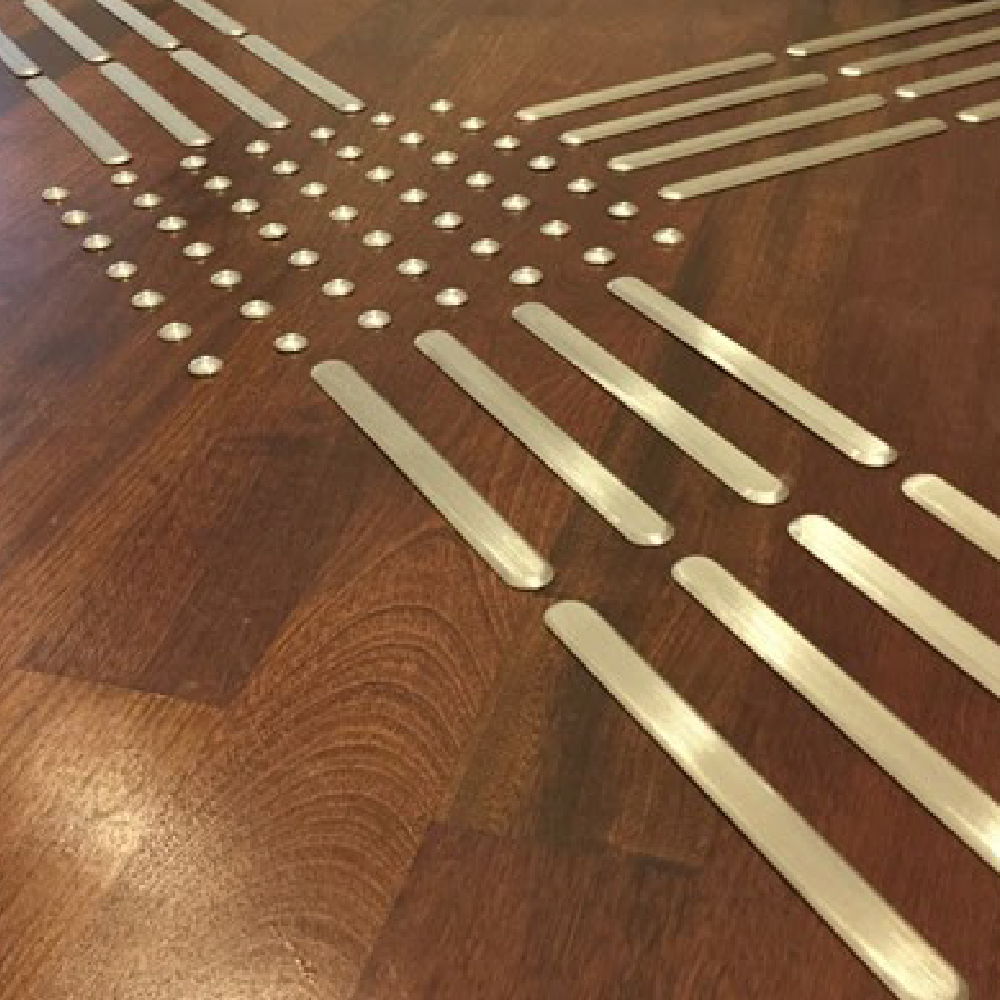
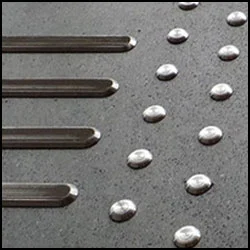
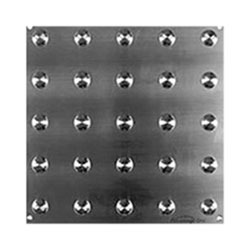
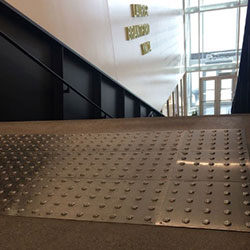
In those interiors, Advantage ONE Self-Adhesive Stainless Steel Domes and matching self-adhesive stainless steel wayfinding bars remove the perimeter border altogether.
A beveled tile is only as flat as the floor underneath it and the hands that install it. In the field, nearly every retrofit trip hazard traces back to rushed preparation rather than a product defect.
Watch out for these six common installation errors on your job site:
Freeze-thaw cycles, road salt, and snow clearing put intense stress on exterior retrofits. Running a quick ten-minute inspection every spring catches minor lifting long before a tenant trips or an inspector issues a deficiency notice.
Use this simple four-point check on every retrofit entrance, curb ramp, and stair landing:
If an inspection turns up cracked tiles or mismatched legacy layouts, you do not have to guess which replacement fits your floor. Our interactive Tactile Solution Finder matches your exact substrate, indoor or outdoor location, and code needs to the right retrofit product in less than a minute.
Retrofitting an older Canadian building for accessibility should solve a safety problem, not create a brand-new one. By choosing properly engineered beveled-edge surface-applied tactile tiles, prepping the substrate carefully, and locking every fastener flush, you protect visually impaired visitors, seniors, and everyday foot traffic without ever touching a jackhammer.
At Tactile Solution Canada, we stock CSA B651, NBC, and AODA compliant surface-applied systems engineered specifically for Canadian floors and Canadian winters. Explore our full lineup of tactile product categories, check provincial rules in our Canadian accessibility codes guide, or call our specialists at 1-877-761-5354 for a fast quote with product data sheets and installation instructions included.
Under CSA B651, the base surface of a Tactile Walking Surface Indicator should be flush with the surrounding floor, or not more than 3 mm above or below it, to prevent tripping. For general floor level transitions between 6 mm and 13 mm, Canadian codes require a beveled edge sloped no steeper than 1:2 (50%). Quality surface-applied tiles pair a low-profile base with a full perimeter bevel to stay safely within code limits.
Choose surface-applied beveled tiles whenever you are upgrading existing, cured concrete, asphalt, wood, or indoor tile where demolition is too costly or disruptive. Choose cast-in-place tactile plates only during new construction or when you are already pouring fresh wet concrete slabs for a broader renovation.
Under Canadian occupiers' liability laws and provincial accessibility regulations such as the AODA, the property owner, condo corporation, or commercial building manager bears legal responsibility for keeping pedestrian paths safe and maintained. Installing compliant tiles once is not enough; keeping fasteners tight and beveled edges sealed protects you against both personal injury claims and municipal compliance fines.
Low-grade mats rely on thin double-sided tape or weak glue and have thick, unsloped vertical edges. A plow blade strikes that blunt lip head-on and peels the entire sheet away. Heavy-duty fiberglass-reinforced polymer composite tiles feature tight perimeter bevels, recessed mechanical anchors, and full-bed structural polyurethane adhesive, allowing plow blades to ride over the edge without catching.
Watch for three early warning signs: visible dark gaps or hairline cracks in the perimeter caulking, corners that flex downward slightly when you press your heel on them, or a hollow sound when tapped. Catching early corner lift lets your maintenance crew clean, re-inject adhesive, and tighten anchors in minutes instead of replacing a shattered panel later.
Yes, provided the underlying surface is structurally sound, level, and properly prepared. Asphalt requires clean, uncracked pavement with outdoor-rated adhesives and longer anchors. Indoor ceramic or porcelain tile needs light surface scuffing or degreasing so the adhesive bonds tightly, while uneven interlocking pavers should be stabilized or replaced with a smooth concrete base pad before mounting surface-applied units.