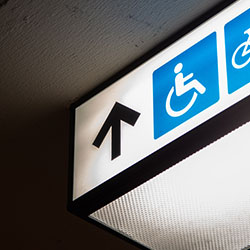
Good wayfinding does not interrupt a space. It quietly teaches the floor how to speak.
Open-concept buildings look simple on paper. Wide lobbies. Clean sightlines. Seamless flooring. Fewer walls. More light. More breathing room.
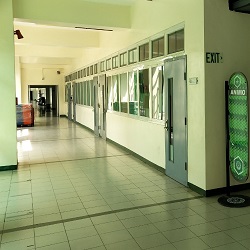
But anyone who has walked into a large condo lobby, hospital atrium, shopping centre, civic building, or transit concourse knows the truth. Open space can also be confusing space.
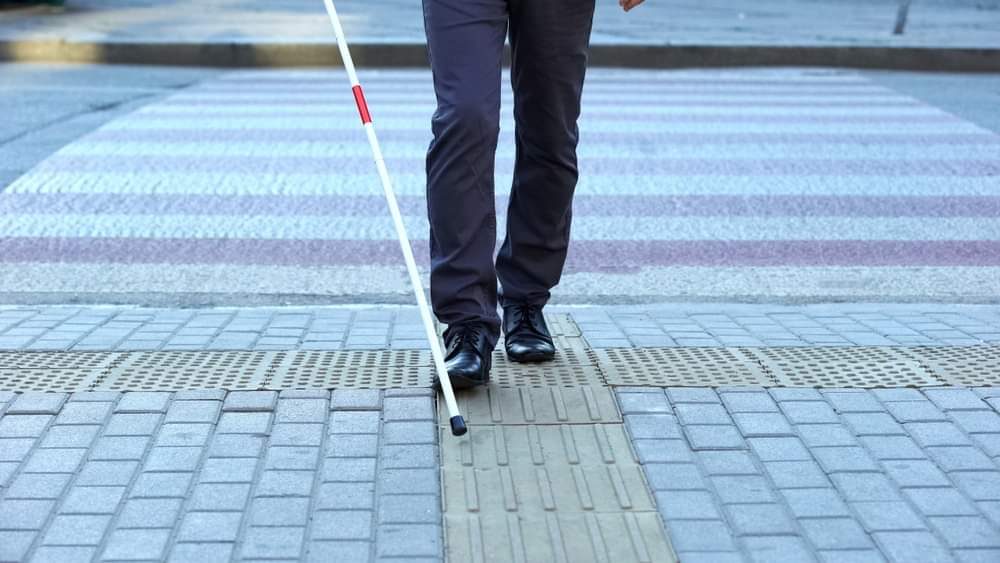
For a person with vision loss, that confusion can be more than inconvenient. It can affect independence, safety, confidence, and dignity.
That is where tactile wayfinding steps in.
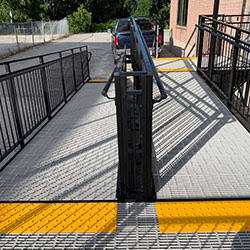
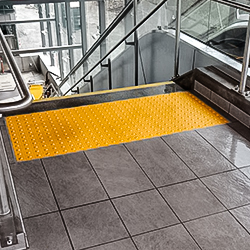
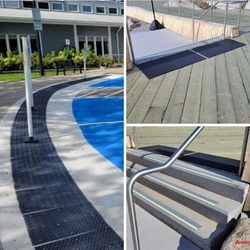
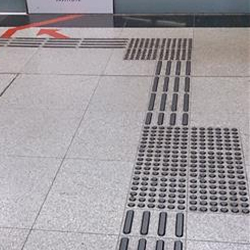
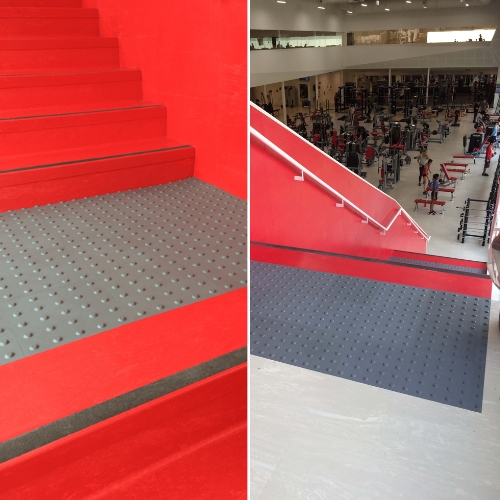
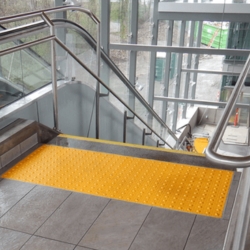
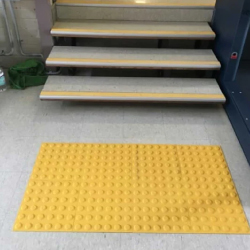
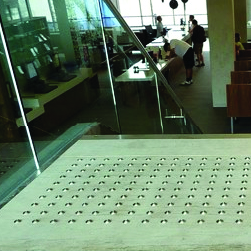
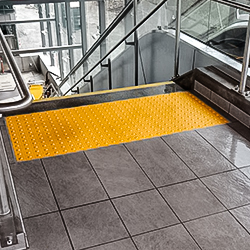
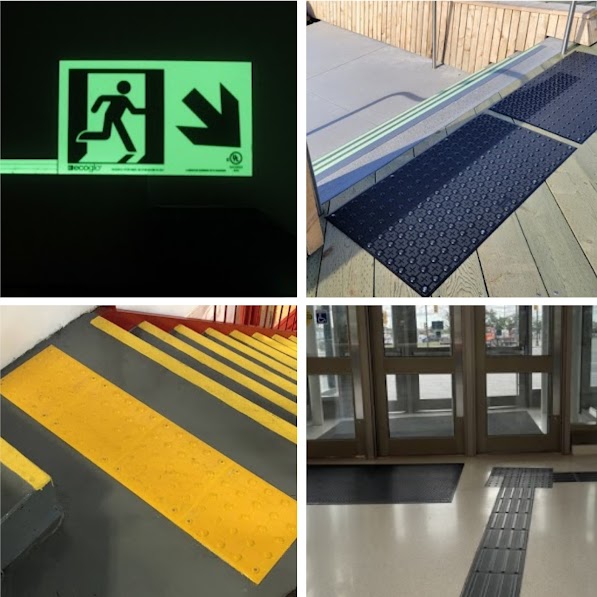
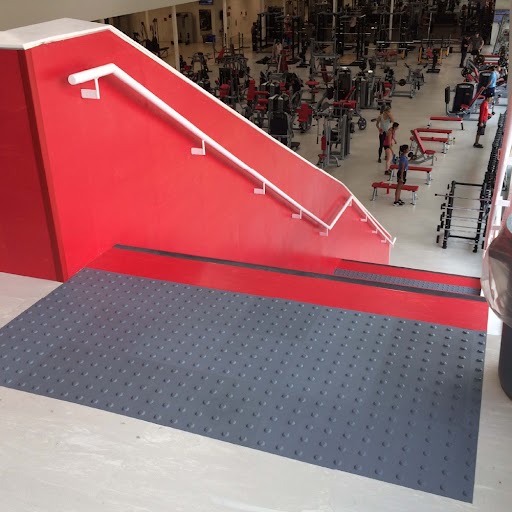
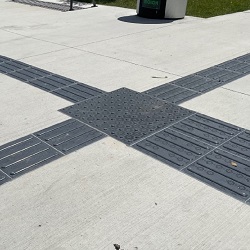
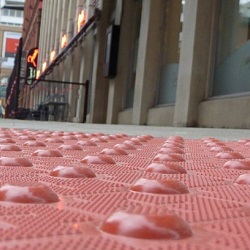
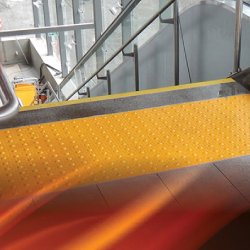
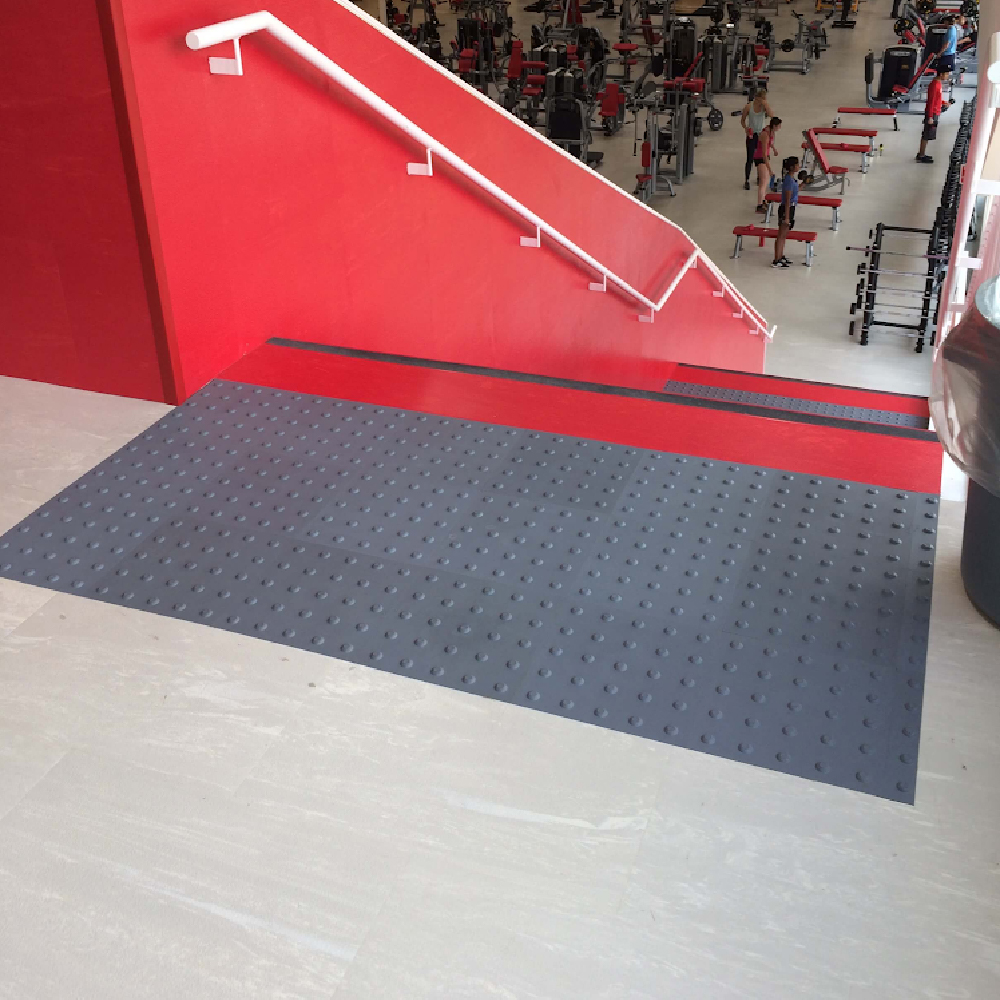
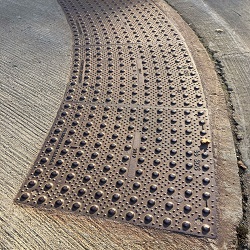
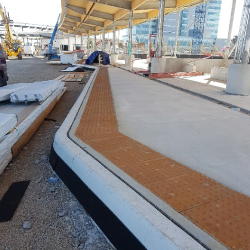
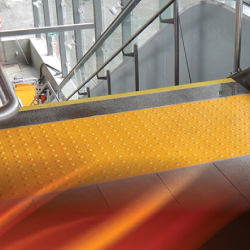
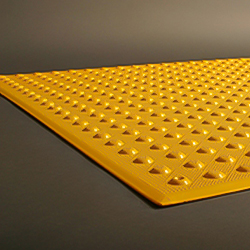
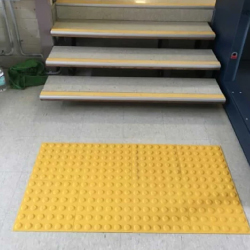
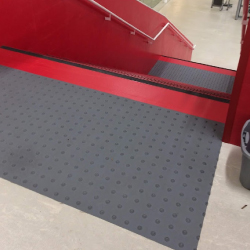
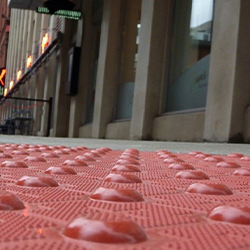
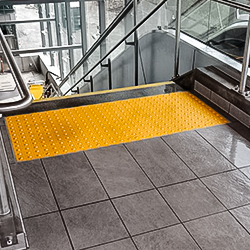
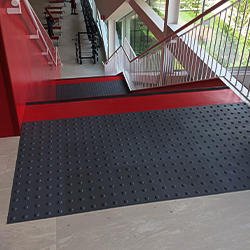
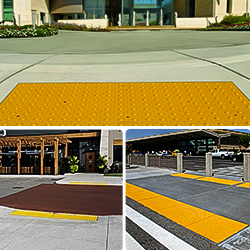
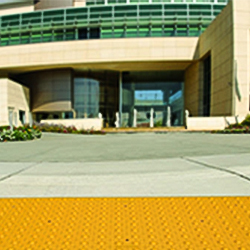
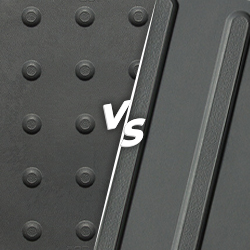
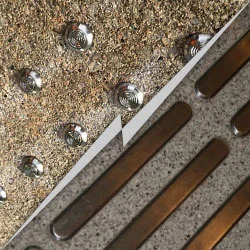
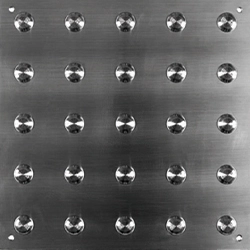
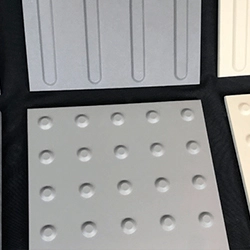
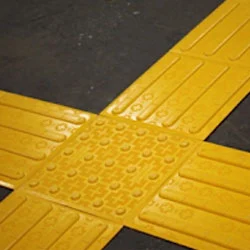
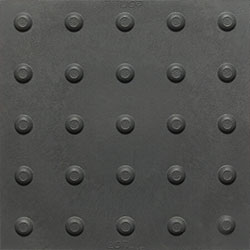
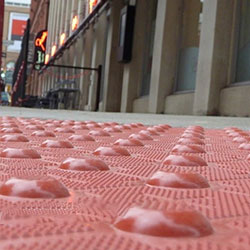
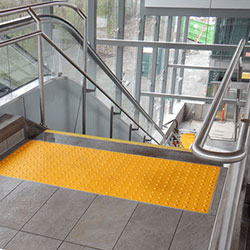
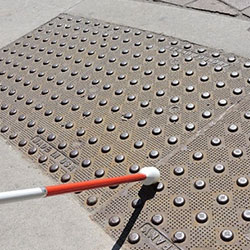
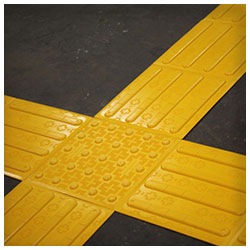
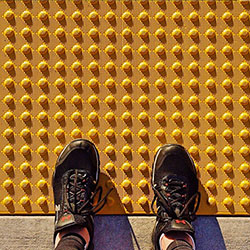
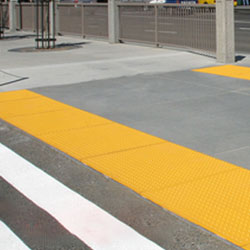
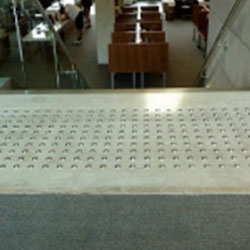
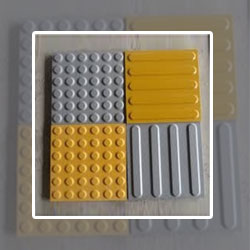
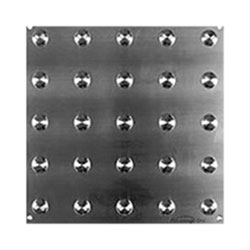
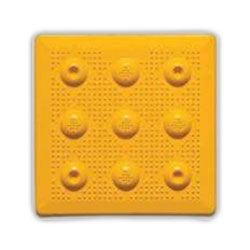
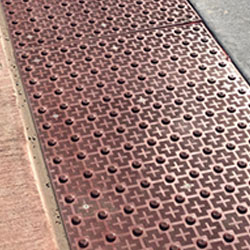
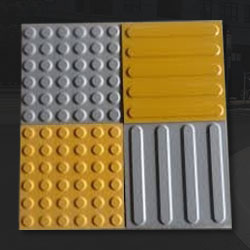
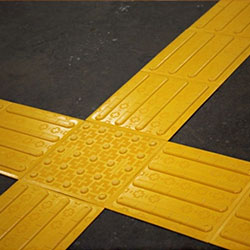
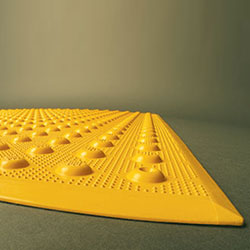
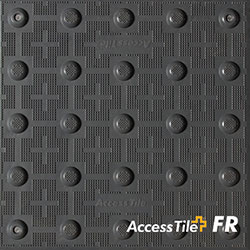
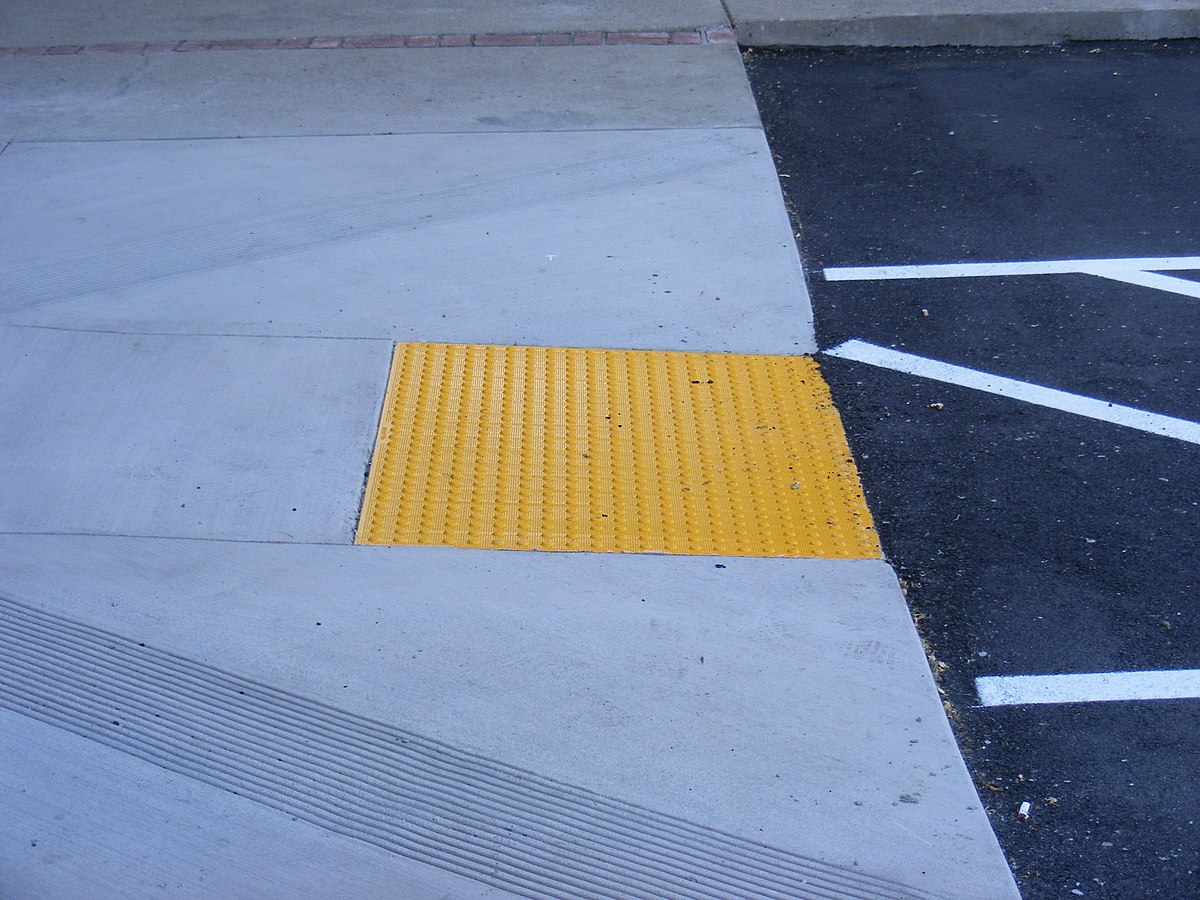
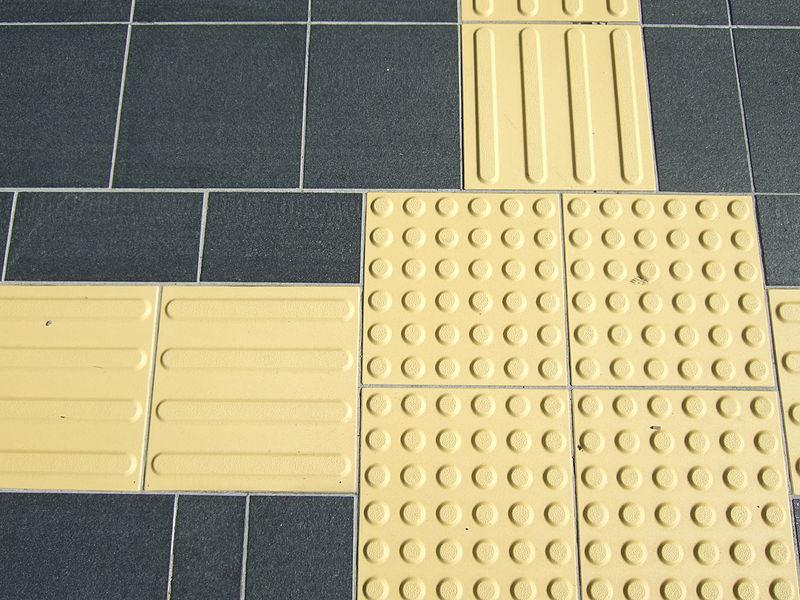
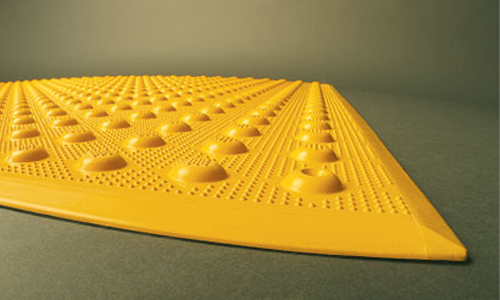
Tactile Walking Surface Indicators, often called TWSIs, are detectable floor surfaces that help people with low vision or blindness navigate built environments. In Canadian accessibility design, they generally fall into two families: attention domes that warn of hazards and directional wayfinding bars that guide movement along a safe route.
In an open-concept floor plan, the challenge is not just adding tactile products. The real challenge is adding them in a way that feels intentional, clean, code-aware, and aligned with the architect’s design vision.
The good news is that this is completely possible when accessibility is planned early, and the right products are selected for the right surfaces.
Open-concept interiors are popular because they feel flexible and modern. They help designers create brighter public spaces, smoother circulation, and better visual connection between zones.
But the same openness can remove the orientation cues many people rely on.
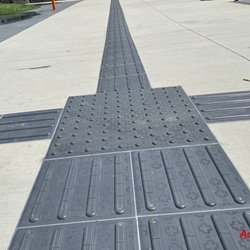
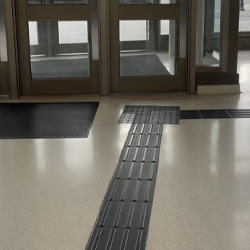
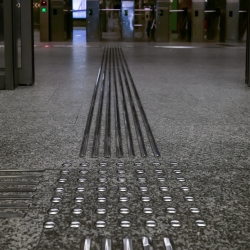
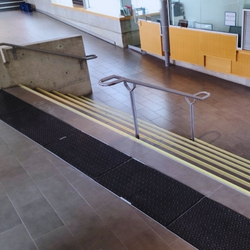
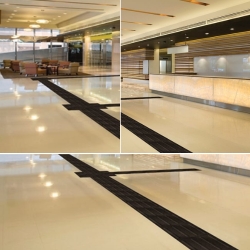
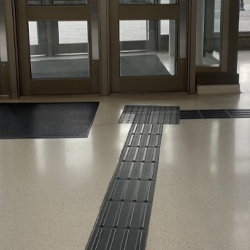
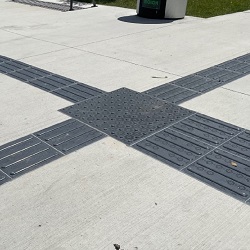
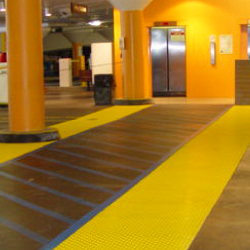
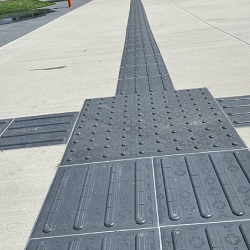
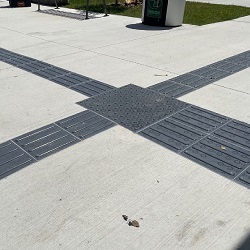
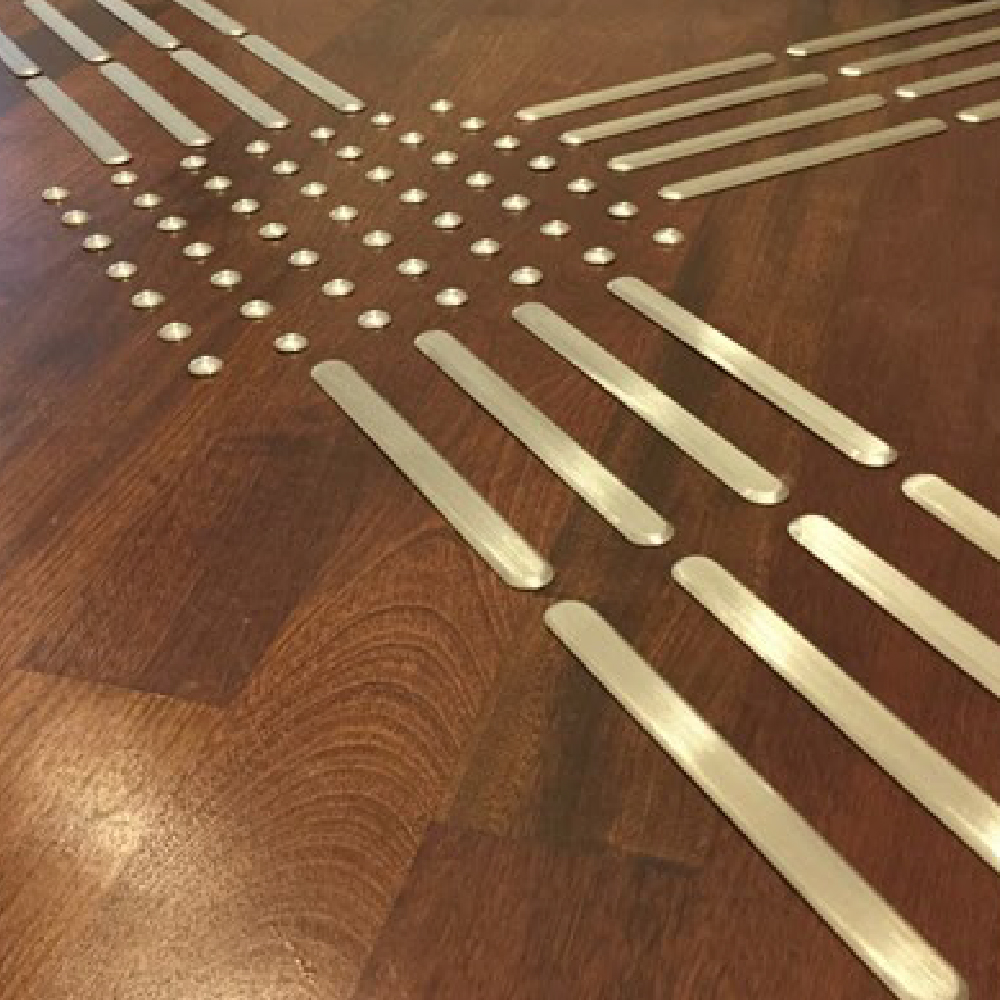
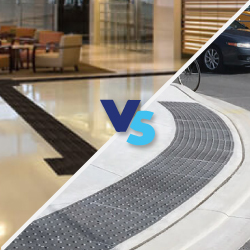
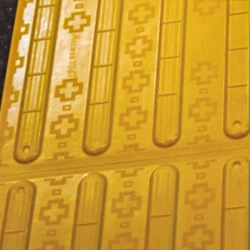
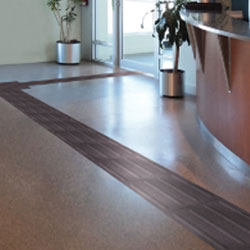
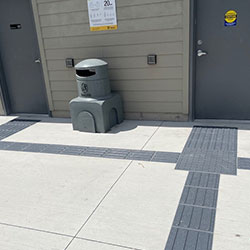
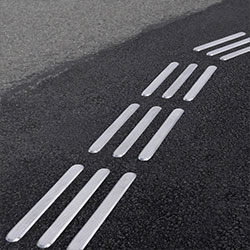
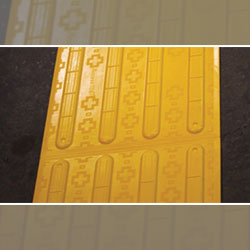
Directional tactile indicators solve that problem by creating a detectable route underfoot and under a cane. They help guide people from one important point to another, such as the entrance to reception, reception to elevators, elevators to washrooms, or lobby to exit stairs.
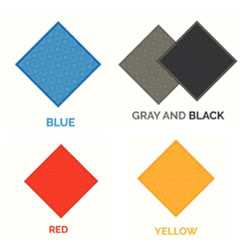
Accessibility Standards Canada notes that direction indicators should provide strong luminance contrast with the surrounding surface and should be built from parallel flat-topped elongated bars that run in the direction of travel. Direction indicators should also not be yellow, so they remain visually distinct from attention indicators.
That one detail matters a lot in design. It means tactile wayfinding does not have to look like a warning field. It can be refined, measured, and visually coordinated with the floor finish.
Before choosing stainless steel, porcelain, rubber, polymer, or cast-in-place systems, start with a simple question:
Walk the floor plan as if you are arriving for the first time.
You may notice that the “obvious” route on the drawing is not obvious in real life. A visitor entering through a vestibule may face a wide stone floor with no clear centreline. A resident may need to find the elevator bank without crossing lounge seating. A patient may need to move from entrance to reception while avoiding planters, columns, and seating clusters.
The tactile path should answer those moments.
A strong open-concept tactile plan usually connects:
The goal is not to fill the entire floor with tactile indicators. The goal is to create a clear, consistent, detectable path that helps people move with confidence.
Late tactile planning is where beautiful spaces get expensive.
Tactile Solution Canada’s pre-construction accessibility planning guide makes this point clearly. When TWSIs, stair nosing, and photoluminescent egress systems are ignored until inspection, developers can face delayed occupancy, emergency labour, and costly retrofits into finished surfaces.
That is exactly what open-concept projects should avoid.
When tactile wayfinding is planned during the blueprint stage, the design team can coordinate:
This turns tactile design from a late-stage fix into an architectural detail.
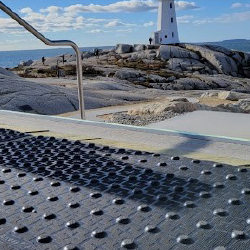
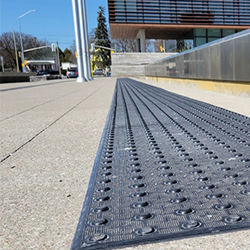
For new construction, Access Tile Cast In Place Wayfinding Bars are a strong option where the route can be embedded into wet-set concrete. They are designed as replaceable cast-in-place tactile wayfinding indicators and are suited for guiding pedestrians through large open floor areas, including shopping malls and transportation terminals.
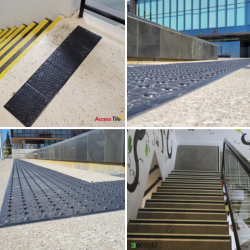
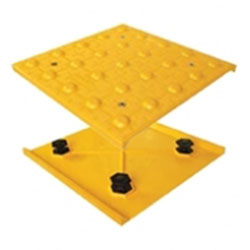
For existing buildings, Access Tile Surface Applied Wayfinding Bars offer a retrofit-friendly solution. These tiles can be installed on existing cured concrete surfaces, and their bevelled edges support a smoother transition while helping create barrier-free pathways.
That difference matters for contractors. New slab? Think cast-in-place. Existing surface? Consider surface-applied. Premium interior? Stainless steel or porcelain may better suit the finish package.
Open-concept buildings are not all the same. A hospital concourse, condo lobby, civic atrium, university building, office tower, and luxury retail space each need a different balance of durability, appearance, installation speed, and maintenance.
Here is how actual Tactile Solution products can fit into the design conversation.
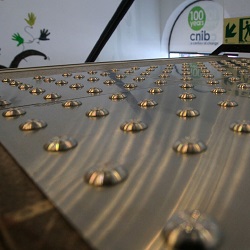
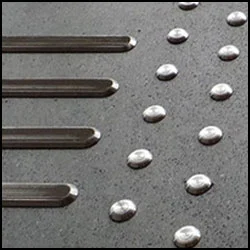
For refined interiors, Advantage Stainless Steel Bars Drilled to the Floor can give the route a clean, architectural look. These individual wayfinding bars are made from 316L marine-grade stainless steel and include an integral texture for slip resistance.
They work especially well when the building already uses stainless steel elevator frames, metal reception details, glass railings, or brushed hardware. Instead of looking like an add-on, the tactile route can echo the existing metal language.
Where drilling is not suitable, Advantage Stainless Steel Bars Self Adhesive can be considered for many interior applications where anchored installation is inappropriate or impossible. They combine stainless steel wayfinding bars with a rubber base and self-adhering permanent tape.
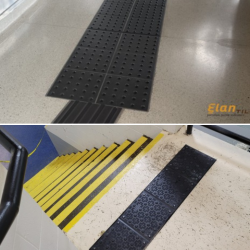
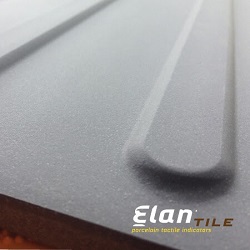
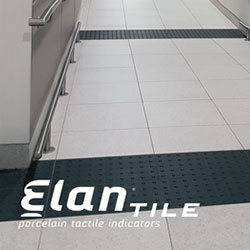
For interiors where the flooring needs a softer architectural finish, Elan Tile Porcelain Wayfinding Bars are a strong, design-friendly option.
Elan porcelain wayfinding bars are built for style and performance. They are suitable for interior and exterior environments, resistant to water, stains, chemicals, frost, thermal shock, and deep abrasions, and they provide a refined porcelain surface that can sit comfortably beside tile, stone, or porcelain field flooring.
For architects who worry that tactile indicators will make a lobby feel “too industrial,” porcelain is often a useful middle ground.
For schools, hospitals, shopping centres, libraries, municipal buildings, and institutional corridors, Eon Tile Rubber Wayfinding Bars offer a durable and flexible surface option.
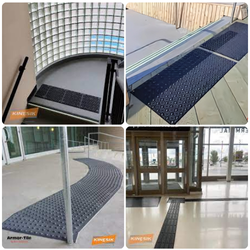
Eon rubber wayfinding bars are made from premium long-lasting rubber and are designed for commercial, institutional, and public environments. They can be shaped, worked, and used for both initial installations and surface retrofits. Their available colours help support visual contrast based on the surrounding floor.
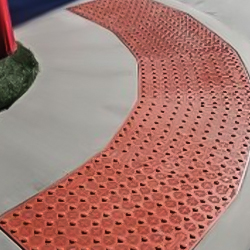
This is useful in spaces where the route may pass through curved circulation areas or surfaces that need some installation flexibility.
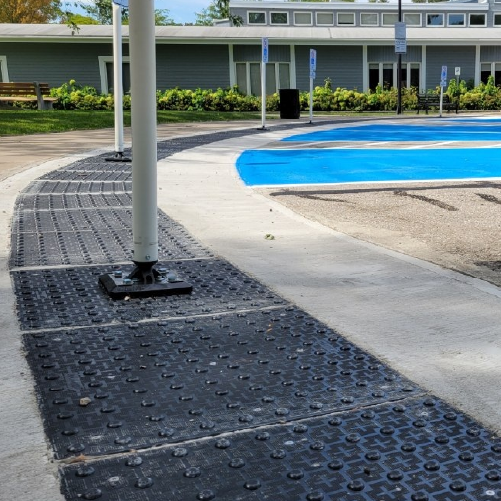
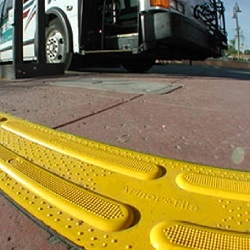
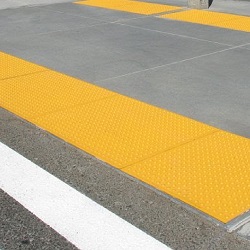
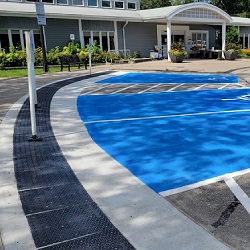
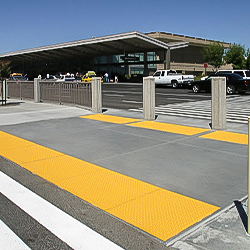
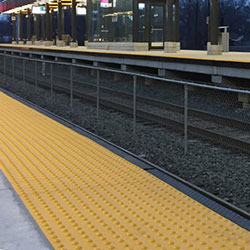
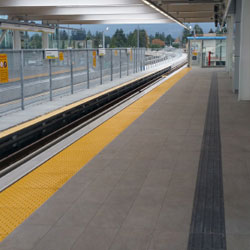
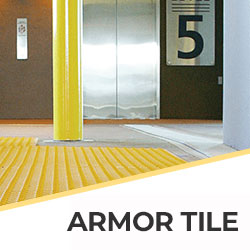
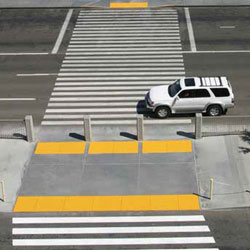
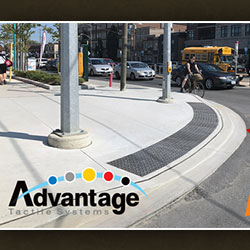
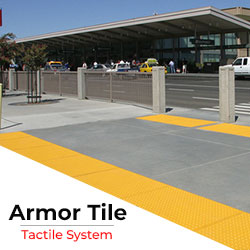
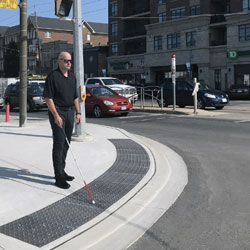
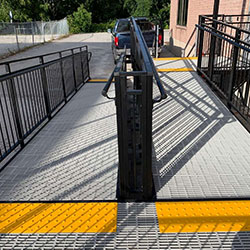
For exterior areas, parking connections, curb ramps, stair approaches, and building entrances, Armor Tile Tactile System products are built for demanding applications. Armor Tile offers AODA, CSA, ISO, and OBC-compliant detectable tactile warning products for locations such as transit platforms, curb ramps, stairwells, escalator approaches, pedestrian crossings, parking areas, and building entrances.
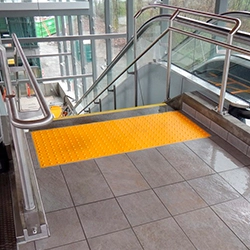
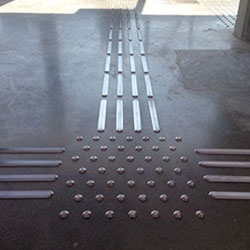
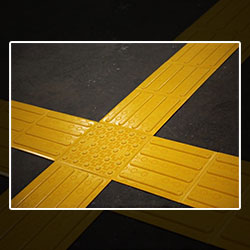
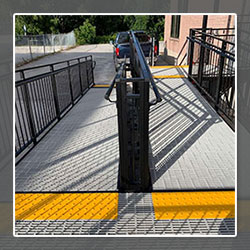
In open-concept design, the transition from outdoor plaza to indoor lobby is often where guidance and warning need to work together. Directional bars may guide users to the entrance, while attention domes warn at curb ramps, stairheads, or unsafe edges.
Many designers worry that tactile indicators will visually disrupt a minimalist floor. That concern is understandable, especially in high-end lobbies where the floor finish may be one of the most expensive features in the project.
But contrast is not optional decoration. It is part of usability.
The smart approach is to choose contrast that feels deliberate.
For example:
The tactile path should be visible enough for people with low vision and detectable enough for cane users, while still feeling like it belongs to the interior scheme.
That balance is where early sampling helps. Do not approve tactile material from a catalogue alone. Place physical samples beside the actual floor finish under real project lighting.
Open-concept design often focuses on the main floor, but accessibility does not stop at the lobby.
Stairs, exit paths, and emergency routes need the same level of planning.
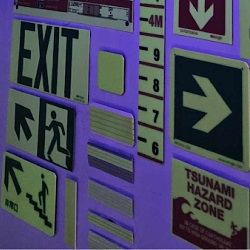
Tactile Solutions’ contractor checklist highlights the importance of checking emergency egress elements such as stairs, directional exit signs, photoluminescent exit signs, and stair nosing as part of installation and maintenance planning.
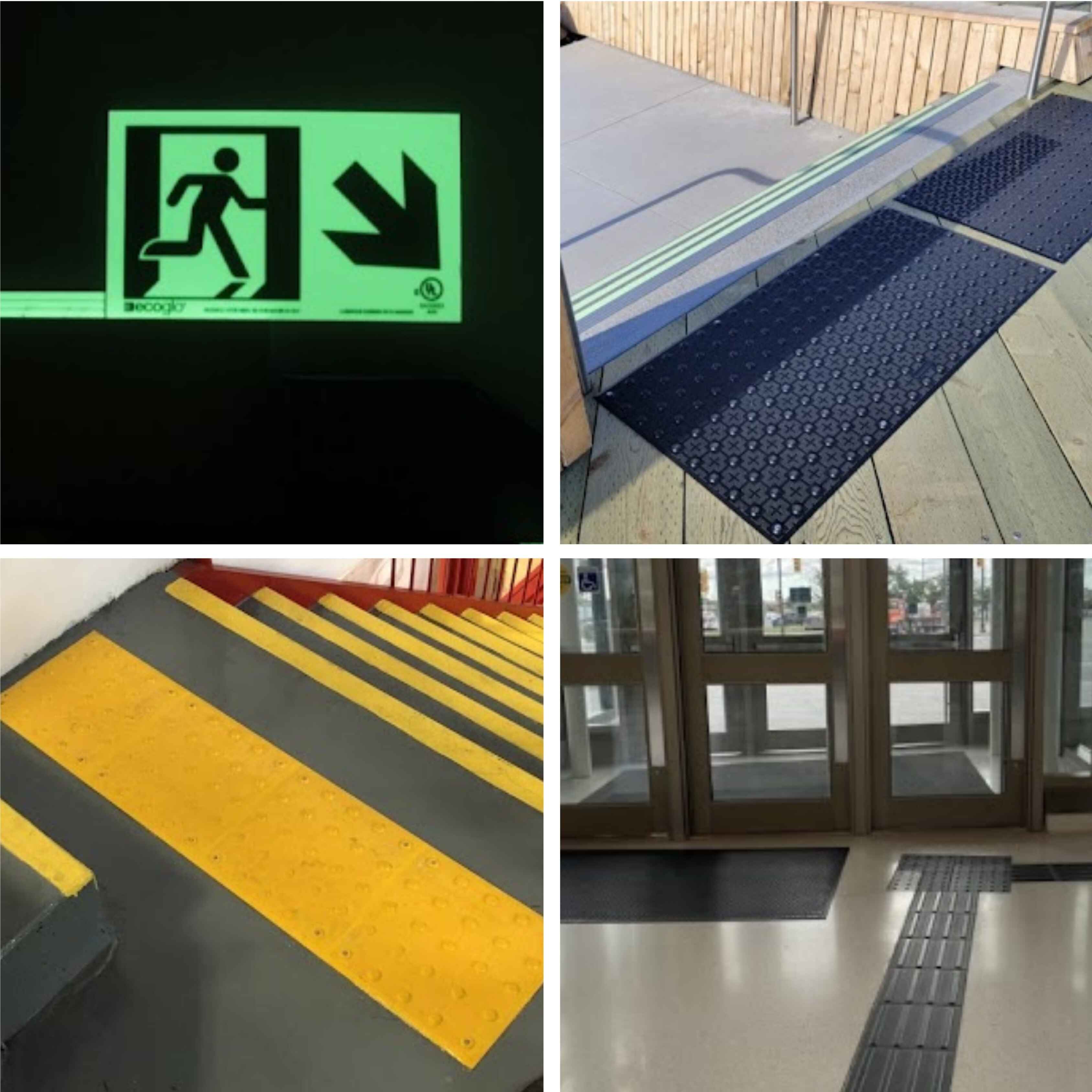
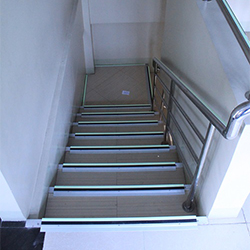
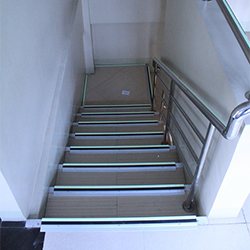
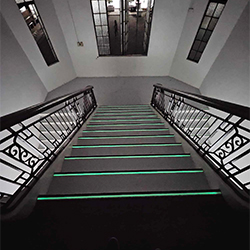
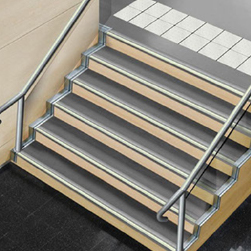
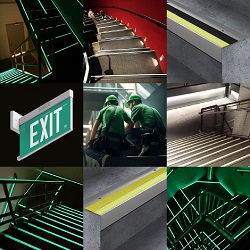
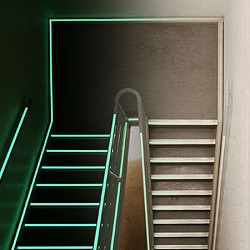
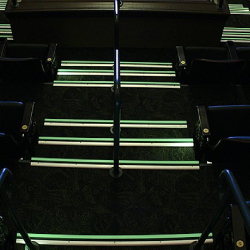
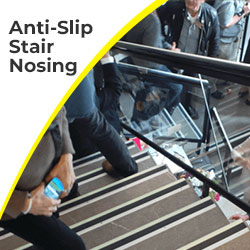
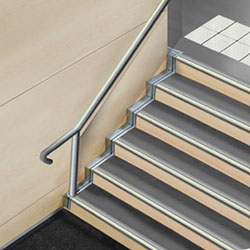
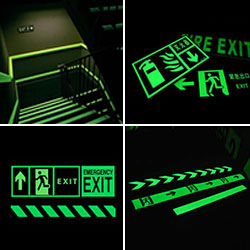
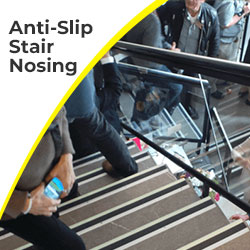
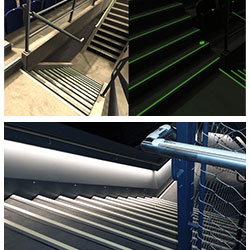
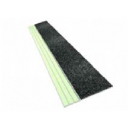
For stair safety, Ecoglo Stair Nosing products help define step edges and improve slip resistance. Ecoglo stair safety strips are designed to provide durable pathfinding support in indoor and outdoor settings.
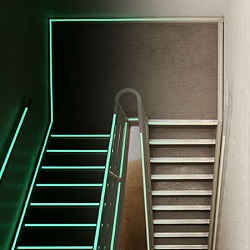
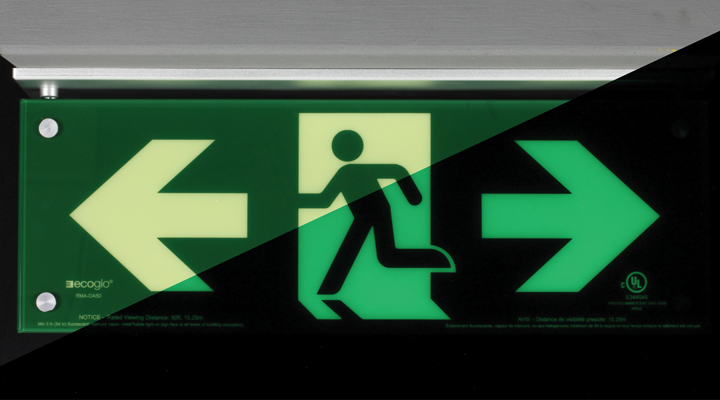
For buildings where power outages and emergency evacuation are a serious concern, Ecoglo Photoluminescent Surface Applied Anti-Slip Contrast Strips provide step-edge visibility in light and dark conditions. They charge from overhead or natural lighting and support luminous path marking.
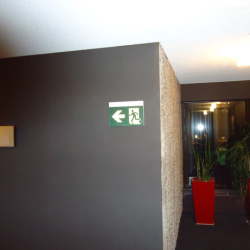
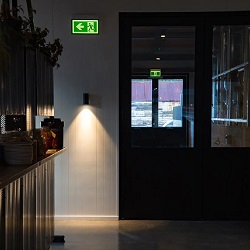
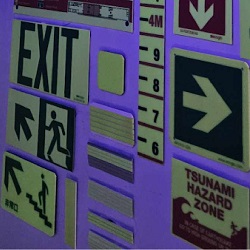
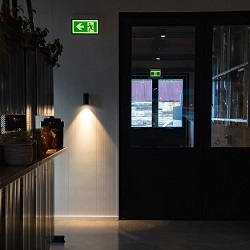
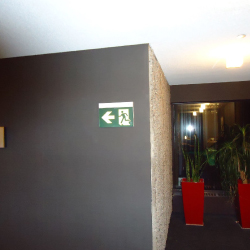
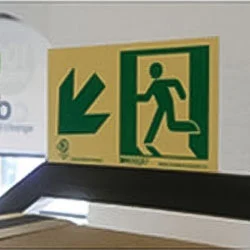
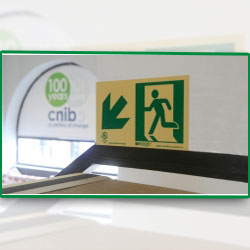
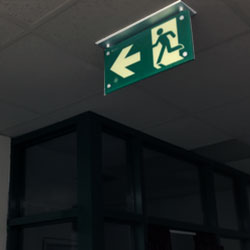
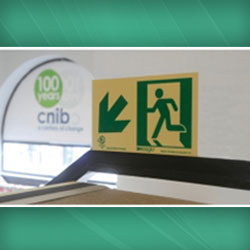
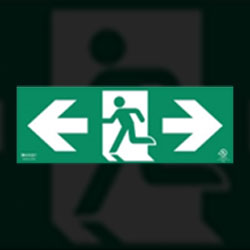
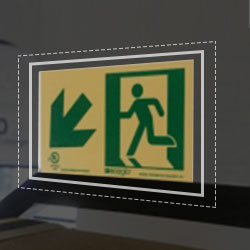
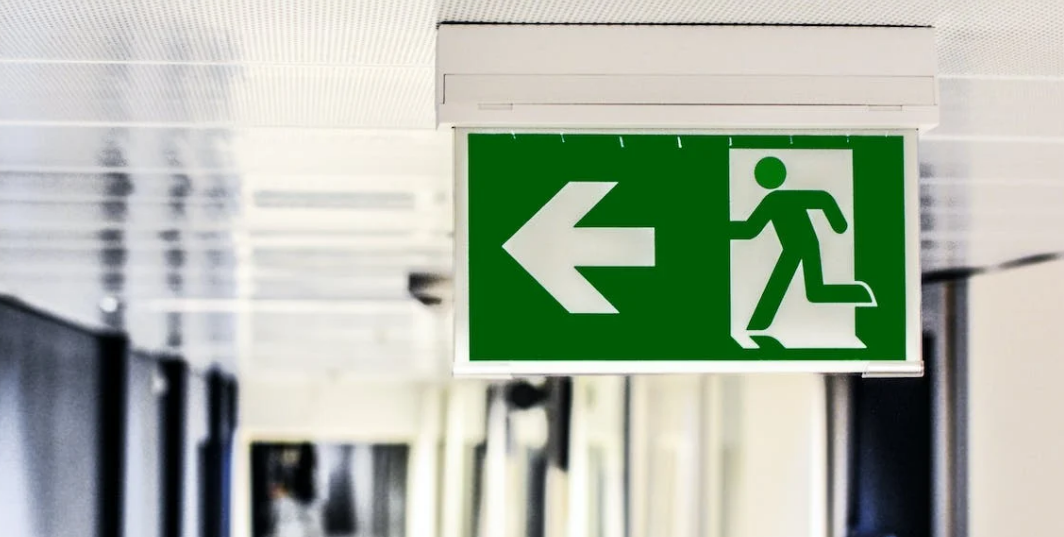
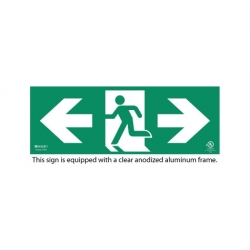
To support exit movement, Ecoglo Directional Signage and Ecoglo Photoluminescent Exit Signs can help guide occupants toward emergency exits when lighting conditions change.
In simple terms, the floor, stairs, and signs should tell the same story.
Here is a practical sequence for contractors, building managers, landscapers, architects, and building owners.
Start with the most important route. Usually, this is entrance to reception, entrance to elevators, or lobby to exit access.
Do not overcomplicate the path with too many branches. A clean route is easier to understand and easier to maintain.
Use wayfinding bars for direction. Use attention domes for hazards.
That distinction helps users understand whether they should continue forward or stop and assess the condition ahead.
Align tactile bars with tile joints, ceiling lines, lighting coves, column grids, millwork, or elevator portals.
When the tactile path respects the building’s geometry, it feels planned rather than imposed.
Use stainless steel where you want a premium interior finish. Use porcelain where the route should blend with refined tile or stone. Use rubber where flexibility and public-use durability matter. Use cast-in-place or heavy-duty systems where exterior wear, snow, salt, and pedestrian traffic are factors.
The Find Right Solution tool is useful for sorting options by indoor or outdoor use, attention domes or wayfinding bars, surface-applied or cast-in-place installation, and material type.
This is where many projects save time and money.
If the tactile route is selected after the floor is installed, contractors may need to drill, grind, cut, patch, or retrofit. If it is planned before installation, the route can be coordinated with slab work, tile layout, expansion joints, and finish transitions.
A tactile route that looks clear in daylight may disappear under evening lighting. Glare from polished stone can also reduce visibility.
Always review tactile samples in real lighting conditions.
Maintenance protects both safety and appearance. Tactile Solution’s contractor checklist recommends sweeping tiles weekly to remove dirt and debris that can reduce detectability. It also recommends quarterly inspections for worn domes, fading colours, and loose anchors.
This is especially important in open-concept buildings, where tactile systems are highly visible and constantly used.
Use this quick guide when matching product type to project condition.
New concrete routes, exterior approaches, large open public routes : Access Tile Cast In Place Wayfinding Bars
Existing concrete surfaces or retrofit upgrades : Access Tile Surface Applied Wayfinding Bars
Premium lobbies, office towers, hotels, and refined interiors : Advantage Stainless Steel Bars Drilled to the Floor
Interior areas where drilling is not suitable : Advantage Stainless Steel Bars Self Adhesive
Modern tile, stone, porcelain, or design-sensitive interiors : Elan Tile Porcelain Wayfinding Bars
High-traffic institutional and public spaces : Eon Tile Rubber Wayfinding Bars
Curb ramps, entrances, transit zones, and heavy-use warning areas : Armor Tile Tactile System
Stair edge contrast and slip resistance : Ecoglo Stair Nosing
Emergency path visibility during low-light conditions : Ecoglo Directional Signage
Tactile wayfinding uses raised directional bars to create a detectable route through open spaces. It helps people with vision loss move from entrances to key destinations such as reception desks, elevators, washrooms, stairs, and exits.
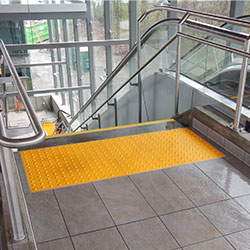
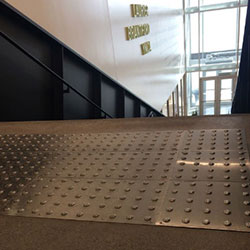
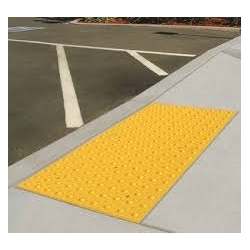
Tactile domes are attention indicators. They warn users about hazards or decision points, such as stairs, platform edges, curb ramps, or unsafe transitions. Tactile bars are directional indicators. They guide users along a safe path of travel.
Yes. Products such as Advantage Stainless Steel Bars Drilled to the Floor and Elan Tile Porcelain Wayfinding Bars can support accessibility while keeping the interior clean, modern, and design-conscious.
For existing cured concrete surfaces, Access Tile Surface Applied Wayfinding Bars are designed for retrofit applications. For certain premium interiors where drilling is not practical, Advantage Stainless Steel Bars Self Adhesive may also be suitable.
For new construction or major exterior work, Access Tile Cast In Place Wayfinding Bars can be embedded into wet-set concrete. This helps integrate the tactile route earlier in the build and can reduce the need for later surface retrofits.
Accessibility Standards Canada notes that direction indicators should not be yellow, helping differentiate them from attention indicators. They should still provide proper luminance contrast with the surrounding floor surface.
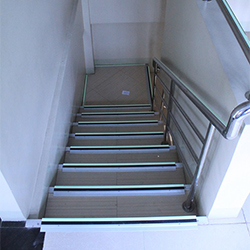
Photoluminescent stair nosings help define stair edges in low-light or blackout conditions. Products such as Ecoglo Photoluminescent Surface Applied Anti-Slip Contrast Strips provide visible step-edge guidance and slip-resistant support for stairs.
Architects, contractors, building owners, facility managers, landscapers, accessibility consultants, and code advisors should all be involved early. The earlier tactile wayfinding is coordinated, the easier it is to protect both compliance and design intent.
Open-concept design should feel free, not confusing.
When tactile wayfinding is treated as an afterthought, it can look like a patch. When it is planned early, it becomes part of the building’s language.
That is what contractors, building managers, landscapers, and owners should aim for in Canadian public and commercial spaces.
Do not wait until inspection to ask where tactile indicators belong. Start with the human route. Choose the product that fits the surface, traffic level, and design finish. Coordinate contrast with care. Maintain the installation after handover.
With Tactile Solution Canada’s code-compliant wayfinding bars, attention domes, stair nosing, and photoluminescent exit signage, open-concept spaces can remain beautiful while becoming safer, clearer, and more welcoming for everyone who moves through them.