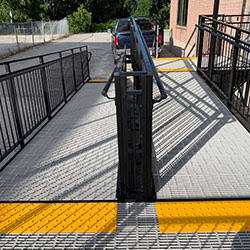
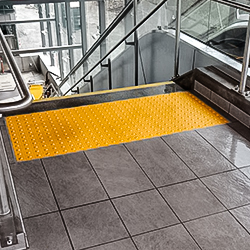
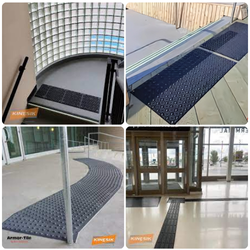
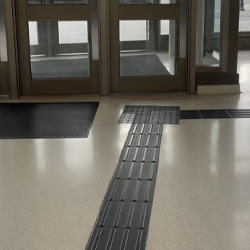
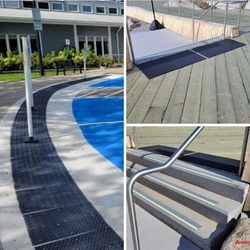
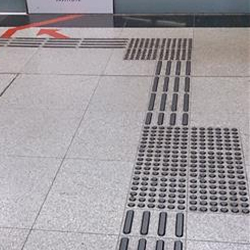
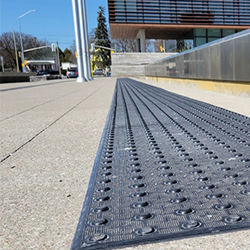
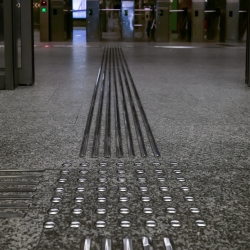
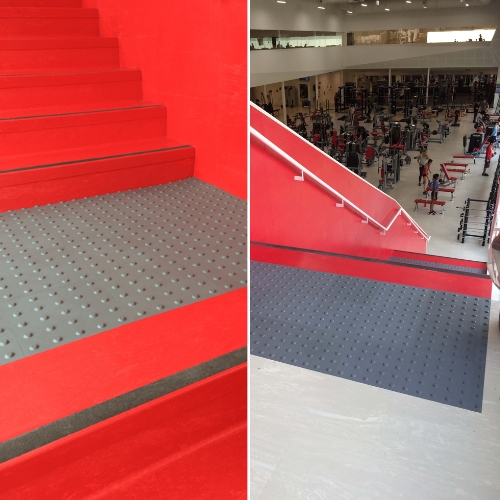
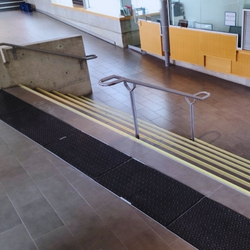
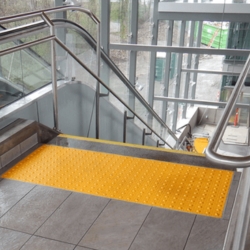
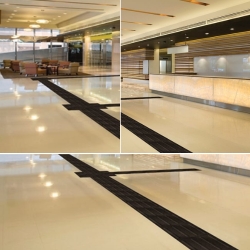
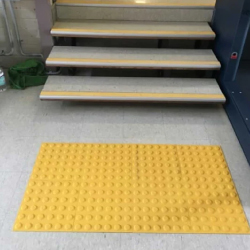
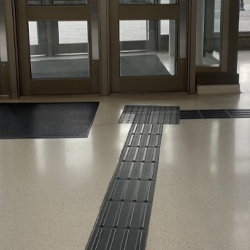
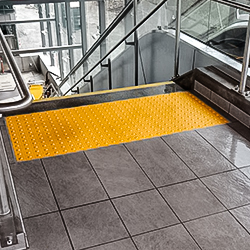
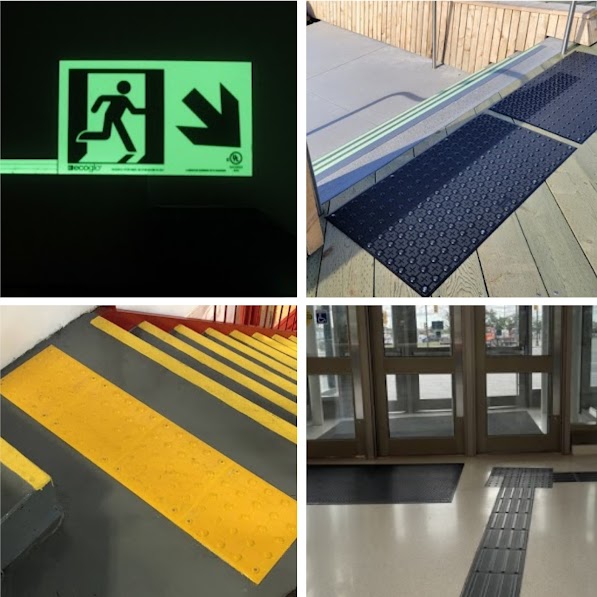
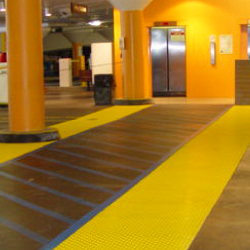
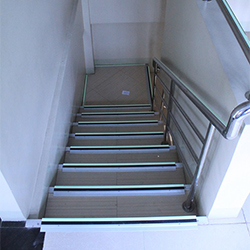
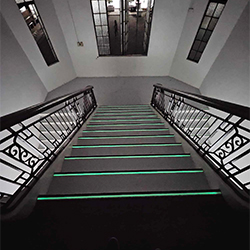
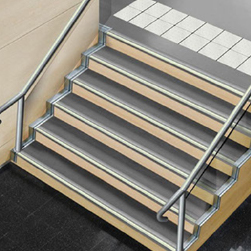
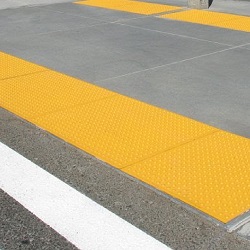
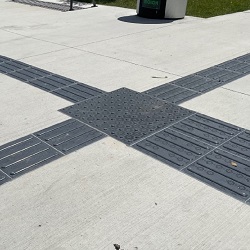
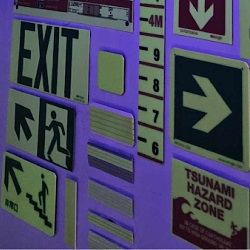
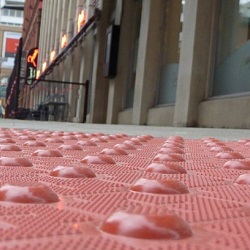
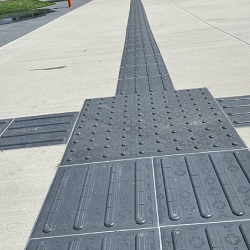
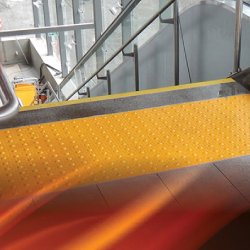
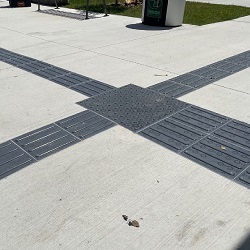
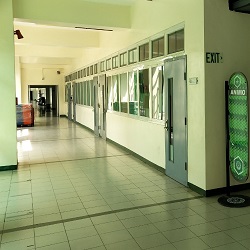
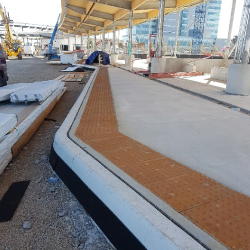
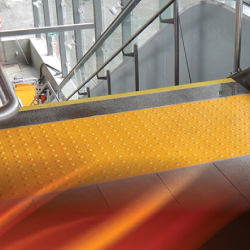
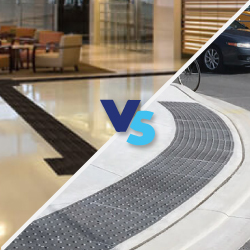
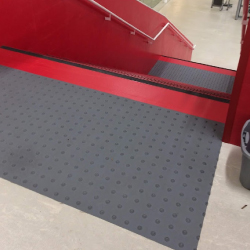
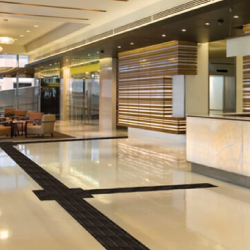
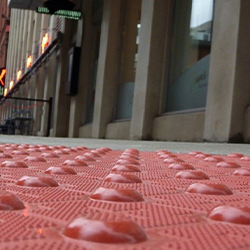
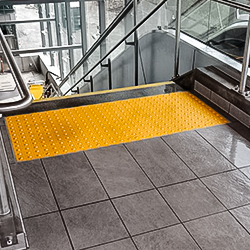
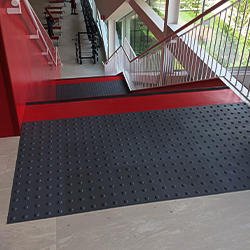
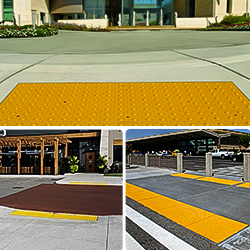
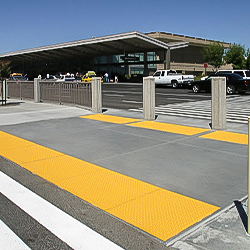
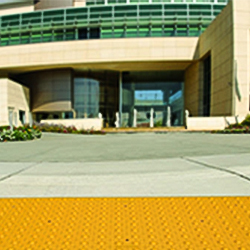
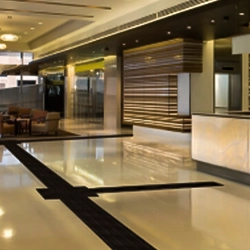
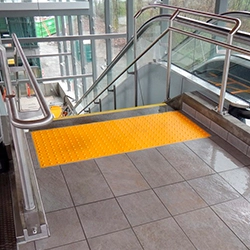
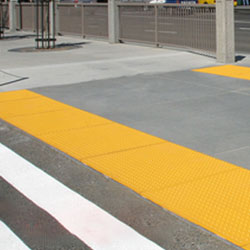
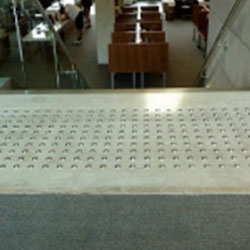
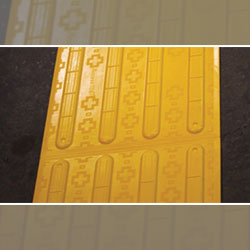
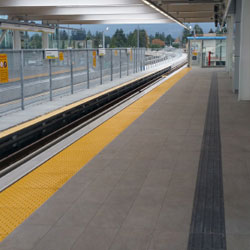
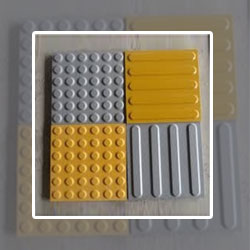
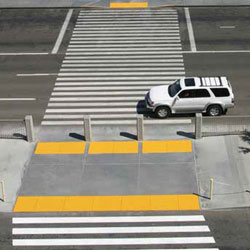
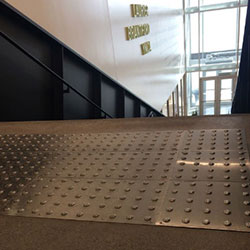
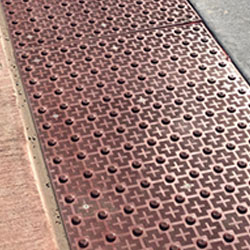
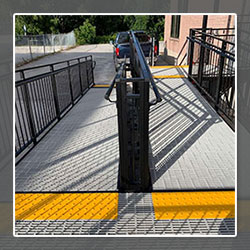
When you spend a massive budget on a custom terrazzo floor or imported Italian marble, the absolute last thing you want to do is cover it up with industrial safety plastic.
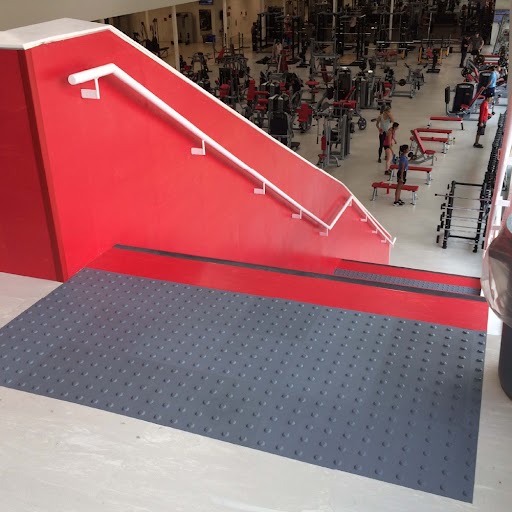
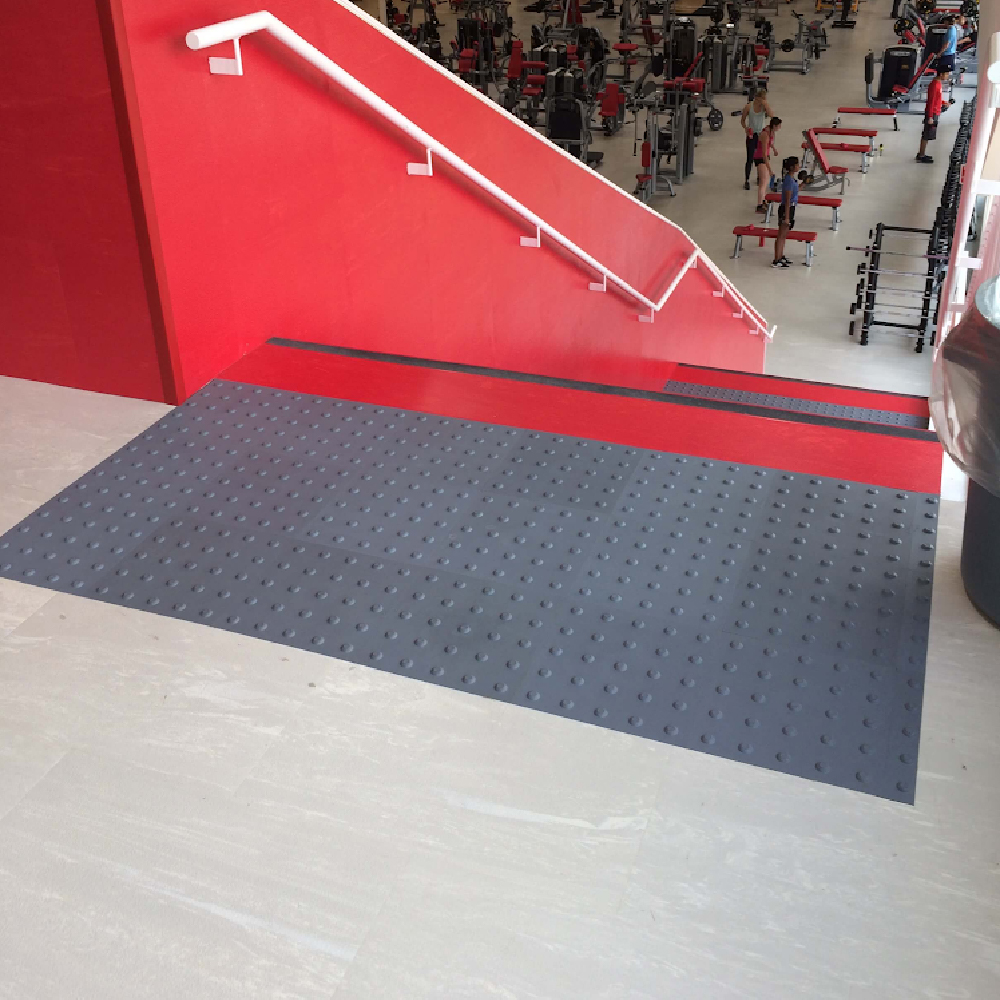
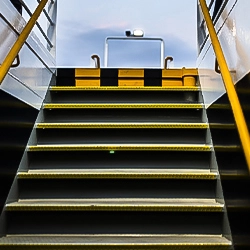
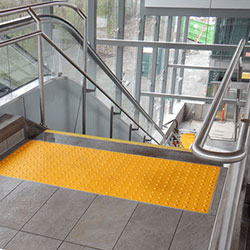
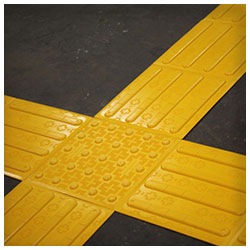
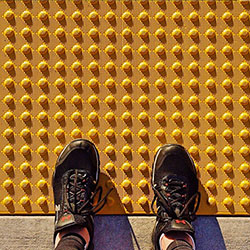
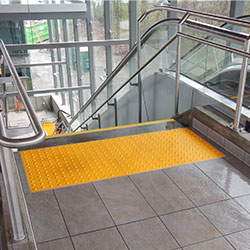
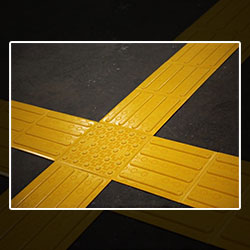
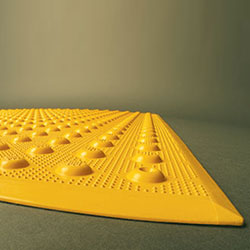
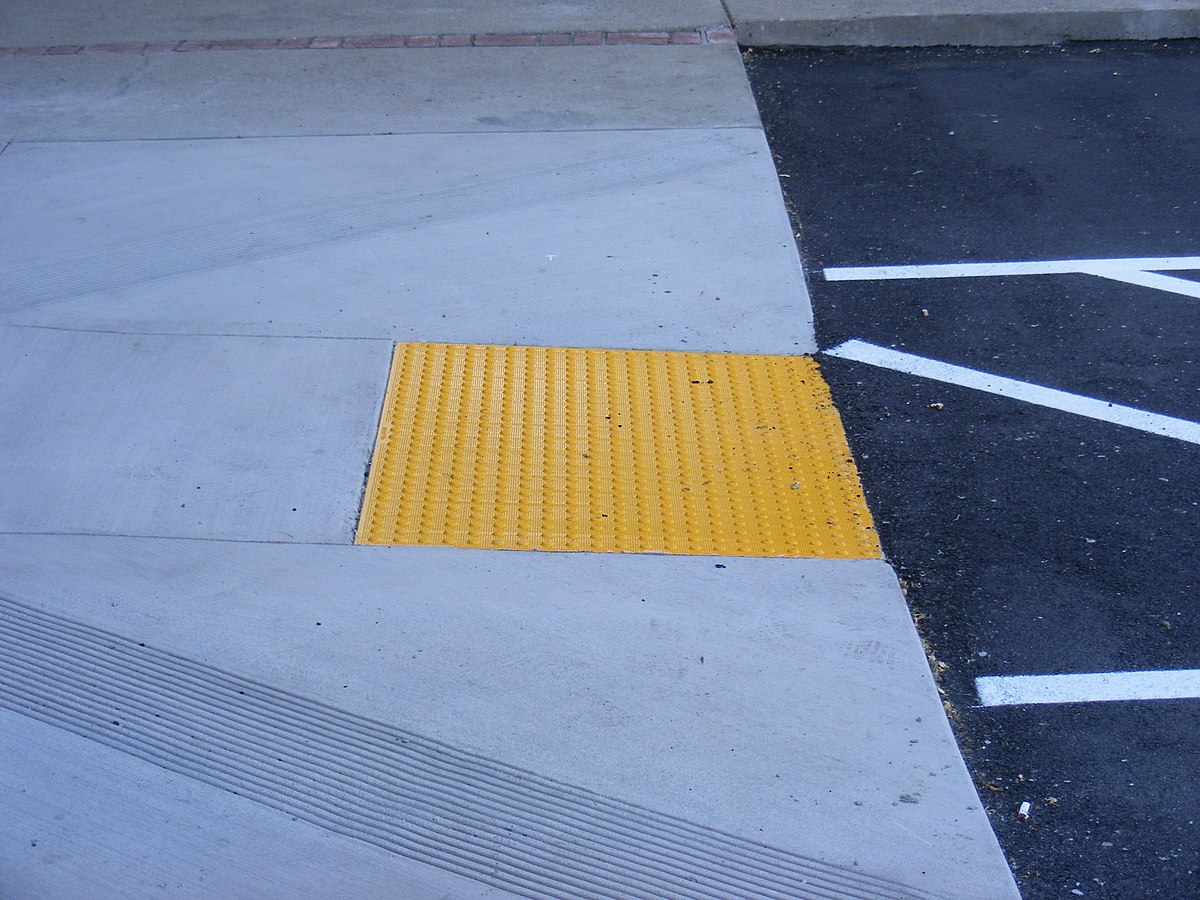
As an architect or interior designer in Canada, you face this exact reality at the end of every major commercial project. You must meet mandatory accessibility codes at the top of every grand staircase and before every elevator bank. You need Tactile Walking Surface Indicators (TWSI) to pass your final building inspection.
You must integrate these physical warnings without destroying the clean, modern aesthetic you worked so hard to create.
At Tactile Solution Canada, we consult directly with top-tier design firms who refuse to compromise o
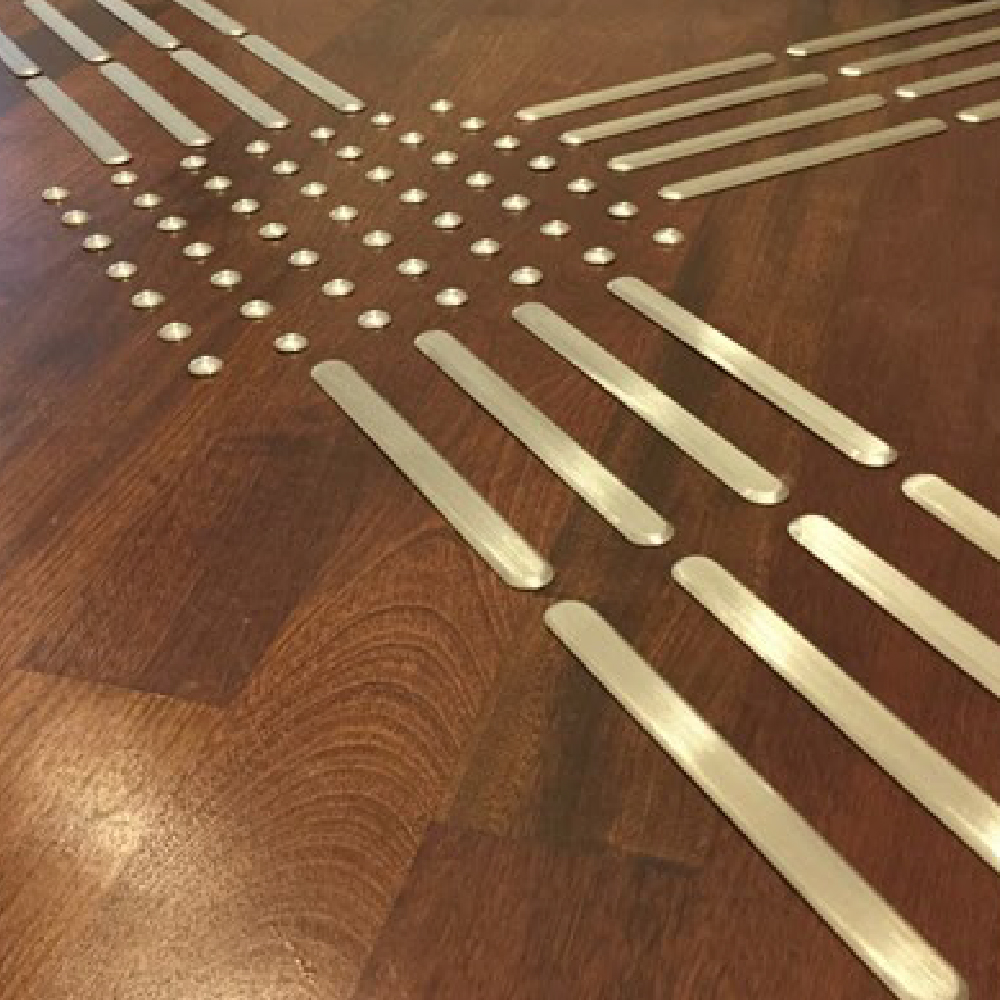
n aesthetics. We supply premium safety infrastructure that actually enhances architectural beauty. When it comes to upscale indoor environments, the debate always comes down to two premium materials: full-body porcelain and marine-grade stainless steel.
Today, we are stripping away the sales jargon. We will compare ElanTile Porcelain directly against Advantage ONE Stainless Steel domes. We will examine how they manipulate light, how they sound under a white cane, and how they handle the reality of daily commercial floor cleaning.
Your choice between porcelain and metal ultimately depends on how you want the safety feature to interact with the surrounding space. You need to decide if you want the warning surface to feel like a seamless extension of the floor, or if you want it to act as a sleek, modern architectural accent.
Both materials provide permanent slip resistance and full code compliance. The difference lies entirely in the visual execution.
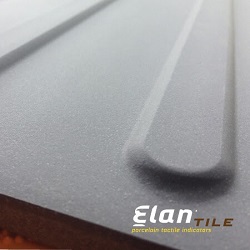
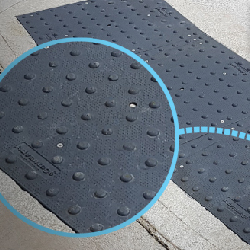
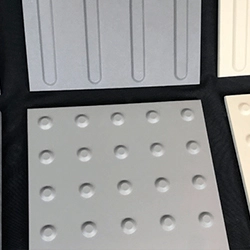
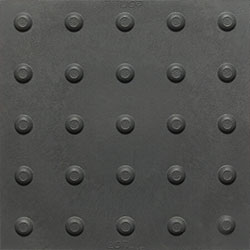
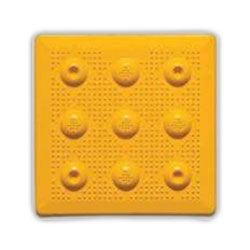
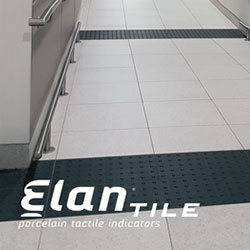
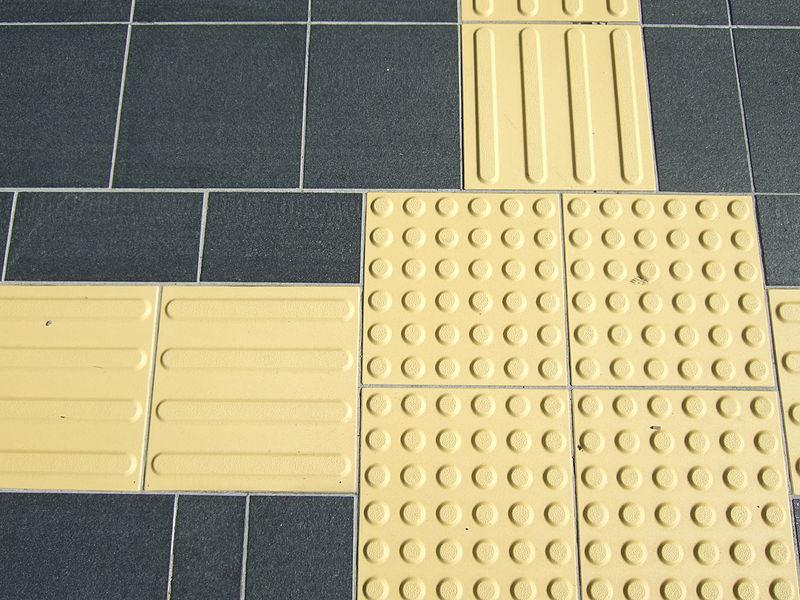
If your goal is a smooth, uninterrupted floor plane, porcelain is your exact answer. ElanTile is manufactured from double-loaded, full-body porcelain stoneware that far exceeds standard commercial tile strength.
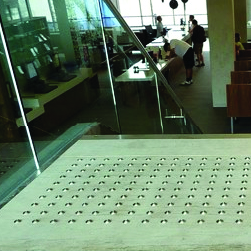
Sometimes you do not want to use a solid tile format at all. If you are laying down an incredibly expensive natural stone slab, you want your guests to see the actual stone.
The law is the law. To pass your building audit, your tactile installations must satisfy the Canadian Standards Association (CSA) B651 guidelines and provincial mandates like the AODA in Ontario.
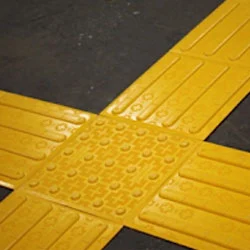
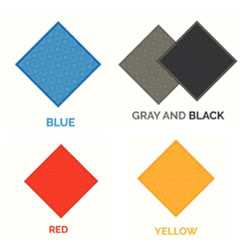
The biggest hurdle for designers is the luminance contrast rule. Your tactile indicators must contrast sharply with the surrounding floor. This ensures individuals with partial vision can spot the hazard easily before their foot touches the edge of the stairs.
Achieving this required contrast is very different depending on the material you choose.
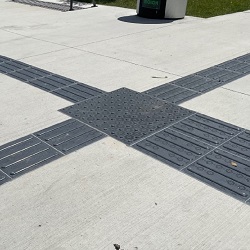
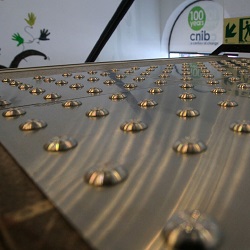
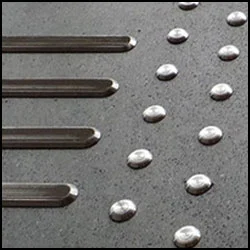
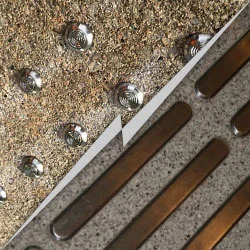
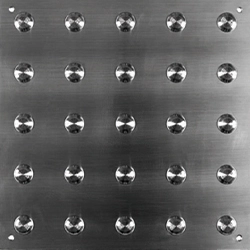
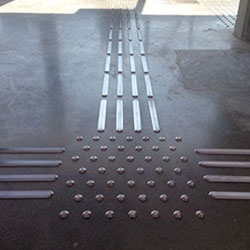
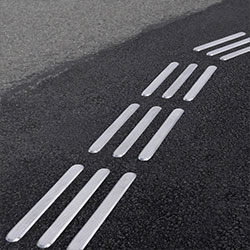
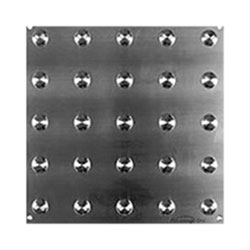
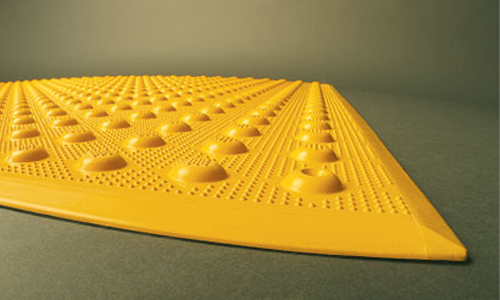
Advantage ONE solves this problem cleverly. You can specify stainless steel domes that feature a black or safety-yellow carborundum grit insert in the center. This gives you the sleek metallic edge you want, the extreme slip resistance you need, and the bold visual contrast required to pass your inspection legally.
If you are ever unsure which product combination passes the code for your specific flooring material, our digital Tactile Solution Finder tool calculates the exact product match for you in seconds.
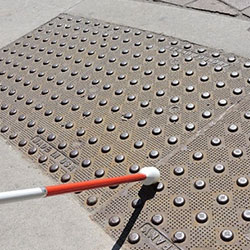
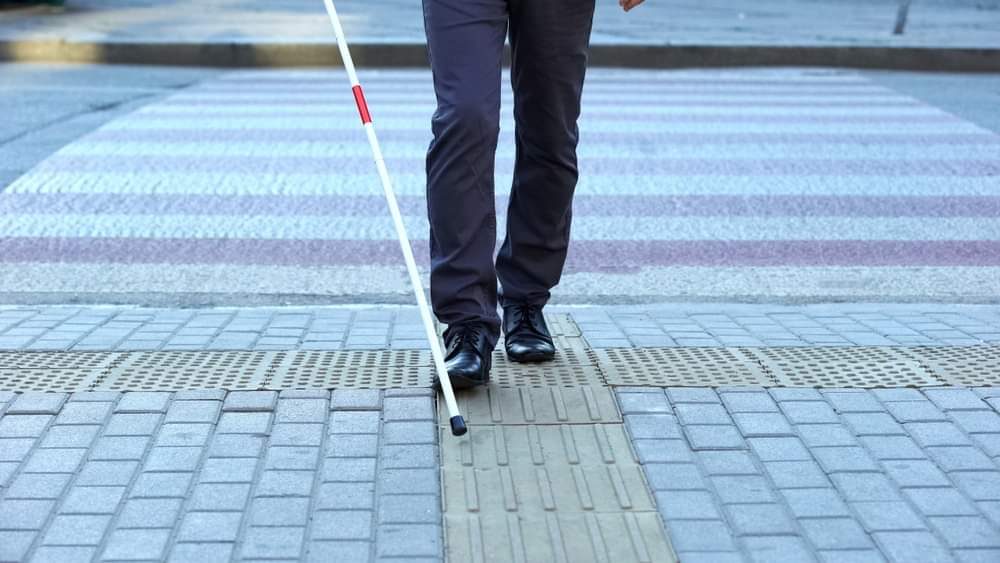
Accessibility is a multisensory experience. A person with vision loss relies on both the physical feel under their shoes and the sound of their white cane striking the floor.
Providing the correct acoustic feedback is just as important as providing a physical bump.
Architects design the building, but facility managers have to clean it for the next twenty years. A beautiful tactile installation is useless if a standard floor buffer destroys it in six months.
You must consider how your chosen material will react to heavy commercial cleaning equipment.
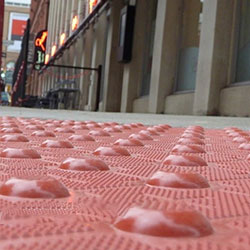
Porcelain is virtually bulletproof against stains. It features a near-zero water absorption rate. If a guest drops a cup of dark roast coffee on the tactile tile, the liquid wipes right off without leaving a permanent shadow.
Janitorial teams can run standard heavy floor scrubbers right over the domes without worrying about damage. It requires absolutely no specialized maintenance training.
Premium 316L stainless steel will never rust. However, your cleaning crew must be properly trained to handle the metal.
They cannot use highly corrosive alkaline degreasers on the domes. They must never use abrasive wire brushes or steel wool to clean the floor directly around the steel markers. Abrasive tools will permanently scratch the premium machined finish of the metal and dull the shine.
Both materials offer permanent safety solutions and full code compliance. Your final decision should rely entirely on your architectural environment, your flooring type, and your installation timeline.
You do not have to choose between a beautiful building and a safe building. By selecting premium materials like full-body porcelain or marine-grade stainless steel, you provide essential accessibility cues that look and feel like intentional, high-end architectural design.
At Tactile Solution Canada, we supply the physical safety infrastructure that protects Canadians from coast to coast. We carry the industry’s most trusted brands, ready to ship directly to your job site.
If you are specifying materials for an upcoming set of blueprints or managing an active interior renovation, we are here to help. Explore our comprehensive tactile solutions today, and let us ensure your next luxury project passes inspection flawlessly.
Not at all. High-quality stainless steel domes feature micro-grooved concentric rings or integrated carborundum grit inserts on the top surface. These engineering details provide exceptional wet and dry traction. They easily pass all Canadian slip-resistance testing mandates.
No. Standard ceramic wall tile cracks easily, but ElanTile is a commercial-grade, full-body porcelain stoneware. When properly set into a solid mortar bed, it boasts immense compressive strength. It can easily handle heavy luggage carts, strollers, and pallet jacks without cracking.
Yes. Advantage ONE domes are specifically designed for surface retrofitting. A contractor uses a precision template to drill holes in the floor. They inject a high-strength structural epoxy and tap the metal stems directly into the cured concrete for a permanent hold.
The CSA B651 standard requires a strong visual contrast between the tactile indicator and the adjacent floor surface. It generally requires a minimum 70 percent contrast in light reflectance value. This ensures the hazard warning is highly visible to pedestrians with partial sight.
You must verify that the product meets the specific dome height, diameter, and spacing geometry dictated by national standards. At Tactile Solution Canada, every product in our comprehensive tactile categories is fully engineered to meet or exceed AODA, NBC, and CSA B651 guidelines.