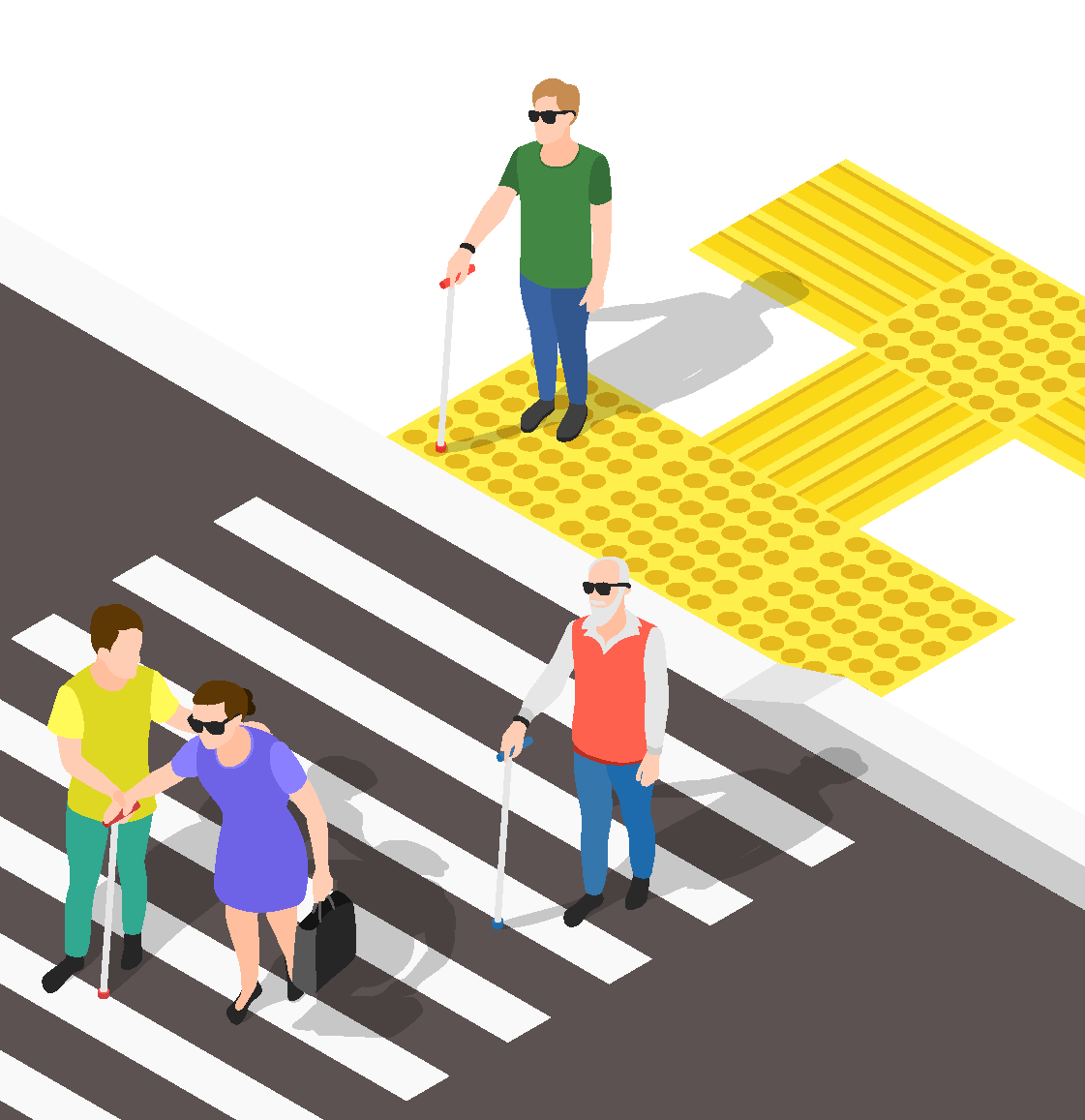
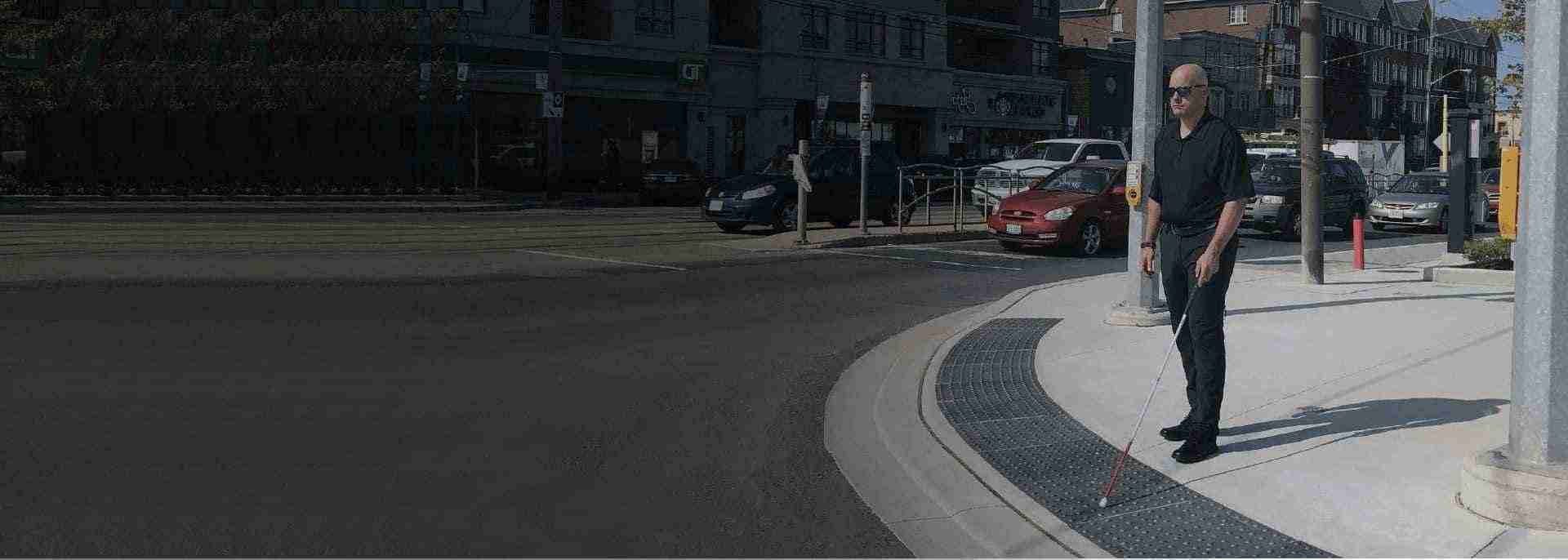
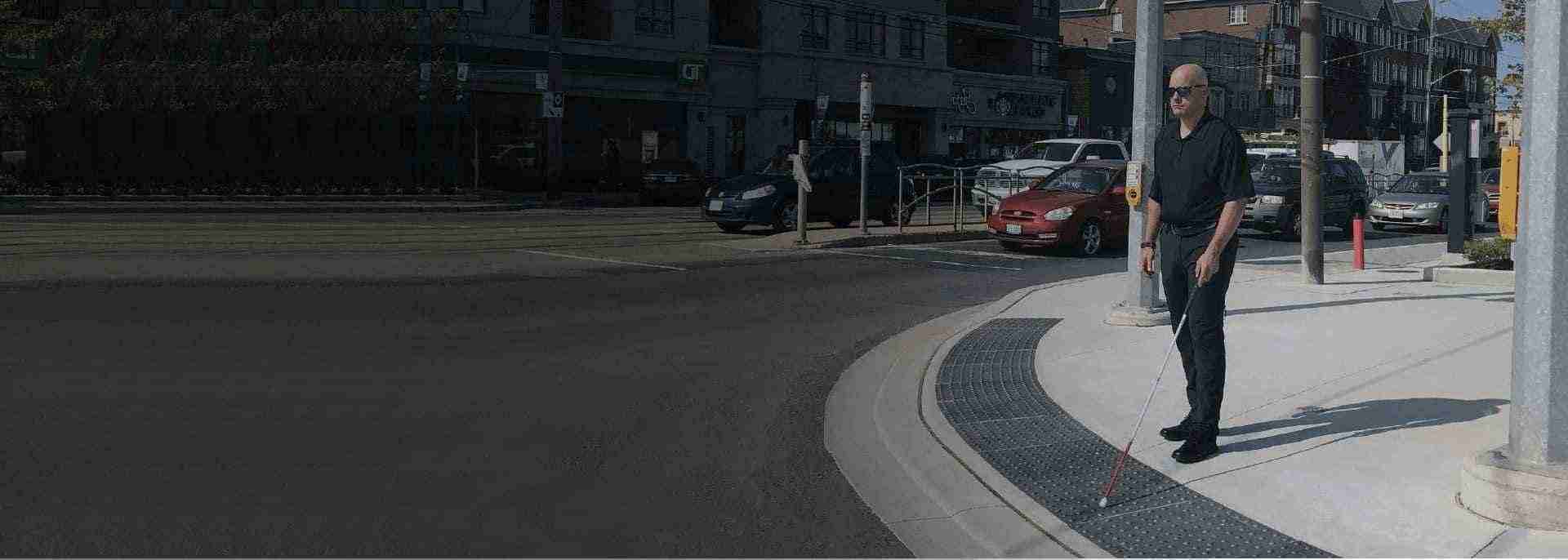
If your building fails accessibility compliance in Canada, you face severe financial and legal consequences. Under the Accessible Canada Act (ACA), federal violations can result in penalties ranging from $250 to $250,000 per violation. Provincial laws like the AODA in Ontario can impose fines of up to $100,000 per day for corporations. Beyond government fines, property owners face significant civil liability risks, personal injury lawsuits, and the costly expense of retrofitting non-compliant spaces.
Picture a busy Tuesday morning. Your project is finally complete, the tenants are moving in, and you’re ready to move on to the next job. Then, a registered letter lands on your desk. It’s not a thank-you note - it’s a Notice of Violation.
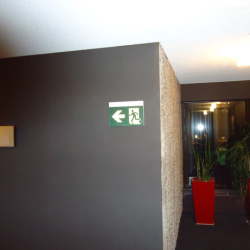
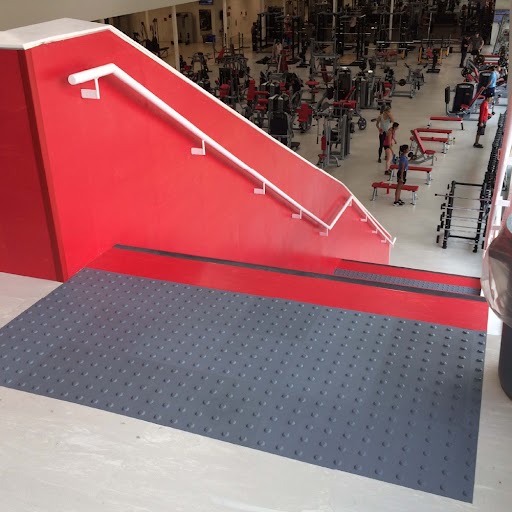
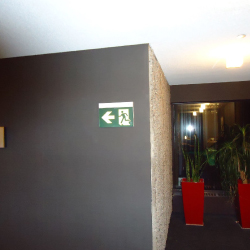
Suddenly, that decision to skip the Tactile Walking Surface Indicators (TWSIs) at the stairwell or the photoluminescent exit signs in the corridor doesn’t feel like a "cost-saving measure" anymore. It feels like a liability.
As professionals at Tactile Solution Canada, we see this scenario too often. Contractors and building managers often treat accessibility as a "nice-to-have" rather than a legal mandate. We are here to set the record straight: In Canada, accessibility is the law. Here is the comprehensive breakdown of the risks you face when you ignore it.
Many building owners assume non-compliance results in a simple warning. The reality is much harsher. Canadian regulations have teeth, and they are designed to bite where it hurts, your bottom line.
The Accessible Canada Act (ACA) aims for a barrier-free Canada by 2040. To enforce this, the Accessibility Commissioner has the authority to issue heavy Administrative Monetary Penalties (AMPs).
According to federal regulations, violations are categorized by severity:
|
Minor |
Administrative errors (e.g., failure to file a plan). |
$250 – $75,000 |
|
Serious |
Failure to provide reports or ignoring orders. |
$2,500 – $150,000 |
|
Very Serious |
Obstruction, false info, or failure to remove barriers. |
$6,250 – $250,000 |
If you operate in Ontario, the Accessibility for Ontarians with Disabilities Act (AODA) is equally strict.
Corporations: Maximum penalties can reach $100,000 per day.
Individuals (Directors/Officers): You can be personally fined up to $50,000 per day.
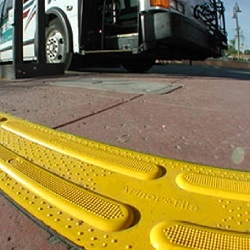
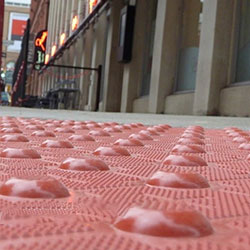
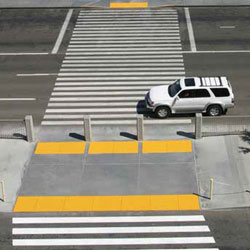
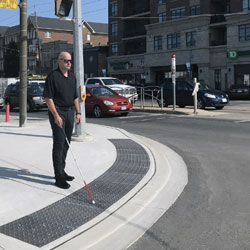
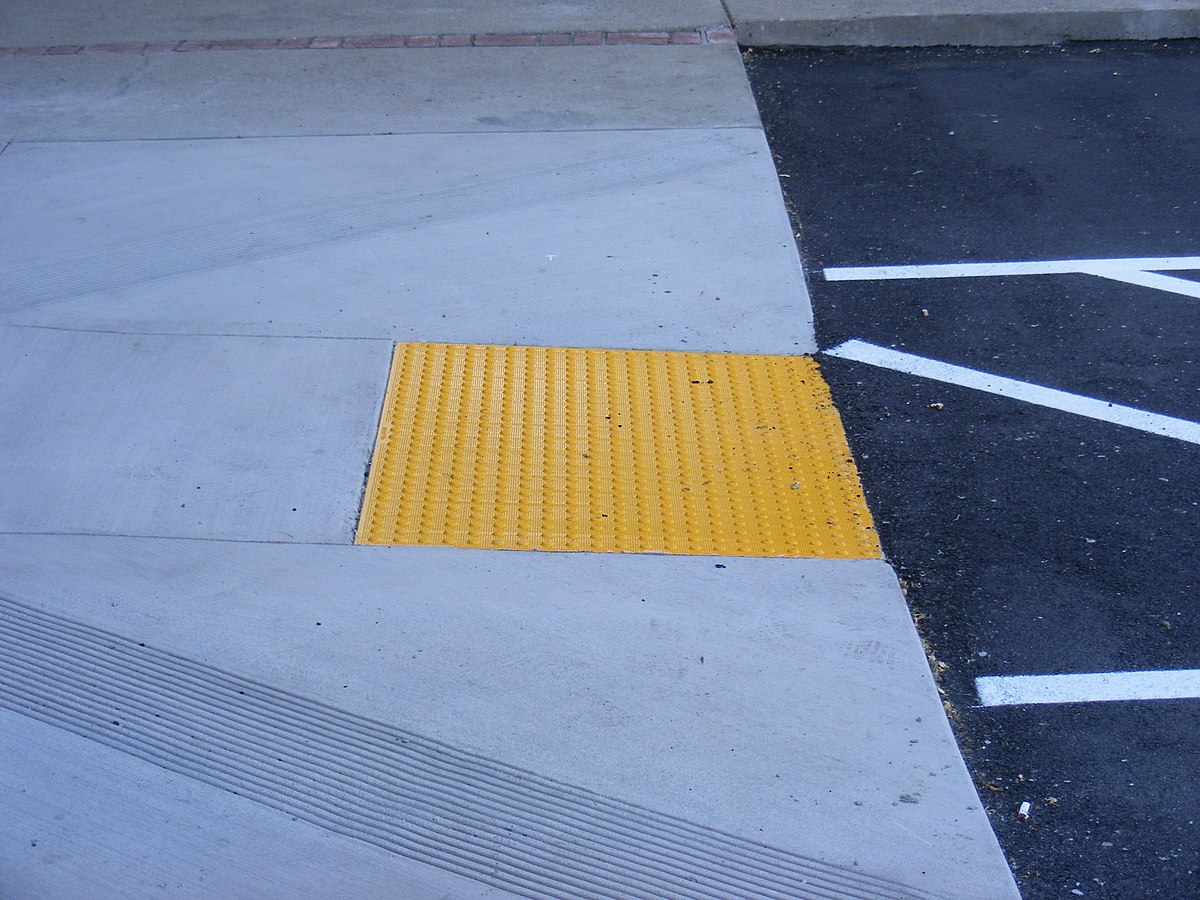
Pro Tip: These fines are often cumulative. If you ignore a lack of attention tactile domes on a curb ramp for a week, you aren't fined once, you could be fined for every single day you remain non-compliant.
Government fines are black and white, but civil liability is where businesses drown. As a property manager or owner, you have a legal "duty of care."
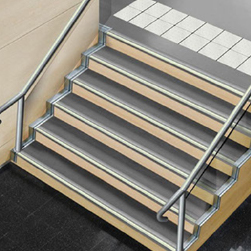
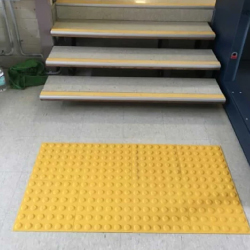
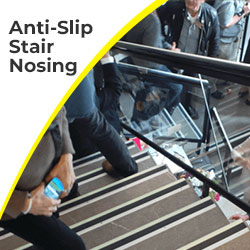
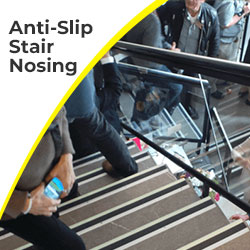
If a visually impaired person is injured on your property because you failed to install code-compliant stair nosing or detectable warning surfaces, you are negligent.
Consider this scenario:
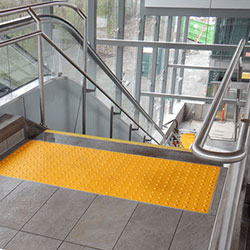
A visually impaired visitor navigates your lobby. Because the architect preferred the "clean look" of smooth grey concrete over high-contrast yellow truncated domes, the visitor misses a step change and falls.
In this instance, you aren't just facing a code violation; you are facing a personal injury lawsuit. Settlements for slip-and-fall incidents involving negligence regarding CSA B651 standards can run into hundreds of thousands of dollars, covering medical costs, lost wages, and pain and suffering.
In the construction and property management industry, reputation is currency.
Tenant Retention: High-value corporate and government tenants mandate barrier-free access in their leases. Non-compliant buildings are often disqualified immediately.
Public Perception: In an era focused on ESG (Environmental, Social, and Governance) criteria, failing to provide basic safety for people with disabilities signals that your company does not value inclusivity.
Here is the golden rule of construction: Retrofitting is always more expensive than doing it right the first time.
If an inspector flags your building, you don't just pay a fine, you have to fix the problem. This leads to:
Demolition Costs: Jackhammering up cured concrete to install cast-in-place tiles.
Operational Downtime: Closing entrances or lobbies, disrupting tenants.
Emergency Pricing: Paying premium rates for rush orders on guidance bars or egress systems.
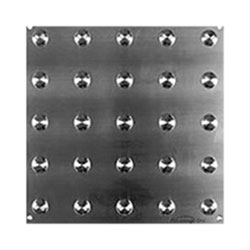
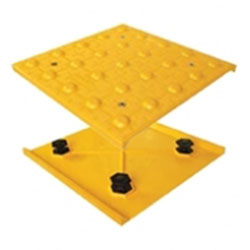
Installing a cast-iron detectable warning plate during the initial pour is seamless. Drilling into concrete two years later to apply surface-mounted tiles is a headache you don't need.
To avoid these risks, you need to implement the right tactile industry solutions. At Tactile Solution Canada, we supply the products that keep you compliant with the National Building Code (NBC) and provincial standards.
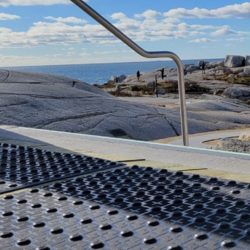
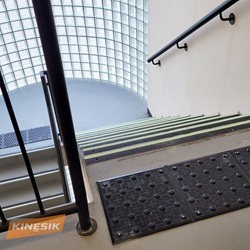
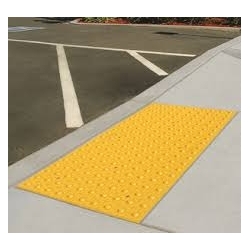
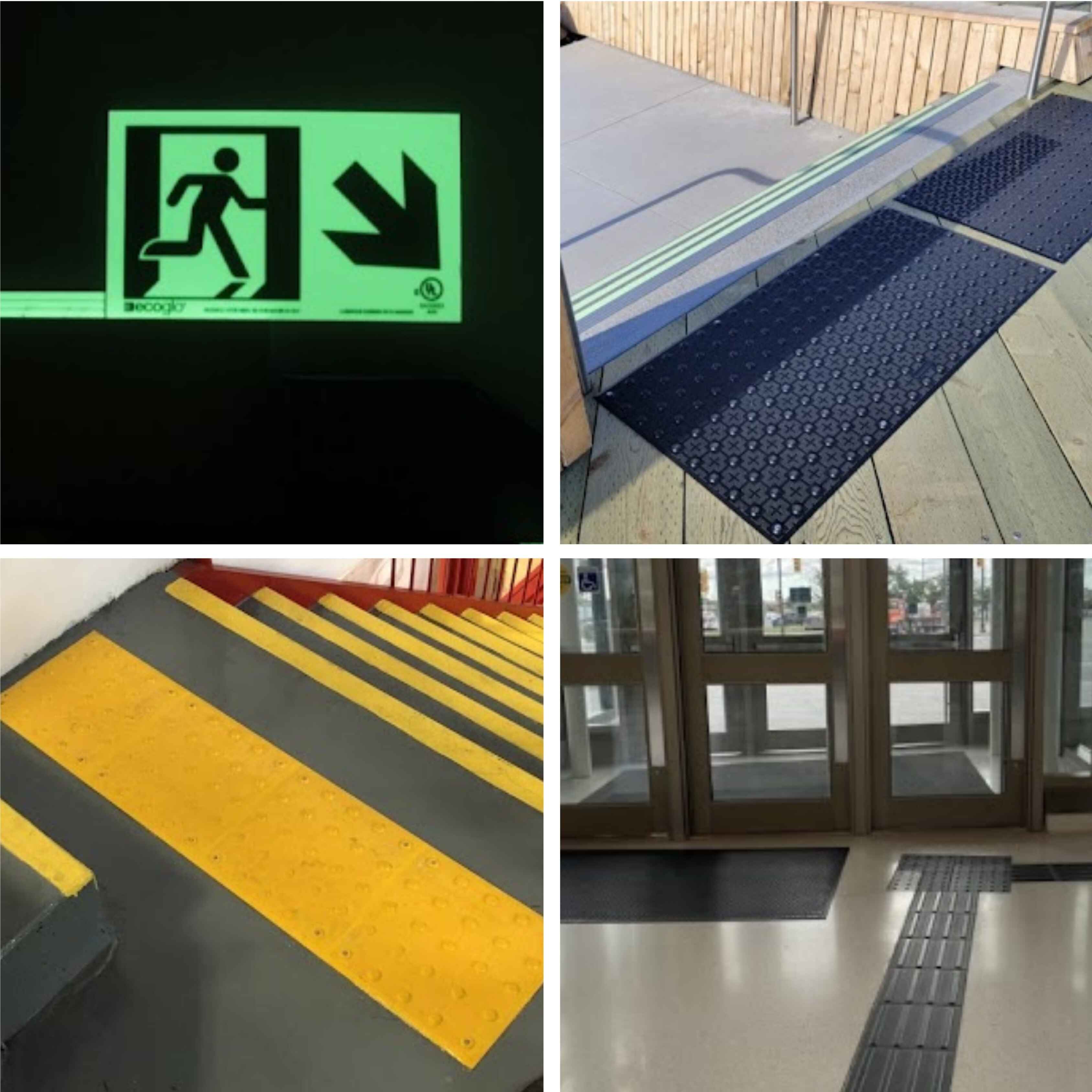
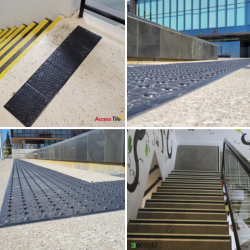
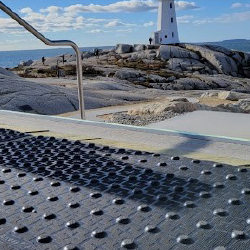
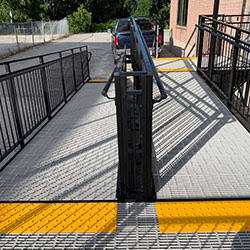
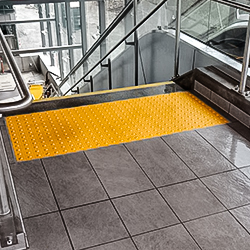
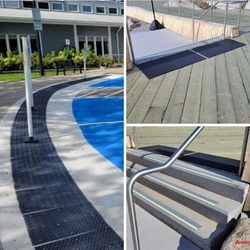
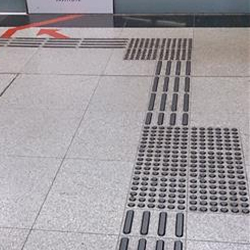
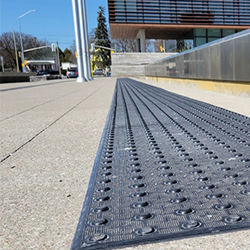
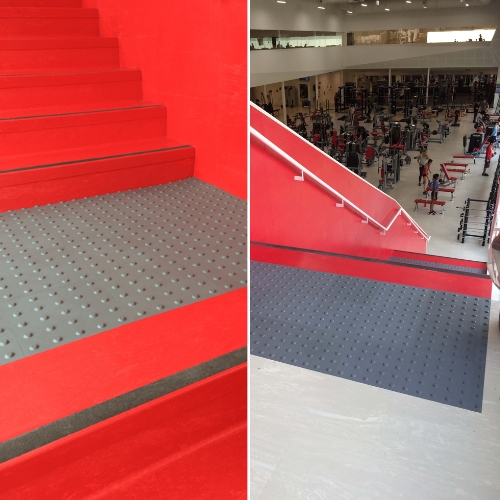
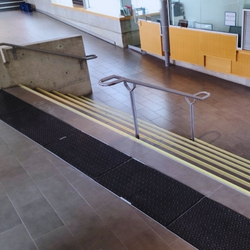
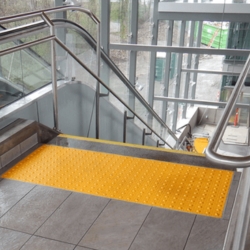
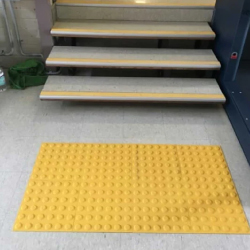
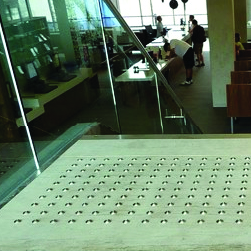
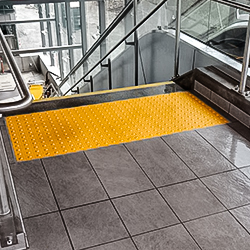
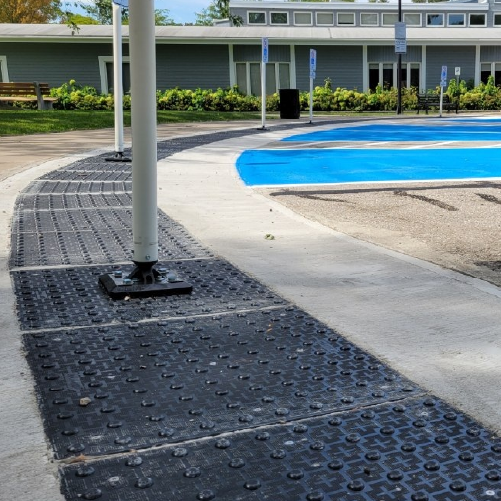
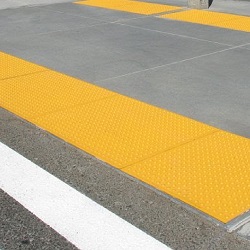
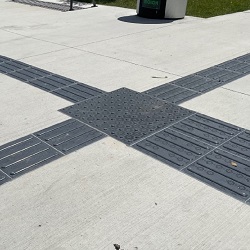
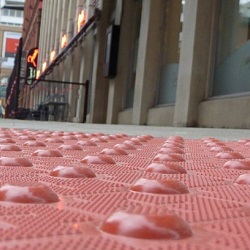
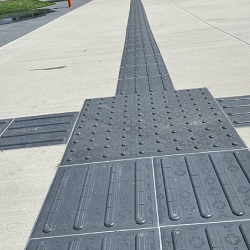
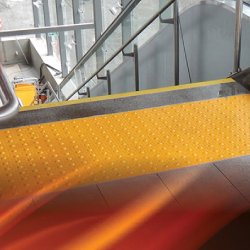
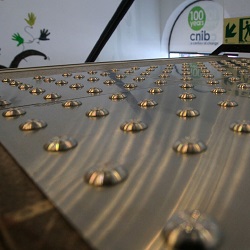
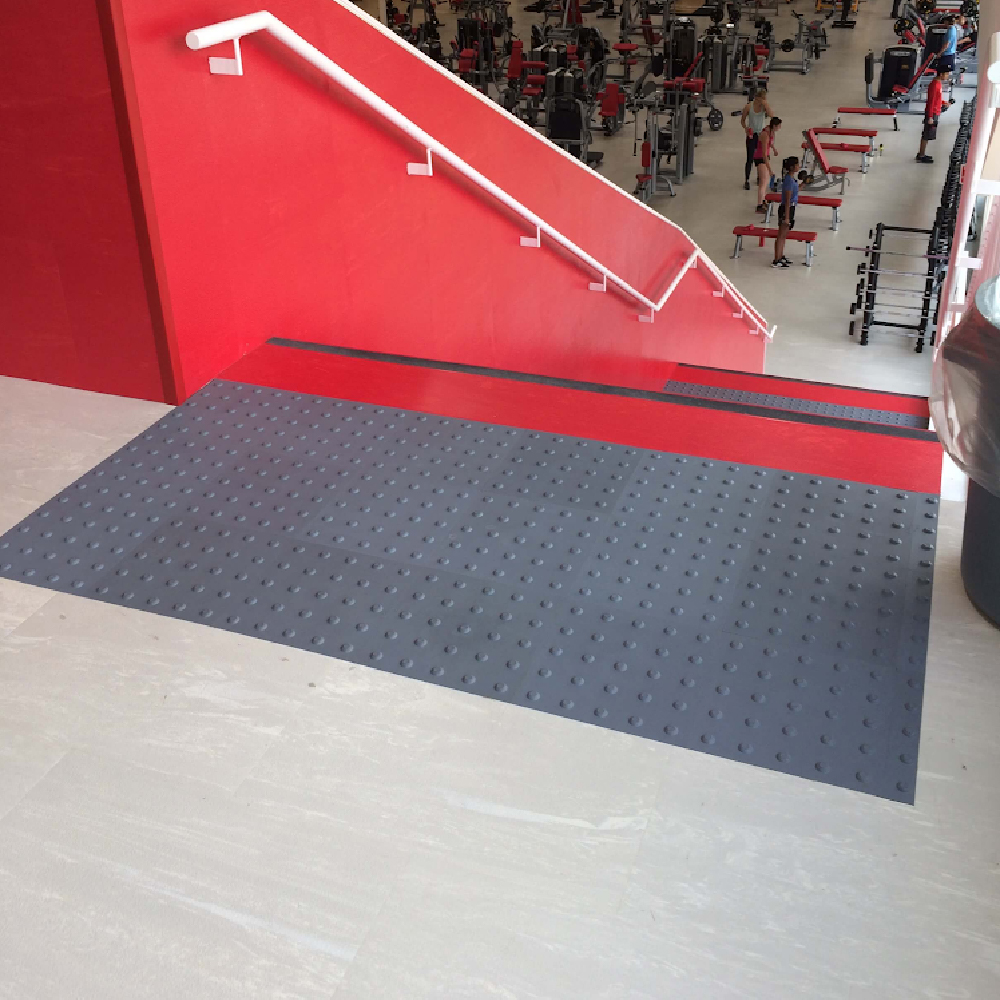
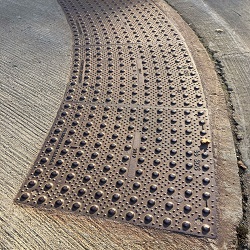
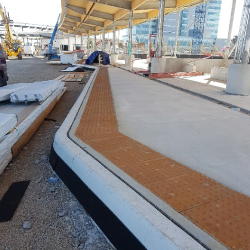
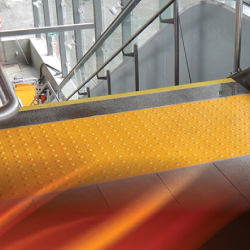
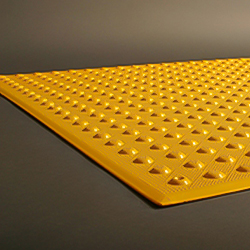
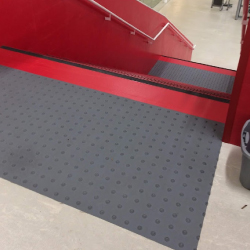
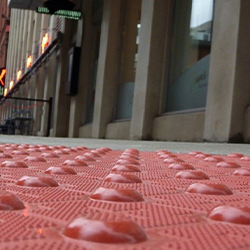
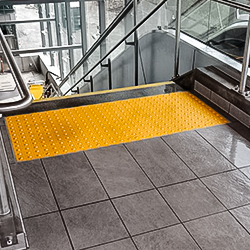
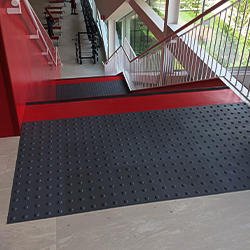
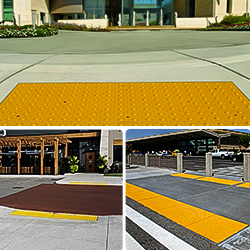
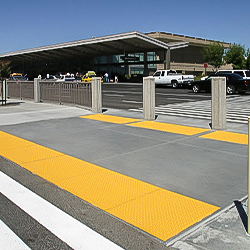
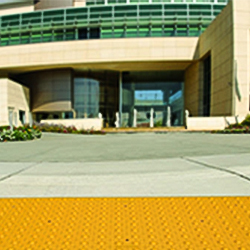
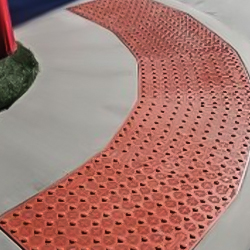
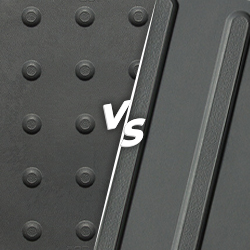
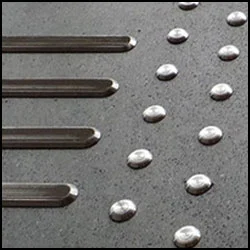
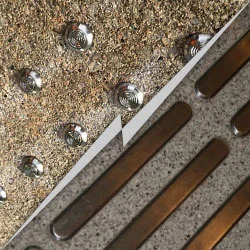
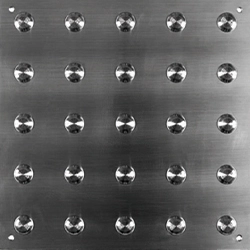
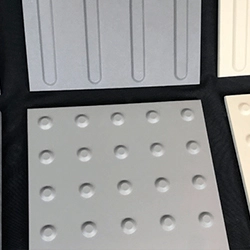
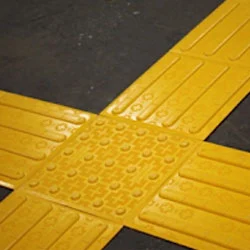
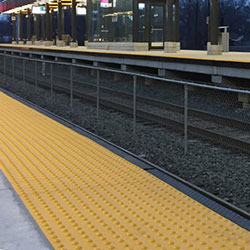
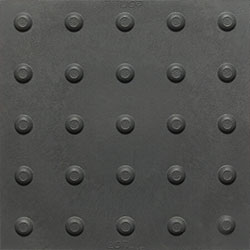
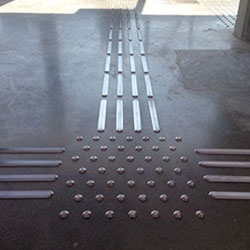
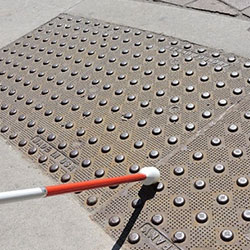
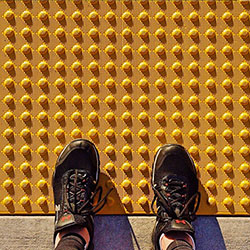
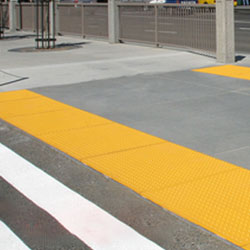
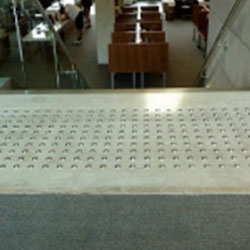
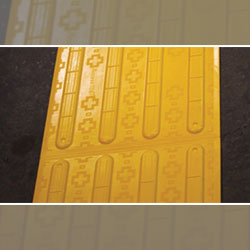
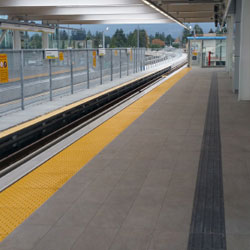
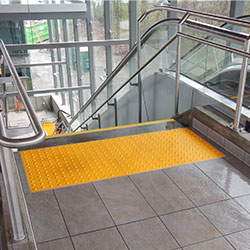
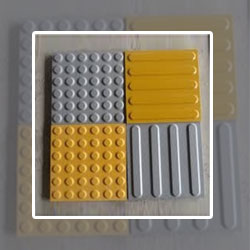
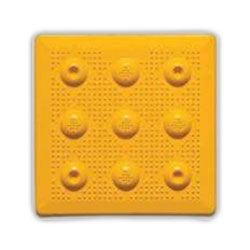
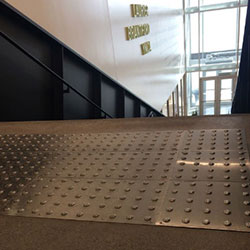
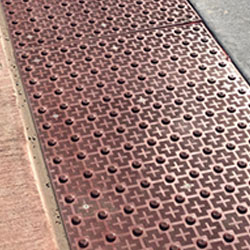
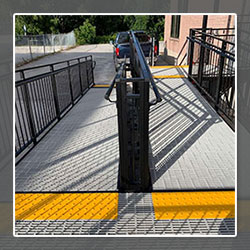
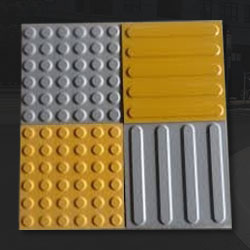
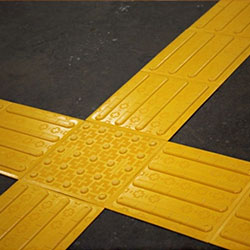
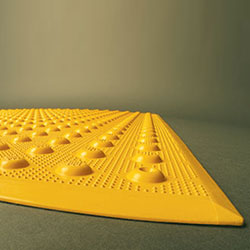
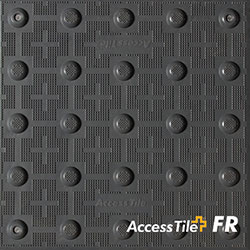
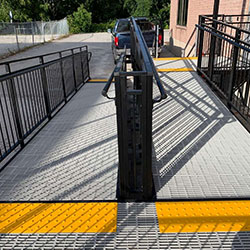
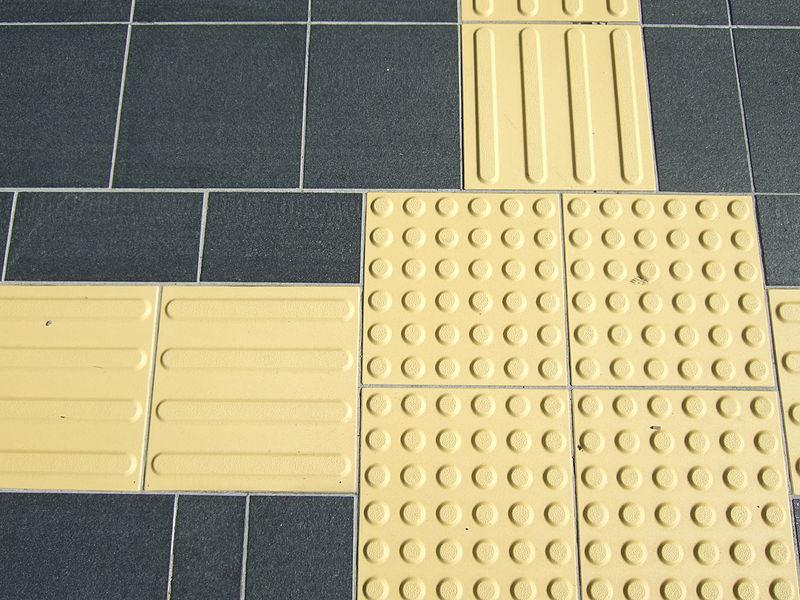
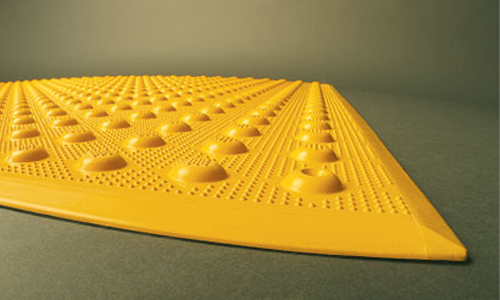
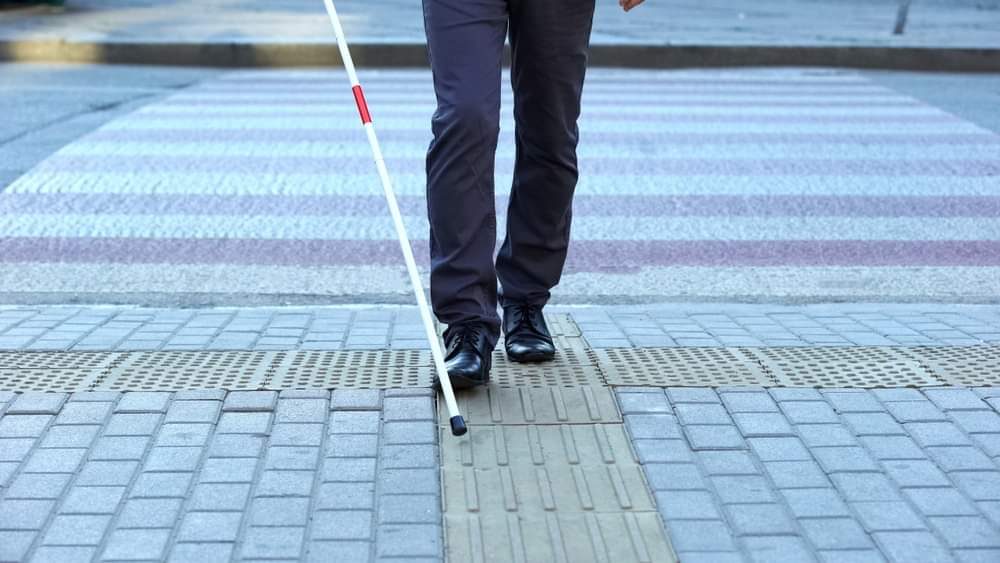
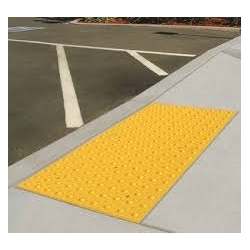
What they are: A grid of raised domes that signal a hazard (stairs, platform edges, curb ramps).
Why you need them: They are the universal "STOP" sign for the visually impaired.
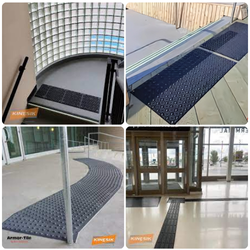
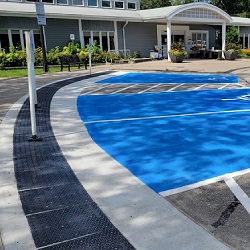
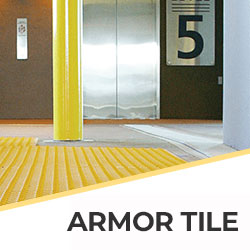
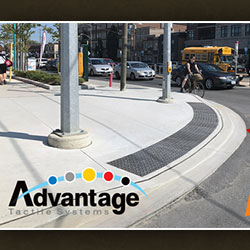
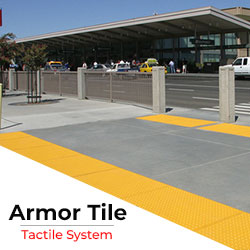
Our Solution: We offer robust Advantage™ Cast Iron for exteriors and Armor-Tile™ for versatile applications.
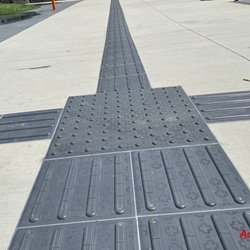
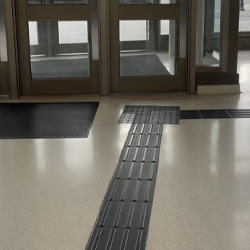
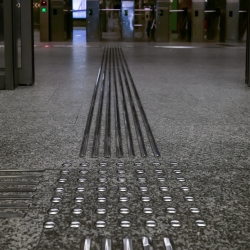
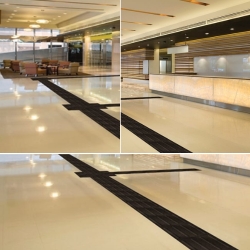
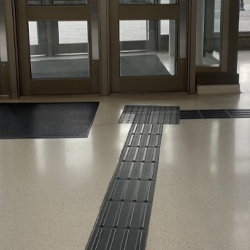
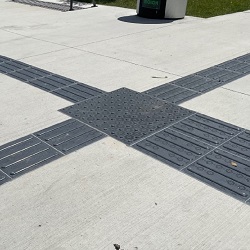
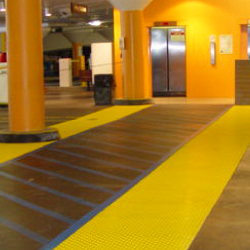
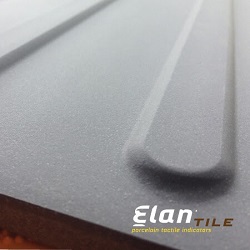
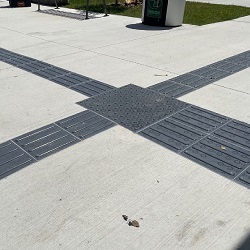
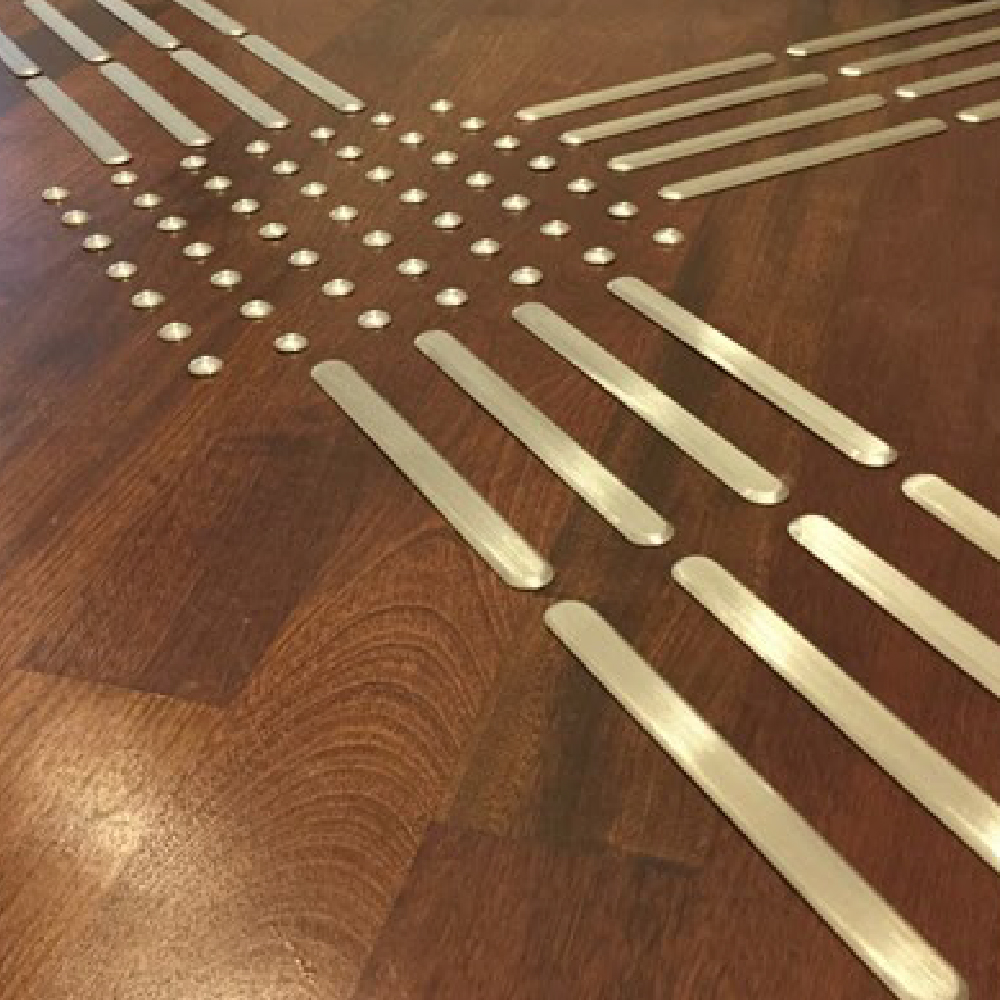
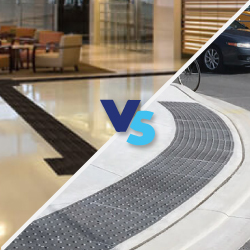
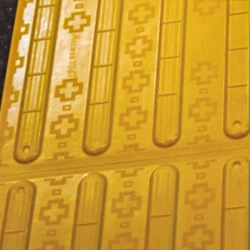
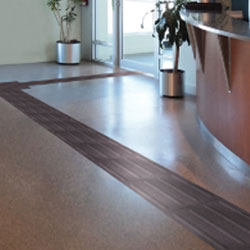
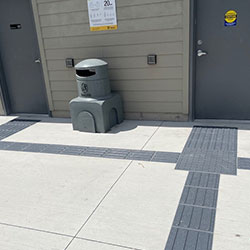
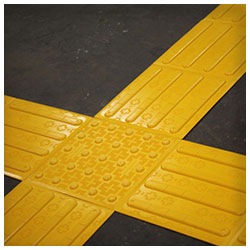
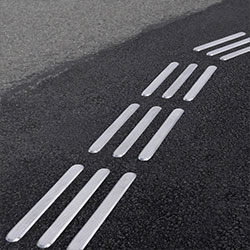
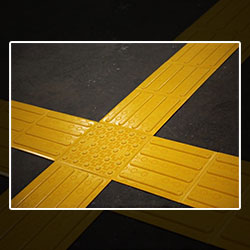
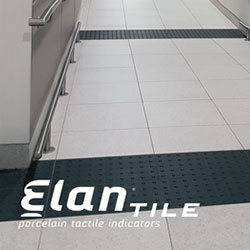
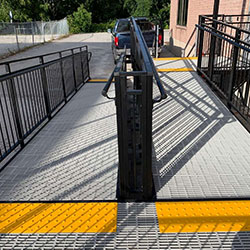
What they are: Linear bars that create a safe path of travel.
Why you need them: They guide pedestrians through complex open spaces like transit hubs or lobbies.
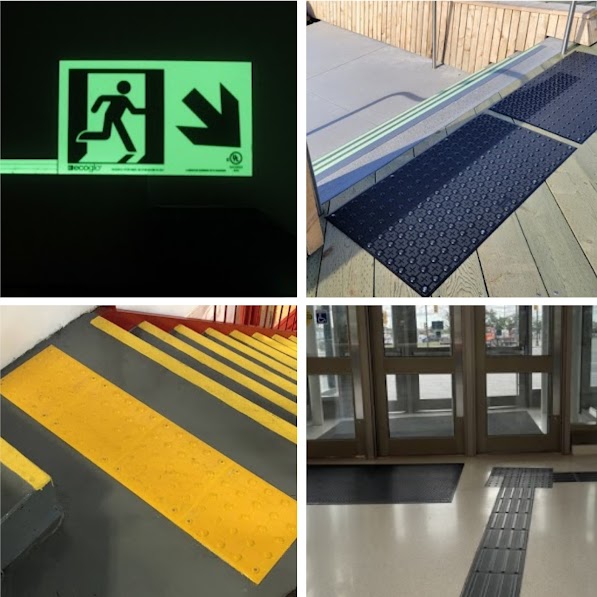
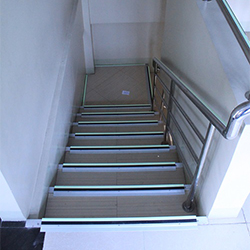
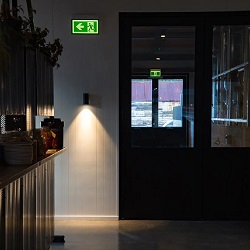
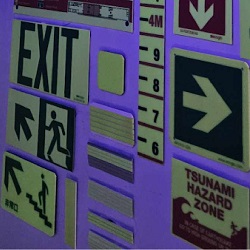
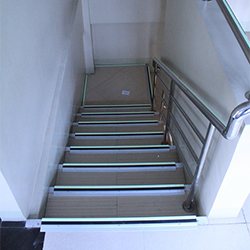
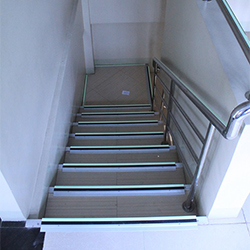
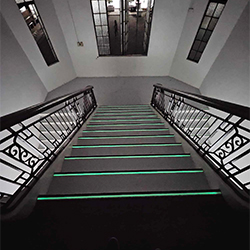
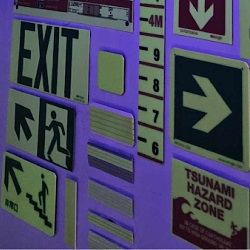
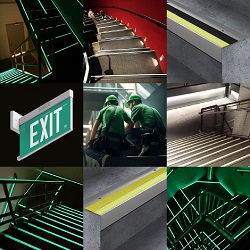
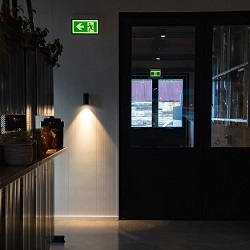
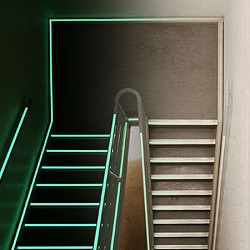
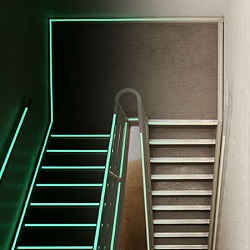
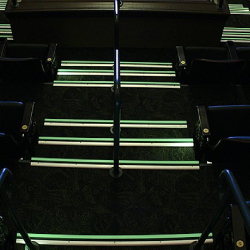
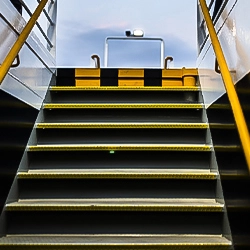
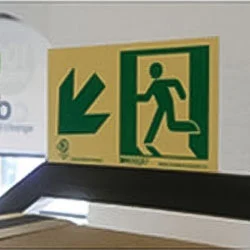
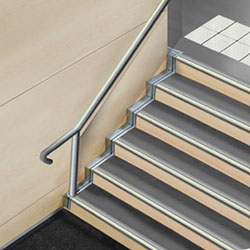
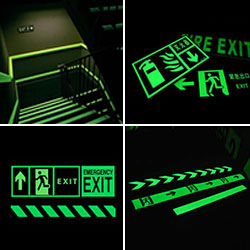
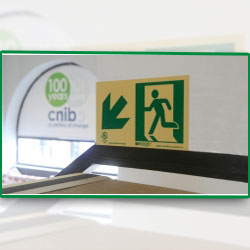
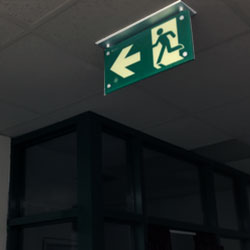
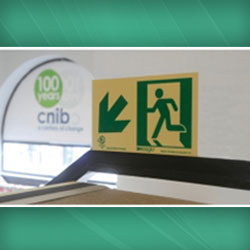
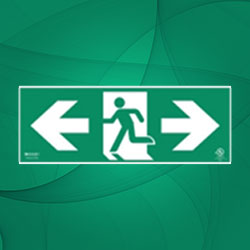
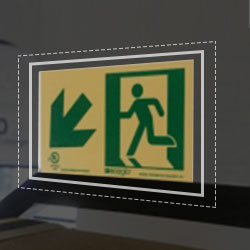
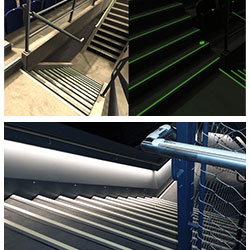
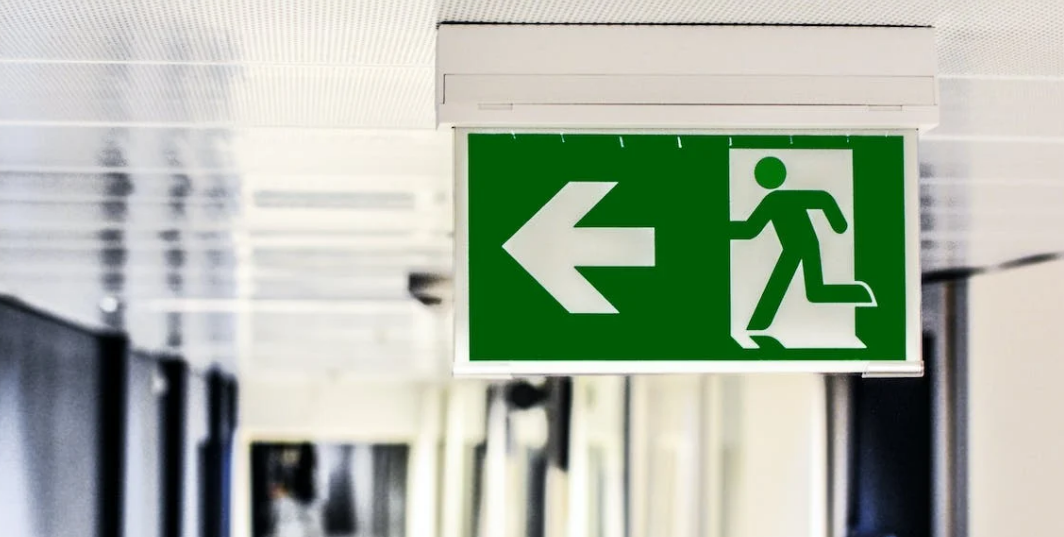
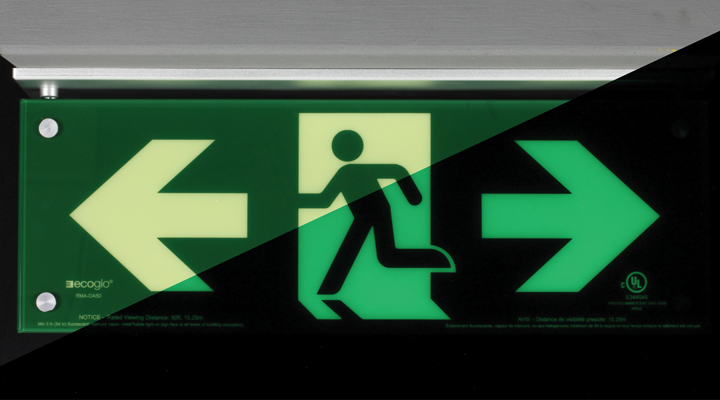
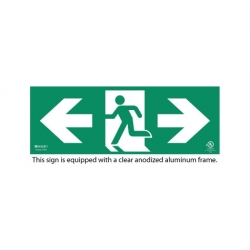
What they are: Glow-in-the-dark stair nosing and exit signs (like Ecoglo).
Why you need them: In a power outage, these provide a clear visual path for evacuation, a critical requirement for modern fire codes.
Liability is often shared. It flows from the property owner to the property management company, and can extend to the general contractor and architect if the design failed to meet code. You cannot outsource liability.
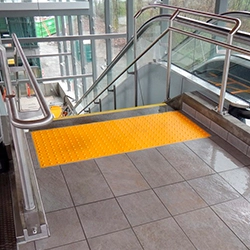
Yes. The Ontario Building Code (OBC) and other regulations mandate them indoors at the top of escalators, unenclosed stairs, and assembly areas.
No. Paint provides visual contrast but zero tactile contrast. A person with total vision loss cannot "feel" color. You must use ISO-compliant tactile surfaces with specific dome heights.
Cast-in-Place: Installed into wet concrete (new construction).
Surface-Applied: Adhered to existing floors (retrofitting). Both are compliant if they meet CSA B651 standards.
Failing accessibility compliance is a gamble with no upside. The fines are steep, the lawsuits are real, and the cost of retrofitting is massive.
At Tactile Solution Canada, we are your partners in safety. Whether you need Wayfinding bars for a university or Cast Iron plates for a city street, we have the expertise and the inventory to get it done right.
Is your building fully compliant? Explore our full range of Tactile Warning Systems here and secure your property against liability today.