In an emergency, people don’t follow plans, they follow light.
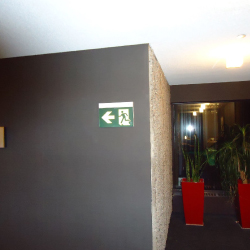
If you’ve ever sat in a late-night meeting when the lights suddenly went out, you know how quickly a calm building can feel confusing. Elevators stop, emergency buzzers chirp, and for a few seconds, everyone looks up, waiting to see which way to move. In that split second, the most reliable thing in your building isn’t your beautifully drafted evacuation plan - it’s the exit signs that actually stay visible when everything else goes dark.
For Canadian contractors, building managers, and owners, that’s the real test: when the grid fails completely, can your exit signs still safely shepherd people out?
In this blog, let’s walk through the showdown that really matters in that moment: photoluminescent vs. electric exit signs during a total power failure - no generators, no batteries, just building and occupants depending on whatever still glows.
Under the National Building Code of Canada (NBC), indoor exit and directional signage must remain visible for a minimum duration after power loss and meet strict brightness and placement criteria.
Requirements include:
In other words, exit signs in Canada can’t just look good under normal lighting; they must perform under stress, smoke, and confusion - precisely when electricity is least reliable.
Let’s imagine a common Canadian scenario: a winter storm hits, the grid fails, and your building loses both main power and backup supply.
Standard electric exit signs rely on:
That works - until it doesn’t. In a complete failure scenario, several weak points show up:
In thick smoke or dusty environments, the focused beams of some LED units can also create glare or hotspots, making the sign harder to read from certain angles.
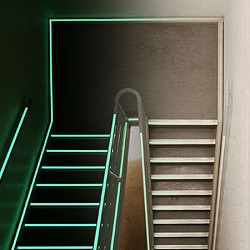
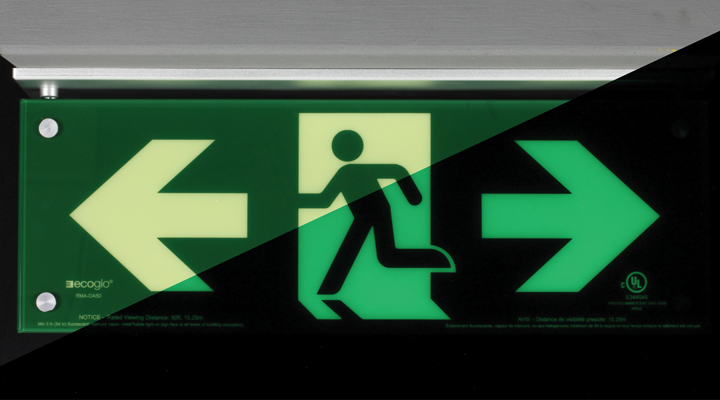
Photoluminescent exit signs flip the script. They don’t need electricity or batteries at all. Instead, they:
When charged for at least 60 minutes at about 54 lux (roughly 5 foot-candles) of suitable light, Ecoglo photoluminescent exit signs supplied by Tactile Solution Canada continue to glow for two hours or more, often far beyond the basic code expectations. Many photoluminescent systems can exceed 12 hours of visible performance, depending on model and conditions.
In a total power failure, that means something simple and powerful: they just keep working.
Picture a downtown high-rise in Toronto, late evening. Cleaning staff are finishing up on level 18, a couple of engineers are in the mechanical room, and a security guard is doing a routine patrol. Suddenly, the building hum drops off - then silence. Total blackout.
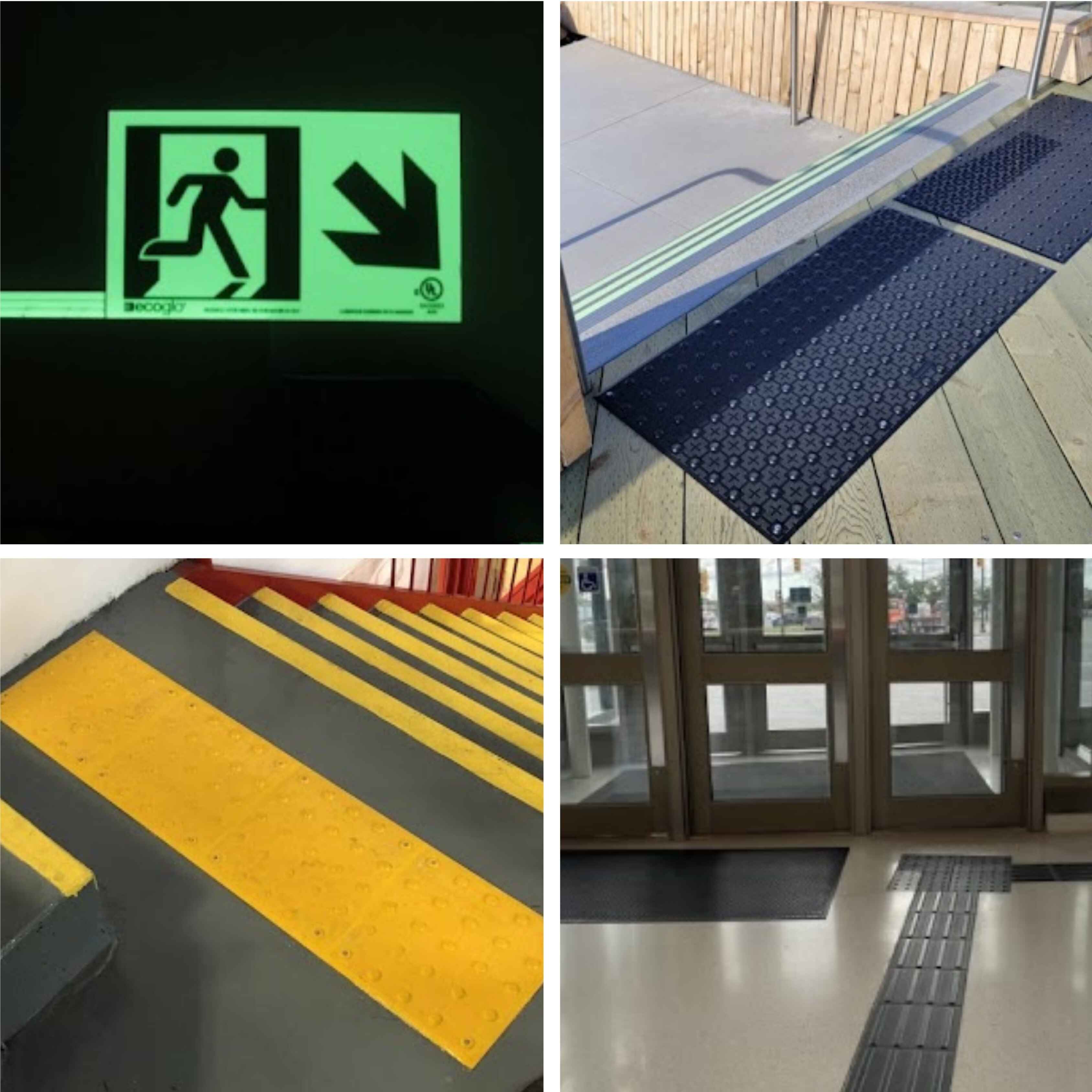
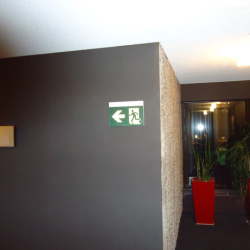
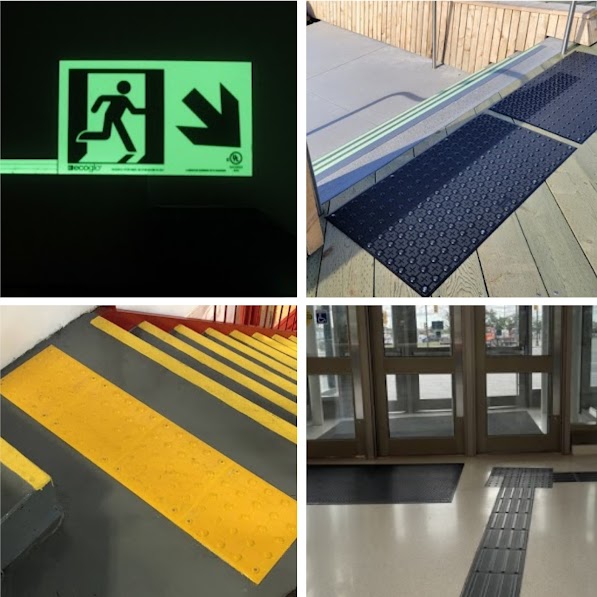
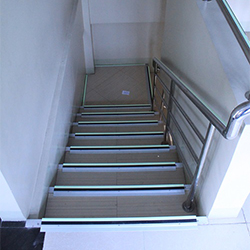
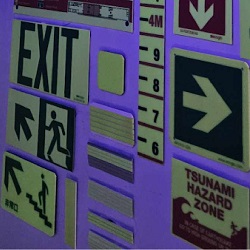
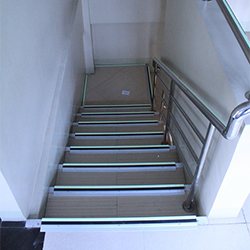
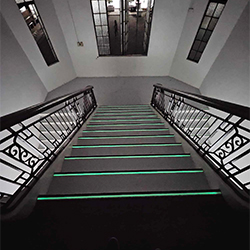
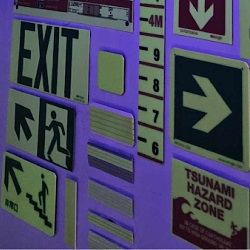
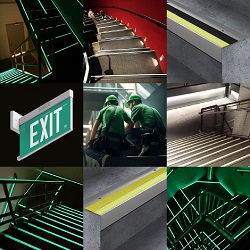
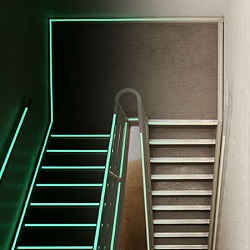
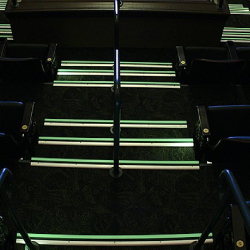
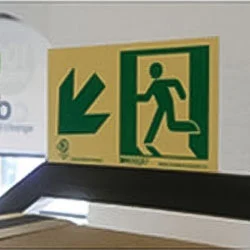
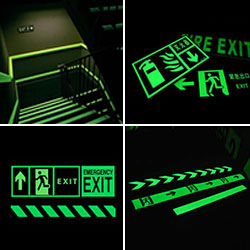
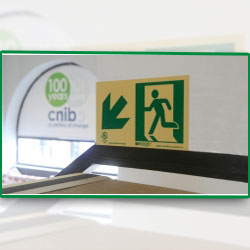
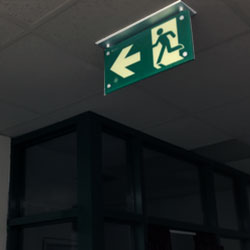
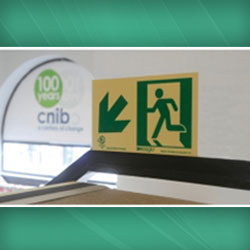
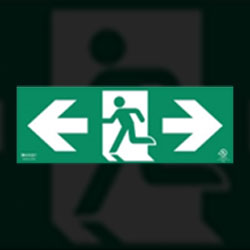
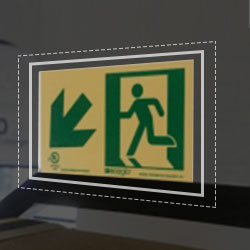
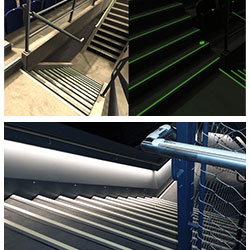
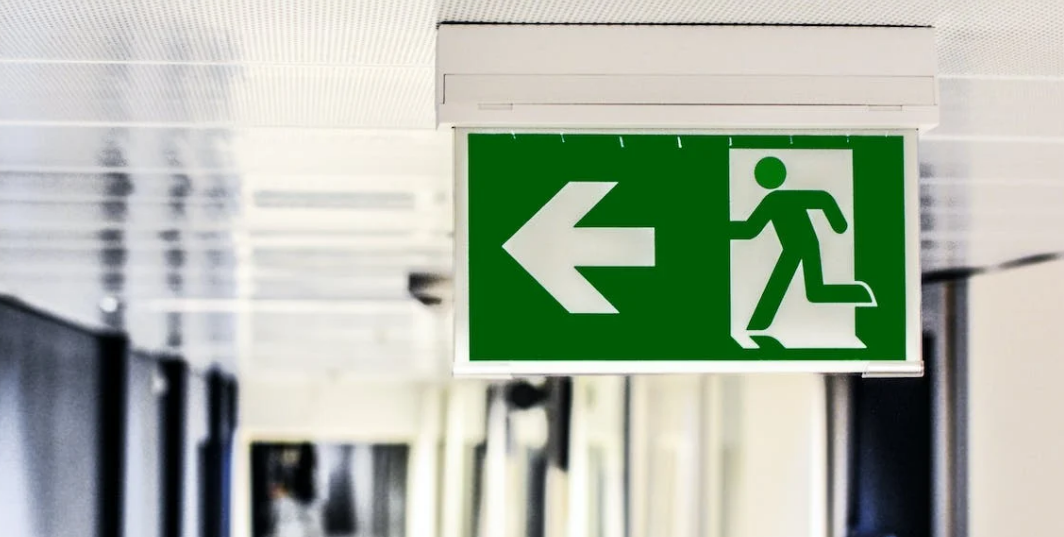
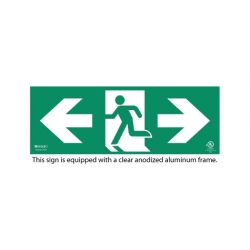
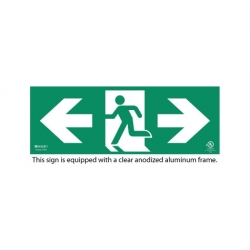
On one floor, older electric EXIT signs flicker and die as the overloaded backup system fails. In another stairwell, the Ecoglo photoluminescent Running Man icons along the doors and directional exit signs along the walls come alive in a calm, steady green glow.
No buzzing, no flicker, just a continuous luminous breadcrumb trail:
The guard doesn’t need to think; they simply follow the glowing icons, guiding others with confidence because the path is literally written in light. In that moment, the choice of photoluminescent over electric signage stops being a design detail and becomes a life-safety decision.
Ecoglo photoluminescent technology is engineered for high-contrast, uniform luminance:
By contrast, some electric signs can develop localized dimming as individual LEDs fail, leading to partial or patchy visibility over time if maintenance is delayed.
Photoluminescent exit and directional signs from Ecoglo are built to withstand real-world abuse:
Electric exit signs, on the other hand, add:
Ecoglo photoluminescent exit signage supplied by Tactile Solution Canada is designed to make compliance less of a headache:
While many electric exit signs can be code-compliant too, they often require additional electrical infrastructure and maintenance to remain within specifications for the life of the building.
At Tactile Solution Canada, our role is to provide exit and wayfinding systems that don’t flinch when the power grid does.
Our Ecoglo photoluminescent exit signs feature:
These are ideal for:
Our Ecoglo directional exit signs extend that reliability along the entire egress route:
Used together, photoluminescent Running Man exit signs and directional signage form a coherent, code-compliant visual guidance system that remains readable even in total power failure scenarios.
Yes, provided they have received the required charging before the outage. Ecoglo photoluminescent exit signs need exposure to at least 54 lux (5 foot-candles) of suitable lighting for a minimum of 60 minutes to become fully operational and then remain visible for two hours or more, often far longer.
Ecoglo photoluminescent exit signs distributed by Tactile Solution Canada are ULC S572 listed and meet UL 924 performance criteria, supporting compliance with NBC emergency lighting and exit signage provisions. Section 1024 of the National Building Code requires photoluminescent exit path markings and signs in many indoor applications, and these products are designed to satisfy those demands.
Unlike electric exit signs, photoluminescent signs have no bulbs, batteries, or wiring to replace. Routine cleaning and ensuring adequate ambient lighting for charging are typically all that’s required, and Ecoglo products are backed by long-term warranties of up to 25 years.
Yes. Ecoglo signs are available with universal mounting kits and can be surface-mounted or integrated into existing exit assemblies in many retrofit scenarios, while still supporting Canadian code compliance when installed correctly.
In day-to-day operations, electric and photoluminescent exit signs may appear to perform equally well. But in the scenario that truly matters (a total power failure), they behave very differently. Electric signs depend on a fragile chain of components; photoluminescent signs are quietly charged and ready, waiting to take over when everything else stops.
Ecoglo photoluminescent exit signs and directional signage at Tactile Solution Canada are designed precisely for that moment, giving you a self-reliant, code‑compliant, and future-ready egress system you can trust when it counts most.
Ready to upgrade your building's safety? Contact our team today, and let’s light the way forward.