Blog
Guide to Choosing CSA-Compliant Tactile Solutions
5th Jul 2024
In today's world, creating inclusive and accessible public spaces is of utmost importance. Public spaces, such as rest stops, shopping centers, playgrounds, etc., must prioritize the needs of individuals with visual impairments or disabilities.
One crucial aspect of accessibility is the implementation of Attention Tactile Solutions, specifically CSA-Compliant Attention Tiles. CSA-Compliance refers to adhering to the standards set by the Canadian Standards Association (CSA) for Attention Tactile Solutions.
These attention tiles guide and alert individuals to potential hazards or changes in their surroundings, ensuring their safety and convenience. In this blog post, we'll cover the different types of attention-tactile solutions for public spaces.
Understanding Attention Tactile Solutions
Canadian accessibility codes mandate the installation of Tactile Walking Surface Indicators (TWSI) to alert visually impaired individuals about potentially hazardous areas, enabling them to navigate public spaces safely and independently.
These solutions typically involve the installation of attention tiles on walking surfaces. By detecting the attention tiles through their canes or feet, visually impaired individuals can gather essential information about their surroundings, such as changes in direction, hazards, or entrances.
The Code-Compliant Tactile Solutions with truncated domes are designed in various materials, colors, and sizes to assure compliance in all situations, whether inside or outside, on newly constructed or on retrofit and existing surfaces.
Different Types of Attention Tactile Solutions
There is a wide range of attention-tactile solutions available, mainly categorized into two types: "cast-in-place" tiles and "surface applied tiles".
Some of the best types of Cast-In-Place attention-tactile solutions are:
Replaceable Cast-Iron Cast-in-Place:
Advantage Replaceable Cast Iron Tactile Walking Surface Indicator (TWSI) plates are designed in strict accordance with ASTM A-48, Class 35B Grey Cast Iron. The Cast in Place System is lightweight with exceptionally high strength and uses advanced metallurgical Engineering Science and Technology to surpass municipal standards. These tiles offer a reliable way to improve safety and accessibility in any public space.
Features:
-
Lightweight and easy to install
-
Engineered to endure the toughest conditions, such as snow plows, overweight vehicular loads, and heavy pedestrian traffic
-
10-year manufacturer’s warranty
AccessTile Cast-In-Place Attention Domes:
AccessTile Cast in Place Replaceable Tactile Attention Domes are leading the way in durability and detectability for tactile systems. This Canadian accessibility code-compliant Cast in Place truncated attention domes are suitable for all environments, providing top-quality solutions for tactile infrastructure products.
Access Tile Replaceable Cast in Place attention domes are installed in wet concrete at building exits near areas with moving vehicles. These detectable warning surfaces visually contrast the ground and provide a different texture to alert the people and help them navigate safely. These Replaceable Cast in Place tactile surface indicators are durable, weather-resistant, and proven to withstand wear and tear.
Features:
- Lightweight and easy to handle
- The most cost-effective method of new curb ramp applications
- 5-year manufacturer’s warranty
Advantage Tactile Systems One Plate With Domes:
Advantage ONE Plate Tactile Walking Surface Indicators(TWSI) are designed for all interior accessibility solutions. They incorporate a textured stainless steel surface for long-lasting slip resistance. These products undergo rigorous testing to surpass guidelines set by AODA, CSA, ISO, and building codes at provincial and national levels.
Features:
- Resistant to heavy traffic abuse and maintenance machinery
- 5-year manufacturer’s warranty
Advantage Tactile Systems Cast Iron:
Advantage Cast Iron Tactile Walking Surface Indicator (TWSI) plates are a reliable and time-tested solution for improving accessibility and safety. They offer several benefits, including aesthetic appeal, long-lasting durability, and a built-in slip-resistant surface for enhanced traction.
Features:
- Lightweight and easy to install
- ASTM A48, Class 35B Grey Cast Iron
- 10-year manufacturer’s warranty
Armor Tile Tactile System Cast-In-Place:
Armor-Tile Cast in place truncated domes are designed from a diamond-hard vitrified polymer composite material, making them an industry leader for their durability, strength, weather, and wear resistance.
The applications of tactile walking surface indicators (TWSI) extend beyond their use in truncated domes. They are also suitable for curb ramps, escalator approaches, parking areas, transit platforms, top-of-stair landings/wheelchair ramps, multimodal transit stations, pedestrian crossings, and vehicular passageways.
Armor Tile cast-in-place domes meet all the requirements set by Canadian accessibility codes such as AODA, CSA, ISO, as well as provincial and national building codes (specifically Ontario's tactile walking surface indicators).
Features:
- The most cost-effective method for new curb ramps
- 5-year manufacturer’s warranty
Some of the best types of Surface Applied Tiles attention-tactile solutions are:
AccessTile Surface Applied Attention Domes:
Access Tile Surface Applied Domes are the industry leader in affordable detectable warning tiles used for any retrofit job. They are ideal for various applications, such as multimodal transit stations, curb ramps, accessible pedestrian crossings, parking areas, tops and bottoms of stair landings, escalator approaches, and many more to alert the public when they're about to reach an unsafe edge.
These Tactile attention domes are useful for people with visual impairments, as they can be felt through footwear. These attention domes are also designed with unique sound reflections for those with guidance canes. This helps them differentiate between Access Tile surface tiles and concrete, allowing for safe and detectable navigation of curb endings.
Features:
- A cost-effective method of retrofitting an existing curb ramp application
- Light weight and easy to handle
- 5-year manufacturer’s warranty
Advantage Tactile Systems Single Domes:
The Advantage One Stainless Steel Dome Tactile System is a special and useful tactile solution for increasing safety and accessibility. These individual attention domes feature a permanent slip-resistant texture integrated into the stainless steel. Advantage One Individual Attention Domes are drilled and fastened directly into the ground and are specifically designed for all interior accessibility solutions.
Features:
- Resistant to heavy traffic abuse and maintenance machinery
- 5-year manufacturer’s warranty
Eon Tile Rubber Attention Domes Tile:
Eon Tile Rubber Attention Domes are durable and flexible tactile indicators ideal for designing and constructing high-quality commercial, institutional, and public spaces.
Eon Tile Attention Domes warn pedestrians, especially the visually impaired, about drop-off edges and areas without curbs or barriers to separate the pedestrian route from a vehicular traffic route.
Features:
- Appropriate for both initial installation and surface retrofit
- 5-year manufacturer’s warranty
Elan Tile Porcelain Attention Domes Tile:
Elan Tile Porcelain Tactile Indicator Attention Domes are designed for style, engineered for performance, and suitable for interior and exterior applications. Elan Tile offers highly durable and versatile walking surface indicators to alert pedestrians of potential hazards conditions ahead, indicating the end of a curb or an edge drop-off. Elan Tile Porcelain Attention Domes are fully compliant with the Canadian Accessibility code.
Features
- Versatile and easy installation for interior and exterior environments
- Exceptional resistance to thermal shock, deep abrasions, and frost
- 5-year manufacturer’s warranty
Armor Tile Tactile System Surface Applied:
The Armor-Tile surface applied tiles offer a cost-effective solution for retrofitting sidewalks. These tiles comply with Canadian accessibility codes, including AODA, CSA, ISO, and provincial and national building codes, specifically for Ontario's tactile walking surface indicators.
Features:
- A cost-effective method of retrofitting existing sidewalks
- Lightweight and easy to handle
- 5-year manufacturer’s warranty
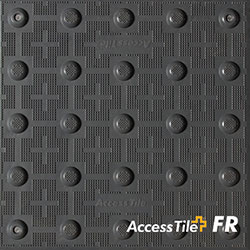
AccessTile Fire Resistant Tile with Attention Domes:
AccessTile Fire Resistant Tile with Attention Domes is an effective way to enhance accessibility and safety in high-risk areas. This Surface Applied fire-resistant tile, which meets the Ontario building code requirements, is their first composite tile. These fire resistant Access tile is mandatory in high rise buildings with more than 7 floors.
Access Tile FR is the cost-effective interior solution for applying TWSI tactile warning surface indicators on floors, specifically in exit stairwells, vestibules, lobbies, and corridors. These Surface Applied Fire-Resistant tiles comply with building specifications in Ontario.
Features:
- Beveled edges make for a smooth transition that meets Canadian Accessibility Codes
- 5-year manufacturer’s warranty
Tactile Solutions for Accessibility: A Comprehensive Guide
28th Apr 2023
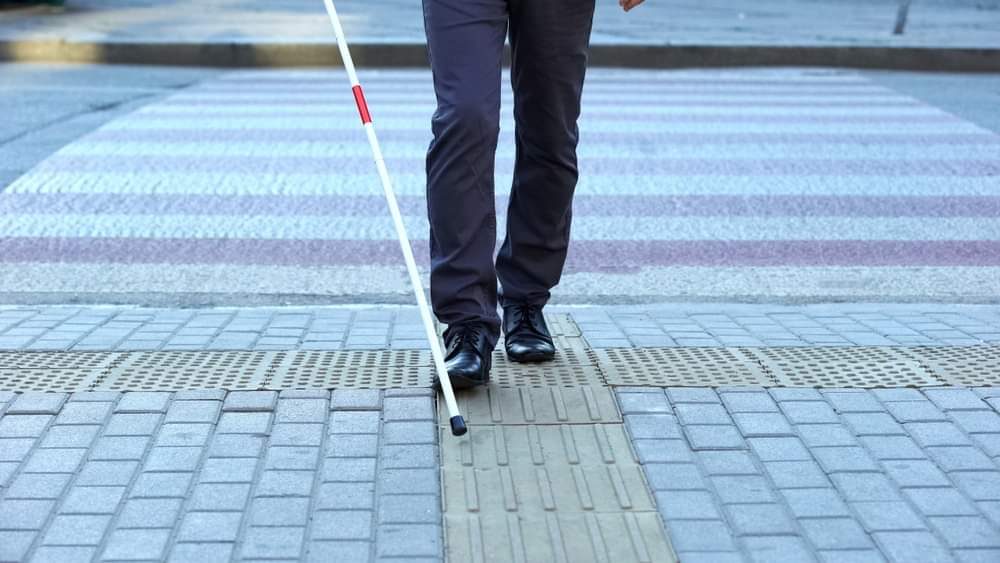
Tactile solutions are nothing less than a boon for people with vision loss. These promise accessibility and create accessible environments for people with vision loss. Simultaneously, understanding the proper use of tactile is extremely crucial.
Over 3% of Canadians aged 15 years and older, approximately 750,000 people, have disabilities that limit their daily activities. As per the 2012 Canadian Survey on Disability (CSD), 5.8% of the people under this age group are legally blind.
Considering such several visually challenged populations, it becomes extremely crucial to implement code-compliant tactile solutions for accessibility in public spaces.
This guide aims to cover the nitty-gritty of the setting tactile solutions and how these create accessible space for people with vision loss.
The Design Basics
Designing a tactile solution holds the utmost importance. The designers must consider four basic elements while designing an accessible environment for people with vision loss. Let’s discuss each.
Layout
It is extremely important to logically design public spaces such as street networks, transit facilities, stores, and shopping areas. Why? Doing so helps visually challenged people memorize the space and get familiar with it quickly and easily. Use a consistent, logical, and easy layout for the exterior and interior of any planned setting.
Lighting
Lighting is one of the essential guiding factors for visually challenged people. Lighting kinds, styles, and locations are determined for employing lighting to aid in wayfinding and orientation.
Colour or Brightness Contrast
The concept of colour and brightness contrast is vital in making environments safer and more usable for everyone, greatly impacting many elements within a constructed environment. Colour contrast should be employed between travel pathways and neighbouring ground surfaces.
Tactile Walking Surface Indicators (TWSIs)
TWSIs, also known as detectable warning surfaces or tactile attention indicators, are standardized walking surfaces that provide information to those blind or visually impaired through texture and, in some cases, sound.
They are often created using inserts like metal, rubber, stone, or plastic or can be built directly into concrete ground surfaces. TWSIs should have a texture that is detectable with a long cane and can be felt underfoot. To reduce the possibility of tripping, their edges should be bevelled.
Some Guidelines about TWSIs
- TWSIs should be coloured differently from the surrounding walking surface. Safety yellow is the perfect colour for attention TWSIs.
- TWSIs should have bevelled edges when fitted as pre-manufactured panels or surface-mounted into an existing ground or floor surface.
- The TWSI panels’ base surface should be no more than three millimetres above the existing surface.
Types of TWSIs
Attention Tactile Walking Surface Indicators
Sometimes referred to as warning TWSIs, TWSIs draw attention to critical hazards such as the staircase’s beginning or the platform’s edge. Attention TWSIs should be circular, flat-topped, truncated domes or cones on a walking surface.
Let’s understand the specifications of attention TWSIs -
- Flat-topped truncated domes or cones, organized in a square grid pattern, parallel or diagonal at 45 degrees to the main direction of movement, should be employed.
- The flat-topped domes or cones should be four to five mm tall. A minimum height of four millimetres is desirable in indoor situations with particularly smooth surfaces, such as polished concrete or terrazzo.
- The top diameter of flat-topped domes or cones should be between 12 and 25 mm.
- The lower base of the flat-topped domes or cones should be 10 mm (+/- 1 mm) larger than the top diameter.
Attention TWSIs are Applied to?
- Platform edges
- Ferry dock edges
- Edges of reflecting pools and fountains unprotected at ground level
- Tops of stairs, at landings where there is a door leading onto the landing
- At landings longer than 2,100 mm where there are no continuous handrails
- Both sides of ground-level railway crossings
- Curb ramps and depressed curbs
- Unprotected edges with a drop-off greater than 250 mm in height
- Entry points to vehicular routes where no curb or other element separates pedestrians from vehicles
- At the beginning of ground-level moving walkways (e.g., used in airport terminals)
Guidance Tactile Walking Surface Indicators
TWSIs for guidance should comprise a pattern of parallel, flat-topped, elongated bars extending in the direction of movement.
Let’s check out the specification for guidance TWSIs -
- Where installed to define a route, their width should be 250 – 300 mm.
- Where installed across a route as an indicator of an amenity or diverging route, their width should be 600 – 650 mm.
- They should have a minimum continuous clearance of 600 mm on both sides.
- The height of the bars should be four to five millimetres.
- The top of the flat-topped elongated bars must have a width between 17 and 30 mm.
- The bars should be colour contrasted with surrounding surfaces to make them easily identifiable by people with low vision.
- The width of the base of the bars must be 10 mm (+/- 1 mm) wider than the top.
- The top length of the bars should be at least 270 mm. If drainage is a concern, a space of 10 – 30 mm should be provided at the ends of the bars.
Guidance TWSIs are Applied to?
- Transit stops
- Train stations
- Subway or light rail transit (LRT) platforms
- Airports
- Sports arenas and stadiums
- Large open spaces (e.g., public squares)
- In the door areas of expansive open areas (e.g., shopping malls)
TWSIs used on road surfaces differ from guide surfaces in pedestrian zones. TWSIs placed on road surfaces at pedestrian crossings should -
- Be configured as a straight path
- Be 250mm - 300mm wide
- Be detectable underfoot
- Be detectable with a long cane
- Be at least 50% colour/brightness contrasted with adjacent road surfaces
- Not present a tripping hazard
- Not present a barrier for persons who use wheelchairs or other types of mobility devices
- Be configured to mitigate damage from snow-plowing
Ending Note
The tactile solutions covered in this guide are obtained from multiple sources like National Building Code of Canada, CAN/CSA B651 Accessible design for the built environment, ISO/FDIS 21542 Building Construction – Accessibility & usability of the built environment and ISO 23599 – Assistive products for blind and vision-impaired persons.
