Blog

The Impact of Tactile Indicators on Visitor Experience
5th Oct 2026
Inclusivity is not a mere afterthought or checkbox; it is the very foundation shaping welcoming sanctuaries that uplift communities.
As leaders providing Canadian businesses accessibility solutions since 2008, we at Tactile Solution Canada believe deeply in the immense power of inclusive design, transforming environments into havens of belonging.
Public spaces thrive through participation. Yet subtle exclusionary oversights often inhibit people with disabilities, diminishing accessibility. Fortunately, progressive upgrades effectively champion dignified autonomy.
This blog explores how purposeful infrastructure adjustments using tactile wayfinding and warning cues and safety features foster customizable experiences accommodating all abilities accessibly. Continue reading to discover inspiring real-world examples of upgrades building communal connections!
The Need for Accessibility Upgrades in Public Spaces
Despite strengthening legislation, everyday impediments still limit people with disabilities and seniors, including:
- Confusing, inconsistent tactile wayfinding cues bewildering navigation
- Poor visual signage and color contrast camouflage critical details
- Slippery flooring or staircases endanger stability
- Alarming absence of safety guards at elevated platforms
While likely unintentional oversights initially, lacking accommodations isolates vulnerable communities from safely enjoying public events, retail, transit, and recreational facilities. Exclusion breeds further marginalization, diminishing trust and participation.
However, practical infrastructure upgrades effectively transform accessibility, seeding goodwill and belonging instead.
The Power of Tactile Walking Surface Indicators Guiding Intuitive Mobility
Tactile walking surface indicators (TWSI) essentially function as tangible "traffic signals" for pedestrian navigation. Standardized textures conveniently communicate upcoming hazards, direction changes, and safe passages without reliance on sight.
Categories include:
- Truncated Domes – Distinct bumps alerting potential dangers like busy driveways
- Detectable Direction Indicators – Parallel ridges trail safe navigation paths
Additionally, anti-slip stair treads and photoluminescent emergency signage boost safety for people with mobility impairments using support canes, wheelchairs, or walking aids.
Much like braille patterns conveying information tangibly, tactile infrastructure accommodates users of all abilities interactively at their own pace. Subtle thoughtfulness removes frustrating obstacles, welcoming all to participate.
Now, let's explore some real-world examples of upgrades transforming public spaces into sincerely inclusive sanctuaries!
An Aquarium – Crafting Accessible Marine Adventures
An iconic aquatic attraction draws thousands of visitors to discover incredible marine mammals. However, the aging infrastructure challenged people with disabilities to fully enjoy exhibits. Upgrades included:
- Installed durable truncated dome tiles cautioning level changes, improving autonomous mobility. Wheelchair users navigate stair-free.
- Added textured detectable walkways guiding visitors between galleries intuitively without reliance on sight.
- Maximized visual displays and enhanced audio tours accommodating sensory diversity.
- Improved accessibility training for volunteer staff assisting visitors with particular needs.
Aquarium CEO remarks, "Subtle design tweaks implemented compassionately transform spaces, fostering belonging for all rather than just baseline compliance. It's about uplifting communities collectively."
Sports Arena – Championing Barrier-Free Sports Spectating
As a premier sports and entertainment venue hosting a huge number of annual visitors, the iconic sports arena prioritizes accessibility seriously. Recent upgrades include:
- Added widened entries, lowered box office counters, and movable seating for wheelchairs boosting access.
- Installed durable, tactile floor indicators guiding visitors to seating sections independently.
- Maximized visual displays and audio commentary for sensory accommodations.
- Trained staff help tourists with particular needs through fast-track lanes.
"Embracing accessibility proactively enables all sports fans to cherish our national pastimes while catalyzing more inclusive societies collectively," shares the Executive VP.
A Zoo – Wild About Accessibility!
This world-class zoo also intensified accessibility via:
- Added physical aids like mobility scooters facilitating self-navigated wildlife discovery without reliance on others.
- Installed detectable guidance paths through exhibits boosting autonomous exploration.
- Incorporated textured demarcations safely separating viewing zones from enclosures.
- Maximized visual displays and enhanced audio content tailoring sensory preferences.
"Disability-positive actions like purposeful infrastructure adjustments encourage broader participation, enriching communities tremendously," says the Director.
The Universal Benefits of Tactile Indicator Solutions
Beyond assisting people with disabilities, thoughtfully embedded tactile walking surface indicators enhance collective experiences through:
Greater Safety
- Cautions all pedestrians regarding potential hazards like approaching staircases or busy intersections
Intuitive Mobility
- Guides visitors efficiently during congestion between transit platforms, arena gates, etc., without reliance on signage
Enhanced Context
- Identifies zones, amenities, and shortcuts augmenting spatial awareness, benefiting everyone
Heightened Engagement
- Allows uninterrupted experiences, avoiding disruptions, seeking assistance from strangers
Memorable Adventure
- Creates joyful journeys connecting moments meaningfully across milestones
Fundamentally, universal design principles concurrently enrich environments holistically for inhabitants of all abilities.
Implementing Compliant Tactile Infrastructure Gracefully
Constructing reliably accessible ecosystems benefiting citizens through entire lifecycles needs knowledgeable partners guaranteeing code compliance and proven best practices.
As Canada's top supplier of accessibility solutions since 2008, Tactile Solution Canada consults intelligently and appropriately matching contexts and budgets.
Recommendations include:
Industrial Grade Metal and Stoneware Tactiles
- Transit centers or stadiums warrant heavy-duty solutions like slip-resistant extruded Advantage tiles or embedded Elan porcelain stoneware sustaining extreme loading.
Modular Systems
- Customizable Advantage Single Domes & Bars or replaceable AccessTile sections maximize flexibility for evolving needs.
Fire-Rated Compounds
- Flame-retardant AccessTile polymer composites meet stringent indoor stairwell regulations.
Photoluminescent Aids
- Ecoglo's self-illuminating stair nosings and exit signs guide evacuation when lights fail.
Flooring
- Anti-slip stair treads or contrasting hazard demarcation strips prevent accidents.
By consulting experts proficiently navigating elaborate Canadian accessibility codes and site-specific demands, one gains assured compliance, futureproofing investments sustainably. Let's connect to explore accessibility opportunities unique to your context.
Concluding Thoughts
Subtle inclusive infrastructure amendments unlock participatory adventures, interweaving stories binding communities. When thoughtfully incorporated from project onset, tactile walking surface indicators transform disjointed spaces into welcoming sanctuaries propelling all forward collectively.
Universal accessibility interlinks societies, awakening previously overlooked potential waiting eagerly for acceptance. As specialized consultants and premium solution providers, Tactile Solution Canada remains committed to advancing dignity for all through barrier-free design leadership.
Let's collectively craft a brighter landscape where abilities intertwine, upholding communities consummately!

Transform Your Building with Next-Gen Tactile Indicators
5th Oct 2026
"Accessibility should seamlessly integrate into infrastructural planning from the get-go, not tacked on as an afterthought."
As a builder, property manager, or facilities director in Canada, ensuring your spaces comply with the latest accessibility standards is not only ethically prudent but also legally mandated. With codes continually evolving to uplift inclusion, proactively integrating accessible design enhances belonging, safety, and your reputation.
Tactile walking surface indicators (TWSI) powerfully transform buildings by guiding navigation independently and cautioning hazards reliably. Whether entirely revamping existing infrastructure or constructing a new, tactical installations grant freedom and dignity to differently-abled inhabitants previously restricted.
This blog explores creative approaches to infusing life's subtle joys through updated TWSI, transforming outdated structures into sincerely welcoming sanctuaries, and advancing accessibility. Continue reading to discover inspiring upgrade ideas illuminating your path ahead!
The Need for Updated Tactile Solutions
Outdated buildings with ageing infrastructure often overlook supports assisting mobility or sensory-impaired users. Subtle feedback from regular disabled patrons highlights difficult navigation, dimming enjoyment of shared amenities.
For instance, blurred markings on faded stairs camouflage tripping risks while confusing directional cues lead users astray, especially those with vision impairments relying on canes. Such barriers breed exclusion rather than foster belonging for constituencies requiring additional accommodations.
While likely unintentional originally, overlooking vulnerable users excludes segments of communities from fully participating. With strengthened accessibility legislation compelling timely action, outdated structures require revitalizing through updated TWSI.
Consulting Specialized Tactile Solutions Experts
Yet uncertainty navigating multifaceted accessibility considerations delays proactive upgrades despite passionate intentions. Seeking experienced guidance becomes essential before encumbering your property.
Credentialed consultants thoroughly inspect existing infrastructure across every dimension - stairs, common areas, recreational centers, lobbies, and outdoor terraces. Astute questions reveal concerning gaps like:
-
Absent ground tactile indicators along major pathways
-
Poor stair visibility with low-contrast nosings
-
Faded signage challenging readability
-
Confusing directional cues meandering through lobbies
Additionally, specialists suggest creative solutions aligning upgrades to space usage patterns and annual capital works budgets. Their empathy, paired with expertise, makes seemingly insurmountable accessibility hurdles conquerable.
The Power of Tactile Walking Surface Indicators (TWSI)
Once deficiencies become apparent, it's time to develop a property enhancement strategy. Thoughtfully customized TWSI solutions uplift buildings through:
Guidance Pathways
-
Subtle detectable guidance paths using textured tiles direct individuals through bustling lobby spaces easily without interfering with decor.
Transition Safety
-
Distinguishing surface-mounted tiles with color/texture variations placed wherever flooring changes caution zone variations for vision-impaired users as required.
Stair Visibility
-
Anti-slip stair nosings plus adjacent mini-domes enhance step edges, complying with codes mandating improved visibility and minimizing falls.
Signage Improvements
-
Large visual/tactile egress signs supplement stairwells, assisting emergency wayfinding/evacuation per NFPA regulations.
Pool Security
-
Anti-slip tiles lining aquatic facilities establish perceptible boundaries preventing accidental slips as mandated.
By holistically interweaving such purposeful TWSI selections, existing infrastructure upgrades into progressive sanctuaries scalably without disruptiveness.
Measurable Improvements Through Upgrades
Once installation is completed, the upgrade's impact uplifts buildings exponentially beyond the symbolic makeover! Elderly patrons access staircases independently, individuals use guide canes to navigate lobby spaces smoothly, and young parents feel at ease descending clearly marked steps with children grasped speak volumes.
Such thoughtful touches foster long-awaited inclusion, enabling vulnerable voices to finally experience that quintessential feeling of belonging previously elusive. Simply by resolving subtle impediments through updated TWSI, your property transforms into a sincerely welcoming space for all to congregate casually as friends.
Quantifiable metrics affirming this reinforced sense of safety and dignity include:
-
Reduced annual incident rates related to slips and falls
-
Lowered staff turnover and associated human resource overheads
-
Decreased liability insurance premiums reflecting lessened exposure
-
Multiplied new membership sign-ups and resident occupancy rates
By resolutely removing access barriers sidelining human potential, your upgraded building evolves into an engine for empowerment through the clarion call of ethical accessibility.
Inspiring Stories of Successful TWSI Building Revitalizations
If conceptualizing the transformative capacity of TWSI solutions seems abstract currently, consider inspiring testimonials from tactical retrofitting victories across Canada:
Recreation Centers Reborn Through Accessible Upgrades
Aging recreation hubs overlooking updated tactile walking surface indicators endangered rather than cautioned users. But once durable noticeable pathways, anti-slip stair markings, and better signage installed, elderly patrons finally participated confidently while staff rapidly responded to all emergencies.
"It's incredible witnessing this catalytic ripple effect uplifting communities accessibly," the gleaming manager exclaims.
Condo Amenities Revived to Uplift Inclusion
Annoyed by accessibility barriers dimming enjoyment of shared amenities, passionate condo boards unanimously resolved to transform towers into sincerely welcoming spaces. By installing subtle guidance pathways, safety demarcations, enhanced stair visibility, and aquatic bounds, outdated properties are converted into sanctuaries of belonging.
"Thoughtful touches finally enabled all voices to participate fully," the chairperson affirms, grinning.
Charming Hotel & Resort Renewed to Captivate All Guests
Initially overlooking mobility aids, confusing navigation cues excluded guests from fully enjoying Muskoka's majesty. However, once durable edge markings along winding trails, glowing stair nosings, and better large-text signage appeared, adventurers of all abilities explored freely through the charming retreat.
"Updating infrastructure compassionately fosters travel without barriers," the gracious owner exclaims.
Through simple yet tactical TWSI integrations, each property uplifted safety and dignity simultaneously, amplifying revenue-generating capacity.
Seize the Opportunity to Lead Change
Indeed, inclusion positively impacts lives well beyond legal compliance. It forges bonds, nurtures empathy within communities, and realizes the shared challenges that all face.
Now arises your opportunity to transform outdated structures into progressive sanctuaries through updated TWSI, purposefully infusing safety and accessibility.
By compassionately championing vulnerable voices often sidelined, you steer organizations towards equitable horizons, conveying that each being matters and belongs.
Final Words
When occasional uncertainty resurfaces, consult experienced guiding partners like Tactile Solution Canada to actualize aspirational makeovers accessibly. For upkeeping, universal design unlocks humanity's potential to assemble, interact, and thrive alongside others seamlessly.
There is no better time than now to define your legacy, leading accessible change! When you prepare sincerely to welcome all creeds warmly as friends into your properties through subtle yet mighty TWSI products, you open precious doors to liberation.
Here's wishing you smooth sailing as you sail forth, uplifting inclusion and implicit dignity through purposeful building upgrades benefitting users of today and pioneers of tomorrow while pursuing progress for all. Bon voyage!

How Tactile Indicators Can Improve Wayfinding in Complex Buildings
5th Oct 2026
Navigation should never be a barrier to independence. In the world of accessible design, every texture tells a story, and every pattern guides a path.
Imagine walking through a sprawling hospital, a multi-level corporate complex, or a vast educational institution – feeling disoriented, uncertain, and vulnerable. For millions of Canadians with visual impairments or mobility challenges, this isn't just an occasional experience – it's a daily reality.
Complex buildings pose significant navigation challenges. Intricate layouts, multiple floors, similar-looking corridors, and lack of clear directional cues can transform what should be a straightforward journey into an overwhelming maze. This is where tactile indicators emerge as silent heroes of architectural accessibility.
Transforming Building Navigation: The Rise of Accessible Design
The journey toward truly inclusive building design has transformed dramatically over the past decade. Gone are the days when basic signage and minimal accommodations were considered sufficient. Today's complex buildings demand sophisticated wayfinding systems that serve everyone, regardless of their abilities.
Breaking Barriers: The Human Impact of Wayfinding Solutions
Martha, a regular participant in community center activities, recently shared her experience: "Before the installation of tactile guidance paths, getting to my weekly fitness class was an anxiety-inducing journey. Now, I can follow the textured routes confidently, knowing exactly where I am in the building."
Sarah, a visually impaired professional, shared her experience: "When I first encountered well-designed tactile indicators in my office building, it was like discovering a secret language of navigation. Suddenly, complex spaces became conquerable."
This personal account reflects a broader truth: effective wayfinding and warning systems must consider the diverse needs of all building users, from the visually impaired to elderly residents and young families navigating with strollers.
The Power of Tactile Communication
What Are Tactile Indicators?
Tactile indicators are specialized surface patterns designed to convey important navigational information through touch and visual contrast. They come in two primary forms:
1. Warning/Attention Domes: Raised truncated domes alerting users to potential hazards
- Commonly placed at elevation changes, platform edges, and transitional areas
- Provide crucial safety alerts through both tactile and visual cues
Guidance/Wayfinding Bars: Elongated raised bars indicating safe travel paths
- Direct users through open spaces and toward key destinations
- Create intuitive navigation routes through complex layouts
Strategic Implementation: Maximizing Impact in Modern Facilities
1. Key Installation Zones
Effective tactile wayfinding systems typically focus on these critical areas:
Main Entrances and Lobbies: Establish clear paths from entry points
- Guide users toward information desks and elevators
- Connect to primary circulation routes
Circulation Routes: Mark paths between major building sections
- Indicate directions to essential services
- Create consistent navigation patterns
Transition Points: Highlight changes in elevation or direction
- Mark entries to stairwells and elevator banks
- Indicate doorways to important facilities
2. Material Selection Matters
Modern tactile solutions offer various materials suited to different environments:
- Elan Tile: Premium porcelain options for sophisticated spaces
- Armor Tile: Durable polymer composites for high-traffic areas
- Access Tile: Weatherproof options for both outdoor and indoor installations, also comes in fire-resistant option mandatory for building with 7 or more floors.
- Eon Tile: Flexible rubber solutions for indoor applications
- Ecoglo: Both photoluminescent and non-photoluminescent anti-slip stair nosings and emergency exit signs.
Real-World Impact: A Property Manager's Perspective
Charles, a property manager of a facility, initially viewed tactile installations as merely a compliance requirement. Nevertheless, his perspective shifted dramatically after implementing a comprehensive wayfinding system:
"What started as a code compliance project evolved into something far more meaningful. We've seen a remarkable increase in resident independence and satisfaction. The investment paid for itself through reduced liability risks and increased property value."
Community Recreation Center Transformation
A suburban Toronto community center's experience illustrates tactile solutions' transformative potential. By strategically implementing tactile wayfinding systems, they:
- Enhanced lobby navigation
- Improved stair and ramp safety
- Created clear transition indicators
- Simplified complex spatial environments
Key Installations
- Elan Tile porcelain stoneware for circulation corridors
- Armor Tile tactile indicators for floor texture transitions
- Anti-slip stair nosings
Code Compliance and Safety Standards
Meeting Canadian Accessibility Requirements
All tactile installations must adhere to strict standards:
- AODA (Accessibility for Ontarians with Disabilities Act) guidelines
- National Building Code of Canada specifications
- ISO 23599 international standards for tactile indicators
Safety Considerations
Effective tactile systems must:
- Maintain consistent detection patterns
- Provide adequate color contrast
- Ensure slip resistance in all weather conditions
- Withstand heavy traffic and regular maintenance
Tactile Implementation Strategy
Planning for Success
1. Assessment Phase: Conduct thorough accessibility audits
- Identify key navigation challenges
- Map high-traffic areas and critical pathways
2. Design Integration: Select appropriate materials for each zone
- Plan installation sequences to minimize disruption
- Consider aesthetic integration with existing décor
3. Installation and Maintenance: Work with certified installers
- Establish regular inspection schedules
- Plan for periodic cleaning and maintenance
Measuring Success
Tangible Benefits
Properties implementing comprehensive tactile wayfinding systems typically report:
- Increased user independence and confidence
- Reduced navigation-related incidents
- Higher tenant satisfaction rates
- Enhanced property marketability
- Improved emergency evacuation efficiency
Long-term Value
Investment in quality tactile solutions delivers lasting returns through:
- Extended product lifespans (10-15 years)
- Reduced maintenance requirements
- Lower liability risks
- Increased property values
- Enhanced reputation for accessibility
Future-Forward: Next Generation of Accessibility for All
As building designs become increasingly complex, the role of tactile wayfinding continues to evolve. Emerging trends include:
- Integration with digital navigation systems
- Smart materials with enhanced durability
- Sustainable manufacturing processes
- Expanded color and texture options
- Advanced installation techniques
Making the Right Choice
When selecting tactile solutions for your facility, consider:
- Traffic patterns and usage intensity
- Environmental conditions
- Aesthetic requirements
- Maintenance capabilities
- Budget constraints
- Installation timeline
Parting Thoughts: Building a More Accessible Future
The implementation of tactile indicators represents more than just compliance—it's an investment in human dignity and independence. As we've seen through numerous success stories across Canada, thoughtful wayfinding solutions create more inclusive, safer, and more valuable properties.
Whether you're managing a residential complex, overseeing a community center, or operating a commercial facility, the right tactile solutions can transform your space into a model of accessible design. The journey toward better building navigation starts with understanding your needs and partnering with experienced providers who can guide you through the process.
Remember Martha and Sarah's story—behind every successful tactile installation are countless individuals who can now navigate complex buildings with confidence and dignity. That's the true measure of success in accessible design.
Ready to enhance your building's accessibility? Contact the trusted accessibility experts at Tactile Solution Canada, who understand both the technical requirements and human elements of effective wayfinding solutions. Your journey toward a more inclusive facility begins with a single step—or, in this case, a single tile.

The Aesthetics of Accessibility: Design with Tactile Indicators
5th Oct 2026
Accessibility and aesthetics need not be at odds. With thoughtful design, spaces can be both beautiful and accessible to all. As we move into 2025, there is a growing recognition of the need to incorporate functional tactile elements in aesthetically pleasing ways that enhance rather than detract from the user experience.
Inclusive Design: The Guiding Principle
The spaces we design reflect our values as a society. Do they embrace inclusion or create barriers dividing people?
The principles of universal design remind us to create environments that are usable to all people to the greatest extent possible. Rather than segregating accessible routes or spaces as an afterthought, they advocate intuitive integration from the outset.
Beyond mere compliance, such foresight takes accessibility to another level - seamless, almost invisible support enabling independence with dignity for those facing physical or sensory impairments. It is the difference between grudging accommodation and heartfelt welcome, constraint versus freedom.
Tactile indicators play a vital role in safely guiding the vision impaired within environments. While essential for wayfinding and hazard demarcation, the challenge lies in incorporating these functional elements harmoniously without detracting from a space's beauty.
Balancing Form and Function
The most elegant designs derive beauty from the simplicity of form united by the utility of purpose. Rather than obscure a space's original design intent, optimal placement of refined tactile cueing can quietly unlock accessibility in a non-obtrusive manner.
Advances in materials technology now enable textured tiles, nosings and plates to match any color scheme or flooring aesthetics. Options like matte metals or stone finishes blend detectability into surroundings for subtle support. Even photoluminescent materials charging under ambient light can replace visually jarring electric exit signs.
Such streamlining epitomizes the universal design gold standard - functionality facilitating experience so smoothly it disappears from awareness unless specifically needed by the user.
The days of bolted-on accessibility appendages marring interiors are fading out. Tomorrow's designs harmoniously integrate inclusion fundamentals like detectability and wayfinding directly into the user experience itself.
A Real-World Example
Our recent experience guiding a downtown Toronto condominium board on improving amenity area accessibility highlights how upgraded tactile components can elevate space aesthetics dramatically if planned thoughtfully.
The building's pool, gym, lounge and shared outdoor terrace sorely needed improved navigation cues for vision-impaired residents. Our designers performed an extensive review identifying high-impact areas to introduce a new internal wayfinding system and warning tiles near potential fall hazards.
Rather than opting for jarring yellow striping, we suggested subtle, durable signage alongside nosings and warning plates in muted tones matching existing decor. The result: enhanced safety, blending detectability into the background for those needing it without imposing it on other users.
Feedback post-installation overwhelmingly confirmed the value of such holistic thinking. Patrons felt reassured by the visibility upgrades facilitating self-navigation without detracting from the upscale ambience. Even residents who were unaffected directly appreciated the conscientious upgrades, which reflected positively on community values.
The Transformational Power of Empathetic Design
Thoughtfully fusing accessibility and aesthetic elements embodies deeply empathetic universal design - creating not just usable but enjoyable, even beautiful spaces improving lives tangibly.
Beyond mere compliance, it sends an incredibly powerful message of true inclusion to those often relegated to afterthoughts. Just imagine the flood of dignity and belonging reshaping an autistic child or elderly person with low vision when truly 'seen' and supported to participate independently.
Therein lies the transformative magic within accessibility done well. Seemingly small touches easing navigation or hazard perception grant outsiders the insider gift of experiencing spaces just as freely as others do, dissolving dividing lines between the abled and disabled.
When architects, engineers, and designers lead with such inclusive mindsets, subtly weaving support features all can benefit from directly in buildings, true equity blossoms, elevating society collectively.
The Form and Function Compromise - Emerging Aesthetically Pleasing Tactile Solutions
Newfound alternatives ranging from composite plastic polymers, single domes and bars and porcelain stoneware offer diverse solutions, paying equal attention to both tactile effectiveness and visual integration across applications – conquering historically impossible expectations.
Elan Tile for instance incorporates premium raw materials bravely breaching durability thresholds enabling unprecedented indoor-outdoor TWSI usages. This slip-resistant porcelain stoneware honours the highest R11 ratings and exceeds EN 14411 standards, outlasting traditional vitreous alternatives.
Form + Function: Blending Compliance and Architecture Harmoniously
Besides material advancements delivering enhanced TWSI quality/durability, several solutions specifically prioritize contextual integration from the outset through considered designs catering to diverse applications artfully.
AccessTile, for instance, offers the broadest selection of replaceable TWSI systems imaginable across unlimited color/size permutations designed to embrace surrounding environments holistically. From classic black and federal yellow to contemporary charcoal palettes, AccessTiles foresee every scheme and texture. Certain styles mimic several patterns or popular floor finishes for harmonizing flawlessly.
Plus, the Advantage One steel single dome and bars can be drilled into the floor and also come in self-adhesive form, giving the freedom to use them in suitable spaces accordingly.
Customizable sizing of AccessTile further optimizes the site-specific spacing and needs scaling indicators appropriately relative to the collective geography. Finally, replaceability enables sustaining surface uniformity through cost-effective piecemeal element replacement versus fully reinstalling entire TWSI sections.
Final Words
As remarkable tactile technologies surface catering safety with style, and pioneering construction practices assimilate inclusive ideologies wholly into blueprints early on, seamless form-function synthesis finally conduces creativity delightfully rather than compliance begrudgingly.
Instead, spark growing realizations...accessibility manifestos honouring unique journeys don't take from spaces – they give possibilities. Possibilities for people to participate meaningfully regardless of abilities.
And such social equity uplifts entire communities immeasurably.
There lies promising hope for continually advancing progressively built environments benefiting everyone equitably through dignified access, meeting escalating expectations stylishly.
So architects, contractors, and custodians let's keep raising bars built environmentally and socially with creative, inclusive architectures that maximize human potential through every possible spatial experience imaginably! Contact us today to find a suitable solution that fits your facility's needs!

Pool Area Accessibility: A Condo Board's Tactile Success
5th Oct 2026
Coming together is the beginning. Keeping together is progress. Working together is a success.
As theA chair of a bustling downtown Toronto condominium board, this quote resonates deeply as our guiding light in nurturing inclusive communities. While our soaring condo towers boast bespoke interiors outfitted for modern downtown lifestyles, its aging amenities distressed me, having glaringly overlooked accessibility and safety.
Our aquatic center, fitness room, lounge, and outdoor terrace required urgent upgrades to continue serving all 400+ residents equitably, regardless of ability or disability.
Subtle Feedback Highlighting Overlooked Barriers
The first clues arose during our annual meeting as members voiced navigational difficulties regularly dimming enjoyment of shared amenities.
Visually impaired seniors struggled to locate the pool independently, while those with mobility limitations cringed helplessly as carefree children darted past, fearing accidental collisions amidst cramped corridors.
Young parents felt anxious descending stairwells with infants in strollers, finding faded markings barely identifiable. Such oversights bred exclusion rather than fostered belonging for those requiring additional mobility or sensory accommodations.
While well-intentioned, our aging infrastructure, constrained by tight maintenance budgets, had drifted far from modern universal design principles uplifting accessibility and inclusion. With provincially mandated building codes compelling timely action, the board resolved unanimously to finally transform our tower into a sincerely welcoming space for all constituencies.
Yet, while passionate about catalyzing change, we felt uncertain about executing substantial upgrades absent expertise in navigating multifaceted accessibility considerations.
The Solutions Catalyst - A Leading Tactile Solutions Provider
Then entered our changemaker - Tactile Solution Canada! They were highly recommended by a colleague on a neighboring condo board that had successfully implemented similar initiatives.
The representative conducted an exhaustive walkthrough of our entire high-rise, inspecting stairs, common areas, the recreational center, lobbies, and outdoor terraces. Through curious questions and astute observations, they highlighted gaps including:
-
Confusing tactile wayfinding routes meandering through the lobby
-
Sudden flooring texture changes lacking suitable demarcations
-
Low stair edge contrast camouflaging tripping risks
-
Signage placed inconsistently, challenging readability
Additionally, they guided us in cost-effectively phasing upgrades to match our annual capital works budgeting cycles. Their empathy, paired with expertise, reignited our hopes of transforming amenities into sincerely inclusive spaces.
Finding the Perfect Accessibility Solutions
To enhance accessibility for all demographics, Tactile Solution Canada advocated a combination of tactile and visual solutions purposefully selected after thoughtfully assessing usage patterns and key problem areas:
-
Lobby Circulation Enhancements - Installing durable yet subtle Tactile Guidance Paths using porcelain Elan tiles to direct individuals easily through bustling lobby spaces per ISO 23599. Softer texture complemented interiors while boosting accessibility.
-
Transition Markings - Placing distinguishing durable composite ArmorTile and rubber EON Tiles with texture/color variations wherever flooring textures transitioned, cautioning zone changes as mandated by code. These durable tactile cues enhanced safety for the vision impaired.
-
Stair Visibility Upgrades - Applying Ecoglo anti-slip stair nosing on all lobby and amenity stair edges coupled with adjacent ArmorTile domes improved the visibility of changes in elevation as per OBC requirements.
-
Exit Signage Improvements - Supplementing stairwell and hallway doors with large accessible egress signs and directional indicators assisted wayfinding during emergencies.
-
Pool Area Safety - The lining pool surrounded by Ecoglo anti-slip nosings and Eon Tile warning tiles created perceptible boundaries, preventing accidental slips into the water.
By creatively interweaving purposeful amenities enhancements, Tactile Solution Canada helped uplift our aging property to leading-edge accessibility levels with minimal disruption.
Seamless Installation and Rapid Results
The installation team worked efficiently during off-peak hours to install specified tactile tiles, signs, and stair markings using industrial adhesives approved for high-rise applications.
By diligently containing work zones nightly, the project was completed over two weekends with no downtime in amenities access for residents.
The impact was literally life-changing, especially for vulnerable demographics! Seniors with mobility limitations finally accessed the pool safely via detectable path ribbing with confidence. Young parents felt at ease descending stairwells clearly demarcated by anti-slip nosings, keeping little hands grasped properly.
Navigating the lobby also eased considerably, with intuitive wayfinding tiles guiding users smoothly between elevators, lounge areas, and mailrooms.
Multiplied Purpose Served Through Accessibility
Indeed, the thoughtful installation enhanced accessibility for multiple groups in our diverse community:
-
Clear paths enabled safe self-navigation for those with limited sight. Porcelain tiles provided critical traction while guiding users reliably toward entries from the lobby.
-
Added stair visibility to assist elderly patrons in ascending and descending securely. Even in emergencies, glowing nosings illuminated evacuation routes clearly.
-
Comprehensive signage made amenities easily discoverable independently.
-
Newly secured pool boundaries eased monitoring for lifeguards while preventing avoidable accidents.
Our reputation is enhanced substantially through thoughtfully embracing inclusion. By proactively removing barriers sidelining human potential, our condominium evolved into a sincerely welcoming space where all constituencies mingled freely as neighbors and friends.
Key Learnings to Share
For other condo boards considering similar initiatives, here are a few pointers that made our experience smooth and successful:
-
Seek periodic resident feedback to identify accessibility gaps and safety concerns. This helps frame improvements around actual user needs rather than assumptions alone.
-
Consult experienced accessibility specialists on product specifications and placements customized for your unique property environment and usage patterns. Their expertise prevents costly missteps.
-
Phase projects over time to match capital works budgets when financial resources are constrained.
-
Schedule tactile installation during periods of low occupancy like nights and weekends. This minimizes disruptions for residents.
-
Promote completed accessibility enhancements to attract new residents who avoid properties perceiving barriers.
-
Maintain improvements through scheduled inspections and timely repairs. Documenting for audits substantiates compliance.
We sincerely hope our experience provides a helpful blueprint for your condominium as you embark on elevating accessibility.
Parting Thoughts
In closing, we remain deeply grateful to our partners at Tactile Solution Canada for their indispensable role in spearheading meaningful inclusion through expert guidance on accessible design. By compassionately co-creating solutions tailored to our residents' diverse needs, our condominium transformed into a sincerely welcoming space.
Today, watching elders, children, and people of all abilities interact freely while navigating their homes independently fills us with pride. We accomplished something much larger than merely complying with building codes. These thoughtful touches enabled vulnerable voices to finally experience that quintessential feeling of belonging we all cherish.
Our residents now traverse the lobby not as strangers but as neighbors sharing an underlying bond - the knowledge they are valued not despite impairments but because their lives matter equally. And that simple yet profound shift nurtures communal empathy which elevates humanity. This rippling impact reflects accessibility's immeasurable returns, requiring foresight to appreciate fully.
We hope our story inspires your condominium board to view inclusive infrastructure upgrades not as grudging obligations but as opportunities to enrich communities by making even the simplest daily activities uplifting for all. Whenever you need guidance or suggestions, please don't hesitate to reach out to Tactile Solution Canada. Here's wishing your community many future years thriving together accessibly.

Crafting Accessible Bathrooms: Universal Design & Compliant Fixtures Guide
23rd Sep 2026
In modern architecture and interior design, accessibility is no longer an afterthought—it is a foundational principle. Creating inclusive environments means designing spaces that accommodate users of all ages and mobility levels without compromising on aesthetics or safety. While much attention in accessible design is given to floor safety—such as installing Tactile Walking Surface Indicators (TWSI) and non-slip stair nosings in public and commercial facilities—the washroom remains one of the most critical areas requiring thoughtful universal design.
Whether renovating a commercial facility to meet accessibility compliance standards or designing an aging-in-place residential bathroom, integrating smart layout choices with ergonomic fixtures ensures both safety and comfort.
1. Establishing Barrier-Free Spatial Layouts
A truly accessible bathroom begins with clear, unobstructed pathways. Building codes like the Accessibility for Ontarians with Disabilities Act (AODA) and the Americans with Disabilities Act (ADA) emphasize the importance of adequate turning radiuses for wheelchair users, typically requiring a minimum 60-inch (1500 mm) clear turning circle.
Key considerations for a barrier-free layout include:
-
Zero-Threshold Entryways: Eliminating curbs at the bathroom door and shower entrance prevents tripping hazards and allows seamless wheelchair transit.
-
Tactile and Visual Indicators: Utilizing high-contrast colors and subtle tactile surface indicators near transitions helps visually impaired users navigate the space safely.
-
Strategically Placed Grab Bars: Reinforced wall backing should be installed during construction to support heavy-duty grab bars near the toilet and shower zones.
2. Ergonomic Sink Solutions and Tap Selection
The vanity area is often the first point of interaction in a washroom. Standard counter heights and complex multi-turn handles can pose significant barriers to individuals with arthritis, limited grip strength, or mobility impairments.
To optimize the sink area for universal access:
-
Knee Clearance: Wall-hung or open-front vanities allow wheelchair users to roll directly under the basin.
-
Lever and Sensor-Operated Controls: Replacing traditional wrist-twist knobs with single-lever or motion-activated controls dramatically improves usability. When selecting fixtures, opting for ergonomic bathroom sink taps with extended lever handles ensures that water flow and temperature can be adjusted effortlessly using a wrist, elbow, or single finger.
-
Paddles and Touchless Tech: In public facilities, touchless sensor taps not only enhance accessibility but also promote hygiene and water conservation.
3. Safe and Inclusive Shower Systems
Showers present the highest risk of slips and falls in domestic and commercial bathrooms alike. Achieving a safe shower environment requires a combination of slip-resistant flooring, threshold-free drainage, and intuitive controls.
When configuring an accessible shower enclosure:
-
Thermostatic Anti-Scald Controls: Rapid temperature fluctuations can cause sudden movements leading to dangerous slips. Installing certified pressure-balanced or thermostatic controls maintains water temperature within safe limits.
-
Adjustable Handheld Sprays: Fixed overhead showerheads can be difficult to reach for seated users. A slide-bar system featuring flexible shower faucets allows the spray height to be adjusted easily for standing or seated showering.
-
Integrated Seating: Built-in bench seating or fold-down teak/metal seats provide stability and reduce fatigue during use.
Conclusion
Universal design is about empowerment and dignity. By combining compliant structural elements—from non-slip surfaces and tactile wayfinding to barrier-free layouts—with thoughtfully designed fixtures, architects and property owners can create washrooms that are safe, compliant, and welcoming for everyone. Investing in ergonomic fixtures today creates an inclusive environment that stands the test of time.
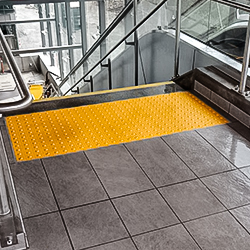
Transform Your Building with Next-Gen Tactile Indicators
17th Jan 2025
"Accessibility should seamlessly integrate into infrastructural planning from the get-go, not tacked on as an afterthought."
As a builder, property manager, or facilities director in Canada, ensuring your spaces comply with the latest accessibility standards is not only ethically prudent but also legally mandated. With codes continually evolving to uplift inclusion, proactively integrating accessible design enhances belonging, safety, and your reputation.
Tactile walking surface indicators (TWSI) powerfully transform buildings by guiding navigation independently and cautioning hazards reliably. Whether entirely revamping existing infrastructure or constructing a new, tactical installations grant freedom and dignity to differently-abled inhabitants previously restricted.
This blog explores creative approaches to infusing life's subtle joys through updated TWSI, transforming outdated structures into sincerely welcoming sanctuaries, and advancing accessibility. Continue reading to discover inspiring upgrade ideas illuminating your path ahead!
The Need for Updated Tactile Solutions
Outdated buildings with ageing infrastructure often overlook supports assisting mobility or sensory-impaired users. Subtle feedback from regular disabled patrons highlights difficult navigation, dimming enjoyment of shared amenities.
For instance, blurred markings on faded stairs camouflage tripping risks while confusing directional cues lead users astray, especially those with vision impairments relying on canes. Such barriers breed exclusion rather than foster belonging for constituencies requiring additional accommodations.
While likely unintentional originally, overlooking vulnerable users excludes segments of communities from fully participating. With strengthened accessibility legislation compelling timely action, outdated structures require revitalizing through updated TWSI.
Consulting Specialized Tactile Solutions Experts
Yet uncertainty navigating multifaceted accessibility considerations delays proactive upgrades despite passionate intentions. Seeking experienced guidance becomes essential before encumbering your property.
Credentialed consultants thoroughly inspect existing infrastructure across every dimension - stairs, common areas, recreational centers, lobbies, and outdoor terraces. Astute questions reveal concerning gaps like:
-
Absent ground tactile indicators along major pathways
-
Poor stair visibility with low-contrast nosings
-
Faded signage challenging readability
-
Confusing directional cues meandering through lobbies
Additionally, specialists suggest creative solutions aligning upgrades to space usage patterns and annual capital works budgets. Their empathy, paired with expertise, makes seemingly insurmountable accessibility hurdles conquerable.
The Power of Tactile Walking Surface Indicators (TWSI)
Once deficiencies become apparent, it's time to develop a property enhancement strategy. Thoughtfully customized TWSI solutions uplift buildings through:
Guidance Pathways
-
Subtle detectable guidance paths using textured tiles direct individuals through bustling lobby spaces easily without interfering with decor.
Transition Safety
-
Distinguishing surface-mounted tiles with color/texture variations placed wherever flooring changes caution zone variations for vision-impaired users as required.
Stair Visibility
-
Anti-slip stair nosings plus adjacent mini-domes enhance step edges, complying with codes mandating improved visibility and minimizing falls.
Signage Improvements
-
Large visual/tactile egress signs supplement stairwells, assisting emergency wayfinding/evacuation per NFPA regulations.
Pool Security
-
Anti-slip tiles lining aquatic facilities establish perceptible boundaries preventing accidental slips as mandated.
By holistically interweaving such purposeful TWSI selections, existing infrastructure upgrades into progressive sanctuaries scalably without disruptiveness.
Measurable Improvements Through Upgrades
Once installation is completed, the upgrade's impact uplifts buildings exponentially beyond the symbolic makeover! Elderly patrons access staircases independently, individuals use guide canes to navigate lobby spaces smoothly, and young parents feel at ease descending clearly marked steps with children grasped speak volumes.
Such thoughtful touches foster long-awaited inclusion, enabling vulnerable voices to finally experience that quintessential feeling of belonging previously elusive. Simply by resolving subtle impediments through updated TWSI, your property transforms into a sincerely welcoming space for all to congregate casually as friends.
Quantifiable metrics affirming this reinforced sense of safety and dignity include:
-
Reduced annual incident rates related to slips and falls
-
Lowered staff turnover and associated human resource overheads
-
Decreased liability insurance premiums reflecting lessened exposure
-
Multiplied new membership sign-ups and resident occupancy rates
By resolutely removing access barriers sidelining human potential, your upgraded building evolves into an engine for empowerment through the clarion call of ethical accessibility.
Inspiring Stories of Successful TWSI Building Revitalizations
If conceptualizing the transformative capacity of TWSI solutions seems abstract currently, consider inspiring testimonials from tactical retrofitting victories across Canada:
Recreation Centers Reborn Through Accessible Upgrades
Aging recreation hubs overlooking updated tactile walking surface indicators endangered rather than cautioned users. But once durable noticeable pathways, anti-slip stair markings, and better signage installed, elderly patrons finally participated confidently while staff rapidly responded to all emergencies.
"It's incredible witnessing this catalytic ripple effect uplifting communities accessibly," the gleaming manager exclaims.
Condo Amenities Revived to Uplift Inclusion
Annoyed by accessibility barriers dimming enjoyment of shared amenities, passionate condo boards unanimously resolved to transform towers into sincerely welcoming spaces. By installing subtle guidance pathways, safety demarcations, enhanced stair visibility, and aquatic bounds, outdated properties are converted into sanctuaries of belonging.
"Thoughtful touches finally enabled all voices to participate fully," the chairperson affirms, grinning.
Charming Hotel & Resort Renewed to Captivate All Guests
Initially overlooking mobility aids, confusing navigation cues excluded guests from fully enjoying Muskoka's majesty. However, once durable edge markings along winding trails, glowing stair nosings, and better large-text signage appeared, adventurers of all abilities explored freely through the charming retreat.
"Updating infrastructure compassionately fosters travel without barriers," the gracious owner exclaims.
Through simple yet tactical TWSI integrations, each property uplifted safety and dignity simultaneously, amplifying revenue-generating capacity.
Seize the Opportunity to Lead Change
Indeed, inclusion positively impacts lives well beyond legal compliance. It forges bonds, nurtures empathy within communities, and realizes the shared challenges that all face.
Now arises your opportunity to transform outdated structures into progressive sanctuaries through updated TWSI, purposefully infusing safety and accessibility.
By compassionately championing vulnerable voices often sidelined, you steer organizations towards equitable horizons, conveying that each being matters and belongs.
Final Words
When occasional uncertainty resurfaces, consult experienced guiding partners like Tactile Solution Canada to actualize aspirational makeovers accessibly. For upkeeping, universal design unlocks humanity's potential to assemble, interact, and thrive alongside others seamlessly.
There is no better time than now to define your legacy, leading accessible change! When you prepare sincerely to welcome all creeds warmly as friends into your properties through subtle yet mighty TWSI products, you open precious doors to liberation.
Here's wishing you smooth sailing as you sail forth, uplifting inclusion and implicit dignity through purposeful building upgrades benefitting users of today and pioneers of tomorrow while pursuing progress for all. Bon voyage!
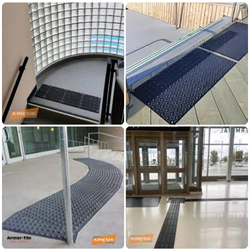
How Tactile Indicators Can Improve Wayfinding in Complex Buildings
10th Jan 2025
Navigation should never be a barrier to independence. In the world of accessible design, every texture tells a story, and every pattern guides a path.
Imagine walking through a sprawling hospital, a multi-level corporate complex, or a vast educational institution – feeling disoriented, uncertain, and vulnerable. For millions of Canadians with visual impairments or mobility challenges, this isn't just an occasional experience – it's a daily reality.
Complex buildings pose significant navigation challenges. Intricate layouts, multiple floors, similar-looking corridors, and lack of clear directional cues can transform what should be a straightforward journey into an overwhelming maze. This is where tactile indicators emerge as silent heroes of architectural accessibility.
Transforming Building Navigation: The Rise of Accessible Design
The journey toward truly inclusive building design has transformed dramatically over the past decade. Gone are the days when basic signage and minimal accommodations were considered sufficient. Today's complex buildings demand sophisticated wayfinding systems that serve everyone, regardless of their abilities.
Breaking Barriers: The Human Impact of Wayfinding Solutions
Martha, a regular participant in community center activities, recently shared her experience: "Before the installation of tactile guidance paths, getting to my weekly fitness class was an anxiety-inducing journey. Now, I can follow the textured routes confidently, knowing exactly where I am in the building."
Sarah, a visually impaired professional, shared her experience: "When I first encountered well-designed tactile indicators in my office building, it was like discovering a secret language of navigation. Suddenly, complex spaces became conquerable."
This personal account reflects a broader truth: effective wayfinding and warning systems must consider the diverse needs of all building users, from the visually impaired to elderly residents and young families navigating with strollers.
The Power of Tactile Communication
What Are Tactile Indicators?
Tactile indicators are specialized surface patterns designed to convey important navigational information through touch and visual contrast. They come in two primary forms:
1. Warning/Attention Domes: Raised truncated domes alerting users to potential hazards
- Commonly placed at elevation changes, platform edges, and transitional areas
- Provide crucial safety alerts through both tactile and visual cues
Guidance/Wayfinding Bars: Elongated raised bars indicating safe travel paths
- Direct users through open spaces and toward key destinations
- Create intuitive navigation routes through complex layouts
Strategic Implementation: Maximizing Impact in Modern Facilities
1. Key Installation Zones
Effective tactile wayfinding systems typically focus on these critical areas:
Main Entrances and Lobbies: Establish clear paths from entry points
- Guide users toward information desks and elevators
- Connect to primary circulation routes
Circulation Routes: Mark paths between major building sections
- Indicate directions to essential services
- Create consistent navigation patterns
Transition Points: Highlight changes in elevation or direction
- Mark entries to stairwells and elevator banks
- Indicate doorways to important facilities
2. Material Selection Matters
Modern tactile solutions offer various materials suited to different environments:
- Elan Tile: Premium porcelain options for sophisticated spaces
- Armor Tile: Durable polymer composites for high-traffic areas
- Access Tile: Weatherproof options for both outdoor and indoor installations, also comes in fire-resistant option mandatory for building with 7 or more floors.
- Eon Tile: Flexible rubber solutions for indoor applications
- Ecoglo: Both photoluminescent and non-photoluminescent anti-slip stair nosings and emergency exit signs.
Real-World Impact: A Property Manager's Perspective
Charles, a property manager of a facility, initially viewed tactile installations as merely a compliance requirement. Nevertheless, his perspective shifted dramatically after implementing a comprehensive wayfinding system:
"What started as a code compliance project evolved into something far more meaningful. We've seen a remarkable increase in resident independence and satisfaction. The investment paid for itself through reduced liability risks and increased property value."
Community Recreation Center Transformation
A suburban Toronto community center's experience illustrates tactile solutions' transformative potential. By strategically implementing tactile wayfinding systems, they:
- Enhanced lobby navigation
- Improved stair and ramp safety
- Created clear transition indicators
- Simplified complex spatial environments
Key Installations
- Elan Tile porcelain stoneware for circulation corridors
- Armor Tile tactile indicators for floor texture transitions
- Anti-slip stair nosings
Code Compliance and Safety Standards
Meeting Canadian Accessibility Requirements
All tactile installations must adhere to strict standards:
- AODA (Accessibility for Ontarians with Disabilities Act) guidelines
- National Building Code of Canada specifications
- ISO 23599 international standards for tactile indicators
Safety Considerations
Effective tactile systems must:
- Maintain consistent detection patterns
- Provide adequate color contrast
- Ensure slip resistance in all weather conditions
- Withstand heavy traffic and regular maintenance
Tactile Implementation Strategy
Planning for Success
1. Assessment Phase: Conduct thorough accessibility audits
- Identify key navigation challenges
- Map high-traffic areas and critical pathways
2. Design Integration: Select appropriate materials for each zone
- Plan installation sequences to minimize disruption
- Consider aesthetic integration with existing décor
3. Installation and Maintenance: Work with certified installers
- Establish regular inspection schedules
- Plan for periodic cleaning and maintenance
Measuring Success
Tangible Benefits
Properties implementing comprehensive tactile wayfinding systems typically report:
- Increased user independence and confidence
- Reduced navigation-related incidents
- Higher tenant satisfaction rates
- Enhanced property marketability
- Improved emergency evacuation efficiency
Long-term Value
Investment in quality tactile solutions delivers lasting returns through:
- Extended product lifespans (10-15 years)
- Reduced maintenance requirements
- Lower liability risks
- Increased property values
- Enhanced reputation for accessibility
Future-Forward: Next Generation of Accessibility for All
As building designs become increasingly complex, the role of tactile wayfinding continues to evolve. Emerging trends include:
- Integration with digital navigation systems
- Smart materials with enhanced durability
- Sustainable manufacturing processes
- Expanded color and texture options
- Advanced installation techniques
Making the Right Choice
When selecting tactile solutions for your facility, consider:
- Traffic patterns and usage intensity
- Environmental conditions
- Aesthetic requirements
- Maintenance capabilities
- Budget constraints
- Installation timeline
Parting Thoughts: Building a More Accessible Future
The implementation of tactile indicators represents more than just compliance—it's an investment in human dignity and independence. As we've seen through numerous success stories across Canada, thoughtful wayfinding solutions create more inclusive, safer, and more valuable properties.
Whether you're managing a residential complex, overseeing a community center, or operating a commercial facility, the right tactile solutions can transform your space into a model of accessible design. The journey toward better building navigation starts with understanding your needs and partnering with experienced providers who can guide you through the process.
Remember Martha and Sarah's story—behind every successful tactile installation are countless individuals who can now navigate complex buildings with confidence and dignity. That's the true measure of success in accessible design.
Ready to enhance your building's accessibility? Contact the trusted accessibility experts at Tactile Solution Canada, who understand both the technical requirements and human elements of effective wayfinding solutions. Your journey toward a more inclusive facility begins with a single step—or, in this case, a single tile.
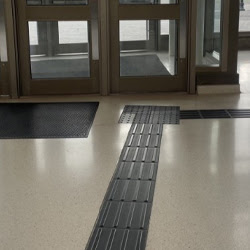
The Aesthetics of Accessibility: Design with Tactile Indicators
3rd Jan 2025
Accessibility and aesthetics need not be at odds. With thoughtful design, spaces can be both beautiful and accessible to all. As we move into 2025, there is a growing recognition of the need to incorporate functional tactile elements in aesthetically pleasing ways that enhance rather than detract from the user experience.
Inclusive Design: The Guiding Principle
The spaces we design reflect our values as a society. Do they embrace inclusion or create barriers dividing people?
The principles of universal design remind us to create environments that are usable to all people to the greatest extent possible. Rather than segregating accessible routes or spaces as an afterthought, they advocate intuitive integration from the outset.
Beyond mere compliance, such foresight takes accessibility to another level - seamless, almost invisible support enabling independence with dignity for those facing physical or sensory impairments. It is the difference between grudging accommodation and heartfelt welcome, constraint versus freedom.
Tactile indicators play a vital role in safely guiding the vision impaired within environments. While essential for wayfinding and hazard demarcation, the challenge lies in incorporating these functional elements harmoniously without detracting from a space's beauty.
Balancing Form and Function
The most elegant designs derive beauty from the simplicity of form united by the utility of purpose. Rather than obscure a space's original design intent, optimal placement of refined tactile cueing can quietly unlock accessibility in a non-obtrusive manner.
Advances in materials technology now enable textured tiles, nosings and plates to match any color scheme or flooring aesthetics. Options like matte metals or stone finishes blend detectability into surroundings for subtle support. Even photoluminescent materials charging under ambient light can replace visually jarring electric exit signs.
Such streamlining epitomizes the universal design gold standard - functionality facilitating experience so smoothly it disappears from awareness unless specifically needed by the user.
The days of bolted-on accessibility appendages marring interiors are fading out. Tomorrow's designs harmoniously integrate inclusion fundamentals like detectability and wayfinding directly into the user experience itself.
A Real-World Example
Our recent experience guiding a downtown Toronto condominium board on improving amenity area accessibility highlights how upgraded tactile components can elevate space aesthetics dramatically if planned thoughtfully.
The building's pool, gym, lounge and shared outdoor terrace sorely needed improved navigation cues for vision-impaired residents. Our designers performed an extensive review identifying high-impact areas to introduce a new internal wayfinding system and warning tiles near potential fall hazards.
Rather than opting for jarring yellow striping, we suggested subtle, durable signage alongside nosings and warning plates in muted tones matching existing decor. The result: enhanced safety, blending detectability into the background for those needing it without imposing it on other users.
Feedback post-installation overwhelmingly confirmed the value of such holistic thinking. Patrons felt reassured by the visibility upgrades facilitating self-navigation without detracting from the upscale ambience. Even residents who were unaffected directly appreciated the conscientious upgrades, which reflected positively on community values.
The Transformational Power of Empathetic Design
Thoughtfully fusing accessibility and aesthetic elements embodies deeply empathetic universal design - creating not just usable but enjoyable, even beautiful spaces improving lives tangibly.
Beyond mere compliance, it sends an incredibly powerful message of true inclusion to those often relegated to afterthoughts. Just imagine the flood of dignity and belonging reshaping an autistic child or elderly person with low vision when truly 'seen' and supported to participate independently.
Therein lies the transformative magic within accessibility done well. Seemingly small touches easing navigation or hazard perception grant outsiders the insider gift of experiencing spaces just as freely as others do, dissolving dividing lines between the abled and disabled.
When architects, engineers, and designers lead with such inclusive mindsets, subtly weaving support features all can benefit from directly in buildings, true equity blossoms, elevating society collectively.
The Form and Function Compromise - Emerging Aesthetically Pleasing Tactile Solutions
Newfound alternatives ranging from composite plastic polymers, single domes and bars and porcelain stoneware offer diverse solutions, paying equal attention to both tactile effectiveness and visual integration across applications – conquering historically impossible expectations.
Elan Tile for instance incorporates premium raw materials bravely breaching durability thresholds enabling unprecedented indoor-outdoor TWSI usages. This slip-resistant porcelain stoneware honours the highest R11 ratings and exceeds EN 14411 standards, outlasting traditional vitreous alternatives.
Form + Function: Blending Compliance and Architecture Harmoniously
Besides material advancements delivering enhanced TWSI quality/durability, several solutions specifically prioritize contextual integration from the outset through considered designs catering to diverse applications artfully.
AccessTile, for instance, offers the broadest selection of replaceable TWSI systems imaginable across unlimited color/size permutations designed to embrace surrounding environments holistically. From classic black and federal yellow to contemporary charcoal palettes, AccessTiles foresee every scheme and texture. Certain styles mimic several patterns or popular floor finishes for harmonizing flawlessly.
Plus, the Advantage One steel single dome and bars can be drilled into the floor and also come in self-adhesive form, giving the freedom to use them in suitable spaces accordingly.
Customizable sizing of AccessTile further optimizes the site-specific spacing and needs scaling indicators appropriately relative to the collective geography. Finally, replaceability enables sustaining surface uniformity through cost-effective piecemeal element replacement versus fully reinstalling entire TWSI sections.
Final Words
As remarkable tactile technologies surface catering safety with style, and pioneering construction practices assimilate inclusive ideologies wholly into blueprints early on, seamless form-function synthesis finally conduces creativity delightfully rather than compliance begrudgingly.
Instead, spark growing realizations...accessibility manifestos honouring unique journeys don't take from spaces – they give possibilities. Possibilities for people to participate meaningfully regardless of abilities.
And such social equity uplifts entire communities immeasurably.
There lies promising hope for continually advancing progressively built environments benefiting everyone equitably through dignified access, meeting escalating expectations stylishly.
So architects, contractors, and custodians let's keep raising bars built environmentally and socially with creative, inclusive architectures that maximize human potential through every possible spatial experience imaginably! Contact us today to find a suitable solution that fits your facility's needs!
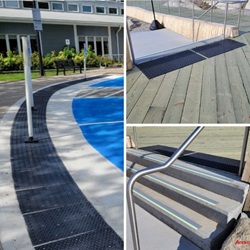
Resort Accessibility Upgrade: Tactile Solutions for All Guests
27th Dec 2024
Travel connects us all. So do the Accessibility
As the proud owner of a charming resort nestled within Ontario's stunning Muskoka region, this quote resonates deeply, capturing our guiding vision of welcoming all to experience nature's tranquility.
While our cozy log cabins and rugged trails seemingly catered to the able-bodied outdoor enthusiast, subtle yet significant barriers clouded our capacity to serve all guests equitably.
A Feedback Pointing Out Missed Hurdles
Early inklings arose when Michael, a regular patron, mentioned in passing how arduous ascending our grand staircase proved, often needing assistance carrying luggage to his 2nd-floor suite.
Meanwhile, Rebecca, a passionate kayaker traveling with a guide dog, described confusion locating our lakeside house rentals without sufficient wayfinding cues. Such oversights potentially exclude rather than welcome vulnerable travelers seeking inclusive hospitality.
While well-intentioned, our aging property - constrained by tight maintenance budgets - had drifted from modern universal design principles, uplifting accessibility through built amenities. With strengthened statutes compelling timely action, we resolved unanimously to transform the resort into a sincerely welcoming refuge where nature's restorative magic empowers every being.
Yet, while passionate about catalyzing change, we felt uncertain about executing substantial accessibility upgrades absent expertise in navigating this complex terrain.
Our Savior - A Leading Tactile Solutions Provider
In stepped our changemaker - Tactile Solution Canada! Highly recommended by a hotelier who successfully overhauled their premises accessibly, I promptly scheduled an exhaustive property walkthrough.
The representative inspected staircases, cabin interiors, nature trails, lobbies, and lakeside amenities through curious questions and astute observations. She noted concerning gaps, including:
-
Uneven walking paths lacking suitable edge demarcations
-
Low stair visibility camouflaging potential tripping risks
-
Glary directional signage straining readability
-
Absent pool area tactile boundaries increasing accident risks
Additionally, they guided us in cost-effectively phasing upgrades that were aligned with our annual capital works budgets. Their empathy, paired with expertise, reignited our hopes of transforming hospitality into an uplifting act of inclusion for all.
Finding the Perfect Accessibility Tactile Solutions
To enhance accessibility across diverse guest experiences, Tactile Solution Canada recommended purposeful tactile upgrades, including:
-
Trail Accessibility - Installing durable ArmorTile wherever nature trail textures transitioned to caution zone changes as per standards. These tactiles enhanced safety for those with vision impairments navigating our rugged natural terrain.
-
Stair & Walkway Safety - Applying anti-slip photoluminescent nosing on all stair edges coupled with adjacent mini tile domes improved visibility of changes in elevation as mandated by code. Gradual tactile ribs also lined uneven walkway borders, assisting mobility devices securely.
-
Signage Visibility - Supplementing directional signs with large print and Braille enhanced wayfinding and met provincial AODA regulations.
-
Pool Area Safety - Lining pool surrounded with anti-slip tiles created a perceptible boundary preventing accidental slips into the water.
By interweaving purposeful upgrades with our charming retro-recreational aesthetic, Tactile Solution Canada helped transform our resort into a contemporary beacon of rustic inclusion.
Rapid Installation and Remarkable Results
The professional installation team worked strategically during off-peak periods to overlay the specified tactile tiles and signage using durable exterior-grade adhesives. Additional handrails were also installed along lengthy staircases for added assistance.
By diligently containing work zones nightly, the resort reopened fully, refreshed, and renovated after just two weeks without major guest disruption, even during peak visiting season.
The impact was literally life-changing! Michael expressed heartfelt appreciation for navigating stairs independently, enabling him to savor sunset views from his suite's balcony, which he previously missed. Meanwhile, Rebecca gleefully traversed meandering wooded trails, feeling securely guided by detectable indicators leading straight to the boathouse docks.
We also received positive feedback from families with young children who felt more at ease exploring our playgrounds and pools safely demarcated. Such thoughtful touches demonstrated our commitment to creating a welcoming space for all to experience Muskoka's majesty.
Key Learnings to Share
For fellow resort owners considering similar initiatives, we're delighted to pay forward learnings that made our experience smooth:
-
Seek periodic guest feedback to identify subtle accessibility gaps that may be overlooked otherwise. This helps frame initiatives around actual patron needs and experiences.
-
Consult experienced accessibility specialists to tailor solutions to your unique environment. Their insights prevent costly missteps or improperly placed products.
-
Phase projects over time to balance capital budgets. Priority upgrades maximize the impact for the most guests and help build momentum.
-
Schedule tactile installation strategically during low-occupancy periods to minimize disruptiveness.
-
Promote completed accessibility enhancements to attract new patrons who avoided visiting previously assuming barriers.
We hope our experience provides a helpful blueprint guiding your resort to transform into an inclusive recreational haven through conscientious upgrades prioritizing dignity for all. Please reach out anytime for suggestions in your rewarding journey ahead!
Parting Thoughts
In closing, we remain deeply grateful to our partners at Tactile Solution Canada for their indispensable role in spearheading meaningful inclusion through customized accessibility solutions. By compassionately addressing our guests' diverse needs, our resort evolved into a sincerely welcoming refuge.
Watching elderly couples ascend staircases gripped securely or individuals using guide dogs navigating trails smoothly is incredibly heartwarming. We accomplished something much larger than merely complying with building codes. Thoughtful touches finally enabled all voices to experience the true serenity nature provides when shared equitably.
Our guests now explore trails not as strangers but as friends, discovering the sense of belonging and community that emerges when everyone participates. And that simple yet profound shift uplifts us all.
We hope our story inspires fellow resorts to view accessibility upgrades not as forced renovations but as opportunities to enrich travel by making the freedom of nature available to all. Please reach out to Tactile Solution Canada for any guidance or suggestions! Here's to many more years of serving every being's needs compassionately.
